Electric Vehicles vs. The Weather: A 10-20% Range Drop? A Shocking Reality Check!
Hey everyone, let’s get real for a minute. We’ve all heard the hype about electric vehicles (EVs). They’re the future! They’re clean, quiet, and eco-friendly! And for the most part, that’s all true. But what happens when the perfect sunny day turns into a frigid winter blizzard or a scorching summer heatwave? That’s where the fairy tale meets reality. As a long-time EV owner and someone who’s spent countless hours digging into the science, I’m here to tell you that extreme weather is the silent villain in the EV story. It’s a huge factor that can slash your range, slow your charging, and even silently degrade your battery over time. It’s the kind of thing they don’t always put on the sticker.
I remember my first winter with my EV. The car was rated for about 250 miles, but after a few cold snaps, my dashboard was consistently telling me I had closer to 200. I felt like I’d been tricked! I was constantly checking my range, and range anxiety went from a funny term to a genuine source of stress. The same thing happened in the peak of summer. That’s when I realized this wasn’t just a minor inconvenience; it was a fundamental challenge of owning an EV. This isn’t about being anti-EV; it’s about being prepared and knowing what you’re getting into. The more we understand, the better we can manage our expectations and care for our vehicles.
Think of your EV battery like a human being. We perform best in a comfortable, moderate environment, right? A mild 70°F day? We’re active and energized. Now, imagine running a marathon in the freezing cold or the blistering heat. We’d struggle. Our performance would drop dramatically. Our body would be working overtime just to maintain its core temperature, and we’d get exhausted much faster. That’s exactly what happens to your EV battery. It has to work extra hard to maintain its optimal temperature, and all that extra energy comes from the same battery that’s supposed to get you from Point A to Point B. It’s a double whammy.
Table of Contents
—
How Cold Weather Cripples EV Performance (And Why)
When the temperature drops, a few things happen inside your EV that are less than ideal. First, the most obvious one: the battery itself. Lithium-ion batteries, which power virtually all modern EVs, are chemical-based. The chemical reactions that produce and store energy slow down when it’s cold. This means the battery can’t release energy as efficiently, which directly translates to a loss of range. It’s like trying to pour molasses in January. It’s just slower and harder.
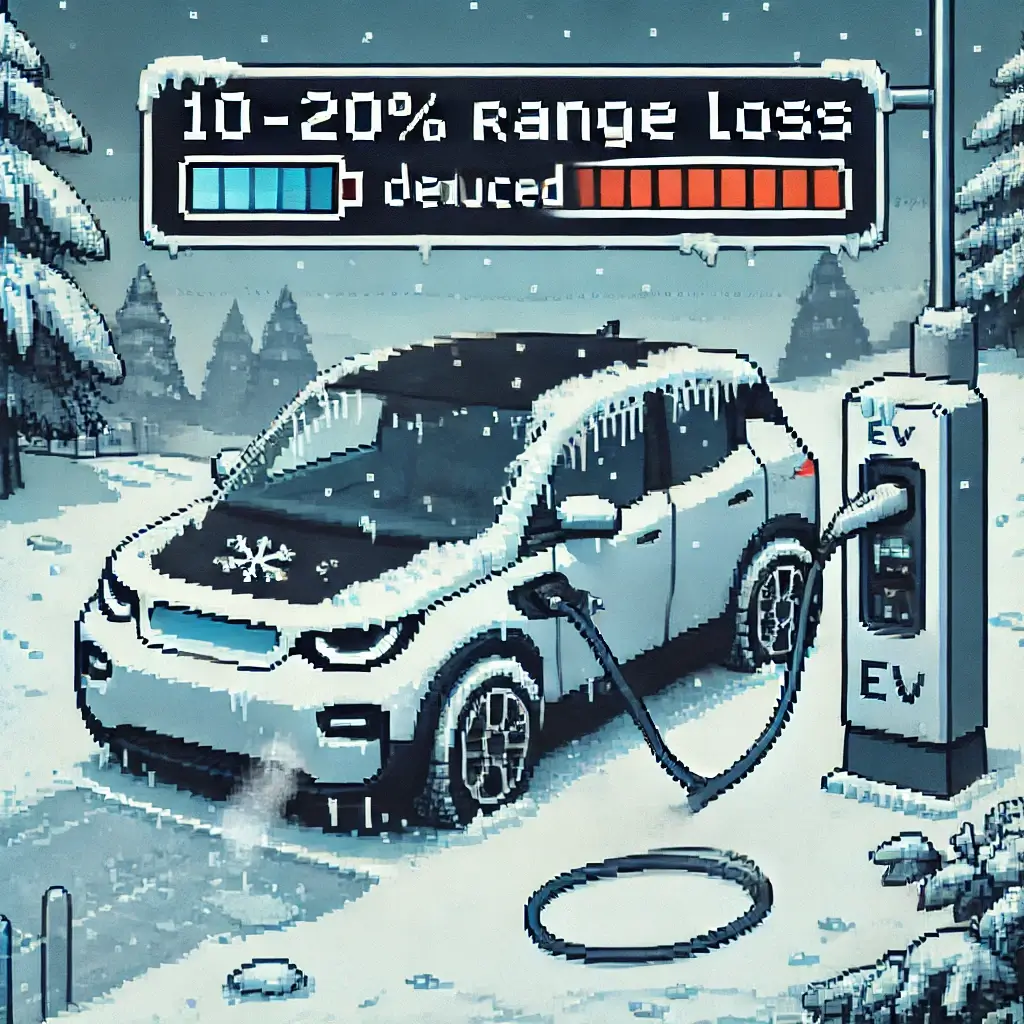
But that’s only part of the story. The car has to use energy to heat the cabin and the battery itself. Your heated seats, steering wheel, and cabin heater all draw power from the same battery that moves the car. A significant amount, in fact! And here’s the kicker: the battery also needs to stay at a certain temperature to perform well and to charge safely. So, a battery management system (BMS) will pull energy from the battery to warm it up, especially before and during charging. This is called thermal management, and it’s a huge energy sink in cold weather. It’s a necessary function, but it absolutely eats into your range. You could be looking at a 10-20% drop in range, and in some really extreme cases, even more. It’s a tough pill to swallow when you’re used to the car’s advertised range.
And let’s not forget about charging. Have you ever tried to fast-charge in the dead of winter? It’s a test of patience. Most fast chargers will automatically throttle the charging speed if the battery is too cold to protect it from damage. This can turn a supposed 20-minute charge into a 45-minute ordeal. The car will often spend the first part of the charging session just warming up the battery, so the actual power transfer is agonizingly slow. This is a crucial point many new buyers miss. Your experience with a fast charger on a sunny 75°F day is NOT the same as a snowy 20°F day.
For me, the key has been preconditioning. If I know I’m going to be driving in the cold, I’ll plug in my car and use the app to preheat the cabin and the battery while it’s still connected to the grid. This means the car is drawing power from the wall, not the battery, to get to an optimal temperature. It’s a game-changer. It not only saves you range but also makes the car more comfortable to get into. Think of it like giving your car a warm-up stretch before a big race. It’s a simple habit that makes a world of difference.
—
The Shocking Truth About Summer Heat and Battery Degradation
While cold weather is the enemy of range, hot weather is the stealthy saboteur of your battery’s long-term health. The science is pretty clear on this: heat accelerates the chemical reactions within the battery. This sounds good, right? More reactions, more power? Not so fast. When these reactions happen too quickly, they can cause irreversible damage to the battery’s internal structure. This process is called **battery degradation**, and it’s what causes your battery to lose its capacity over time. It’s a slow, insidious process, and you won’t notice it day-to-day, but you’ll see the effects years down the line when your range starts to consistently shrink.
Think of it like an aging process for your battery. Just as too much sun exposure can age your skin prematurely, too much heat exposure can age your battery. EVs are built with sophisticated thermal management systems to prevent this, but they aren’t magic. Parking in direct sunlight on a 95°F day, especially with a low state of charge, is one of the worst things you can do for your battery’s longevity. This is because the car has to run its cooling system just to keep the battery within a safe temperature range, and even then, high ambient temperatures are a constant stressor. I once left my car parked at the airport for a week during a heatwave, and when I came back, the dashboard told me the car had spent a significant amount of its battery just running the fans to keep the battery cool. I was shocked!
This is where your habits matter. Parking in the shade, using a sunshade, and avoiding leaving your car at a high or low state of charge in extreme heat can make a huge difference. For those of us living in hot climates like Arizona or Florida, these aren’t just suggestions; they are crucial maintenance steps. The goal is to keep the battery as close to its optimal temperature of around 70-80°F (21-26°C) as possible. It’s a constant battle, but it’s a battle worth fighting to protect your investment.
I often hear people say, “But gas cars don’t have this problem!” and they’re right, to a point. Gas cars have their own set of issues with extreme temperatures, but the consequences aren’t as directly tied to a single component’s long-term lifespan in the same way. The battery is the heart of the EV, and its health dictates the entire vehicle’s value and performance. So, while a hot day might just make your gas car’s A/C work harder, it’s putting silent, permanent stress on your EV’s most expensive part.
—
Infographic: The Hidden Toll of Temperature on EV Batteries
Here’s a simple visual to help you understand the impact of temperature on your EV’s battery. It’s a game of give and take, and unfortunately, the battery is the one doing all the giving.
The EV Battery Temperature Challenge
Cold Weather (< 32°F / 0°C)
📉 10-20% Range Loss
- Why?
- – Slower chemical reactions
- – Energy used for cabin & battery heating
- – Slower charging speeds
Ideal Temperature (60-80°F / 15-26°C)
⚡ Optimal Performance
- Why?
- – Efficient energy release
- – No extra energy for heating/cooling
- – Fastest charging speeds
Hot Weather (> 95°F / 35°C)
🔥 Accelerated Degradation
- Why?
- – Faster, damaging chemical reactions
- – Energy used for battery cooling
- – Long-term capacity loss
A smart thermal management system helps, but your driving and parking habits are key!
—
My Top 5 Tips for Beating the Weather at Its Own Game
As I’ve learned the hard way, you can’t control the weather, but you can control how you react to it. Here are my top five, battle-tested tips for maximizing your EV’s performance and longevity, no matter what Mother Nature throws at you.
Precondition, Precondition, Precondition!
This is my number one tip, and it’s a game-changer. Whether it’s freezing cold or blistering hot, preconditioning your car while it’s still plugged in at home or at a public charger is the most effective way to save range and protect your battery. You can do this through your car’s app. The car will use grid power to heat or cool the battery and cabin to an optimal temperature before you even set off. This means you start your drive with a warm battery (in winter) and a comfortable cabin, with 100% of your range available for driving.
Use Seat Heaters, Not the Cabin Heater.
This is a small but mighty tip for cold weather. Heating the entire cabin is a massive drain on the battery. In fact, it can be the single biggest factor in your winter range loss. A seat heater, on the other hand, uses far less energy and directly heats you, not the air around you. So, if you’re driving alone or with just one passenger, turn down the cabin heater and crank up the seat heaters. You’ll be just as warm, and your range will thank you for it.
Park Smart.
This seems so simple, but it’s incredibly important. In hot climates, try to park in the shade whenever possible. A garage is ideal, but a covered parking spot or even just parking under a tree can make a big difference in how much your battery heats up. In cold weather, parking in a garage helps a lot too, as it keeps the battery from getting to sub-freezing temperatures, which makes preconditioning more efficient and your car ready to go faster. This simple habit protects your battery and can save you money on energy costs.
Mind Your State of Charge.
Just like we don’t like to be too full or too hungry, your EV battery is happiest when its state of charge (SoC) is between 20% and 80%. Leaving your car parked for extended periods, especially in extreme temperatures, at a very high or very low SoC puts unnecessary stress on the battery. If you know you’re going to be leaving your car sitting for a while, try to get the charge to around 50% or 60% before you park it. This is especially true for hot weather, as it helps prevent degradation.
Consider Your Tires.
This is a more subtle point, but it’s just as important. Tire pressure drops in cold weather. Low tire pressure creates more rolling resistance, which means your car has to use more energy to move, eating into your range. Regularly check your tire pressure, especially as the seasons change. Using all-season or winter tires in cold climates can also provide better grip and efficiency. It’s a small detail, but in the grand scheme of things, every little bit of efficiency helps.
—
The Ultimate Question: Is Battery Degradation a Death Sentence?
This is the question that keeps many potential EV buyers up at night. They’ve heard stories of a car’s battery degrading and the horror of a five-figure replacement cost. But let’s put this into perspective. Battery technology has come a long way. The degradation you see in modern EVs is generally a slow, manageable process. Most manufacturers offer a long warranty on the battery, often 8 years or 100,000 miles, guaranteeing a certain percentage of its original capacity (usually 70-80%). This provides a lot of peace of mind.
Think of it like the engine in a gas car. Over time, an internal combustion engine will lose efficiency and horsepower. Parts will wear out, and maintenance becomes more frequent. You don’t get a new engine every few years; you just manage its decline. The same principle applies here. Your EV battery won’t suddenly “die.” It will just hold a little less charge over time. The key is to manage that decline as best as you can with good habits, which we’ve just covered.
Another point to remember is that most of us don’t drive our cars into the ground. We sell them or trade them in after a few years. When you do that, the battery’s health is a factor in the resale value, but it’s not the only factor. The rest of the car’s condition, the mileage, and the general market for that model all play a part. So, while battery degradation is a real thing, it’s not an instant path to a junked car. It’s a normal part of the vehicle’s lifespan, and with modern technology and good care, it’s a problem that’s much less severe than it once was.
—
FAQs: Your Burning Questions Answered by an EV Owner
1. Will extreme weather void my battery warranty?
No, a manufacturer’s warranty generally covers battery degradation over time, but it won’t be voided by using the car in cold or hot weather. However, it’s worth noting that if you abuse the battery by not following the car’s thermal management recommendations, you might run into issues. Always check your specific warranty for details.
2. How can I tell how much my battery has degraded?
Most modern EVs have a feature in the infotainment system or an app that shows the “State of Health” (SoH) of the battery, which is a good indicator of its overall capacity. You can also monitor your maximum range over time to see if it’s consistently decreasing, though keep in mind this is an estimate and can be affected by many factors.
3. Is it better to charge my EV more frequently in extreme weather?
Yes, especially in the cold. It’s better to do a quick top-up to around 80% more frequently than to run the battery down to 20% and then do a full charge. This keeps the battery warmer and closer to its optimal temperature range, which reduces stress and improves efficiency. In hot weather, try to avoid charging to 100% and leaving it there for a long time.
4. Does driving style affect battery degradation in extreme weather?
Absolutely. Aggressive driving—sudden acceleration and hard braking—puts more stress on the battery’s chemistry, especially in extreme temperatures. A smooth, steady driving style is always the best way to maximize range and minimize wear and tear on your battery, regardless of the weather.
—
The Road Ahead: The Future of EVs in a Changing Climate
So, where does this leave us? Is it all doom and gloom for EVs in extreme weather? Not at all. The future of EVs is bright, and the challenges we face today are paving the way for better solutions tomorrow. Engineers are constantly working on new battery technologies that are more resilient to temperature changes. We’re seeing more advanced thermal management systems, more efficient heat pumps, and even solid-state batteries on the horizon that could potentially handle temperature extremes much better.
The conversation is no longer about “if” EVs can handle the weather, but “how well” they can, and what we as owners can do to help. It’s a partnership between the technology and the user. The more we understand the nuances of our cars, the better we can care for them. The goal is to move beyond the superficial “EVs are great” narrative and get into the nitty-gritty of what it takes to be a smart and responsible EV owner. And when you’re armed with this knowledge, that 10-20% range drop won’t feel so shocking anymore. It will just be another part of the journey.
Extreme Weather, EV Performance, Battery Degradation, Range Loss, Thermal Management
🔗 EV Charging Solutions Posted 2025-08-19 11:32 UTC 🔗 7 EV Road Trip Hacks Posted 2025-08-19 07:55 UTC 🔗 Tesla Model Y Accessories Posted 2025-08-18 06:27 UTC 🔗 Tesla Autopilot Hardware Posted 2025-08-17 04:25 UTC 🔗 Raw Materials Powering an EV Posted (no date provided) 🔗 Conquer EV Charging: 5 Epic Hacks Posted 2025-08-19 UTC