Tesla’s Shocking Role in 3 Urban Ecosystems: A Deep Dive into Data, Traffic, and Infrastructure! 🤯
Hey there, fellow urban explorers and tech enthusiasts!
Ever find yourself stuck in a traffic jam, gazing at the sea of cars and wondering, “Isn’t there a better way?”
I know I do.
We’ve all been there, right?
That frustrating, soul-crushing moment when you realize you’ve been sitting still for 20 minutes, inching along like a snail.
What if I told you that the very car in front of you—the sleek, silent, and sometimes annoyingly fast Tesla—is part of a much bigger, more exciting picture?
A picture of a future city that’s smarter, more efficient, and maybe even…
…a little less stressful?
Today, we’re going to pull back the curtain on something truly fascinating:
Tesla’s role in the smart city ecosystem.
This isn’t just about electric cars anymore.
It’s about a company that’s quietly—or not so quietly, depending on who you ask—building the digital and physical infrastructure of tomorrow’s urban landscape.
Think about it:
You’ve got a car that’s basically a supercomputer on wheels, constantly collecting data, learning, and communicating with its surroundings.
That’s not just a vehicle; it’s a mobile data hub.
So, let’s buckle up and dive into how **Tesla** is influencing three key pillars of the **smart city**: data, traffic, and infrastructure.
Table of Contents
The Data Dynamo: Tesla’s Unprecedented Data Collection
Let’s start with the heart of the matter: data.
I can’t emphasize this enough.
When you get into a Tesla, you’re not just driving; you’re becoming part of the world’s most extensive, real-time data collection network.
Each Tesla is equipped with a suite of sensors—cameras, radar, ultrasonic sensors—that are constantly scanning the environment.
And what do they do with all that information?
They send it back to the mothership, anonymously, of course, to refine and improve their Autopilot and Full Self-Driving (FSD) systems.
This is where it gets interesting for the smart city.
This isn’t just about making a car drive better.
Imagine a fleet of millions of these data-collecting machines roaming the streets of a city.
They’re not just seeing the road; they’re seeing potholes, construction zones, blocked lanes, and real-time traffic flow.
They’re a city’s eyes and ears, providing a level of granular, up-to-the-minute information that no traditional traffic sensor or city-owned camera system could ever hope to match.
This data can be a goldmine for urban planners.
It can help them identify traffic bottlenecks, pinpoint areas that need road maintenance, and even optimize traffic light timings.
Think of it as Waze on steroids, but for city management.
And the cool thing is, this data isn’t just being used for Tesla’s benefit.
Imagine if a city could leverage this anonymous, aggregated data to make smarter decisions about its infrastructure.
It’s a game-changer.
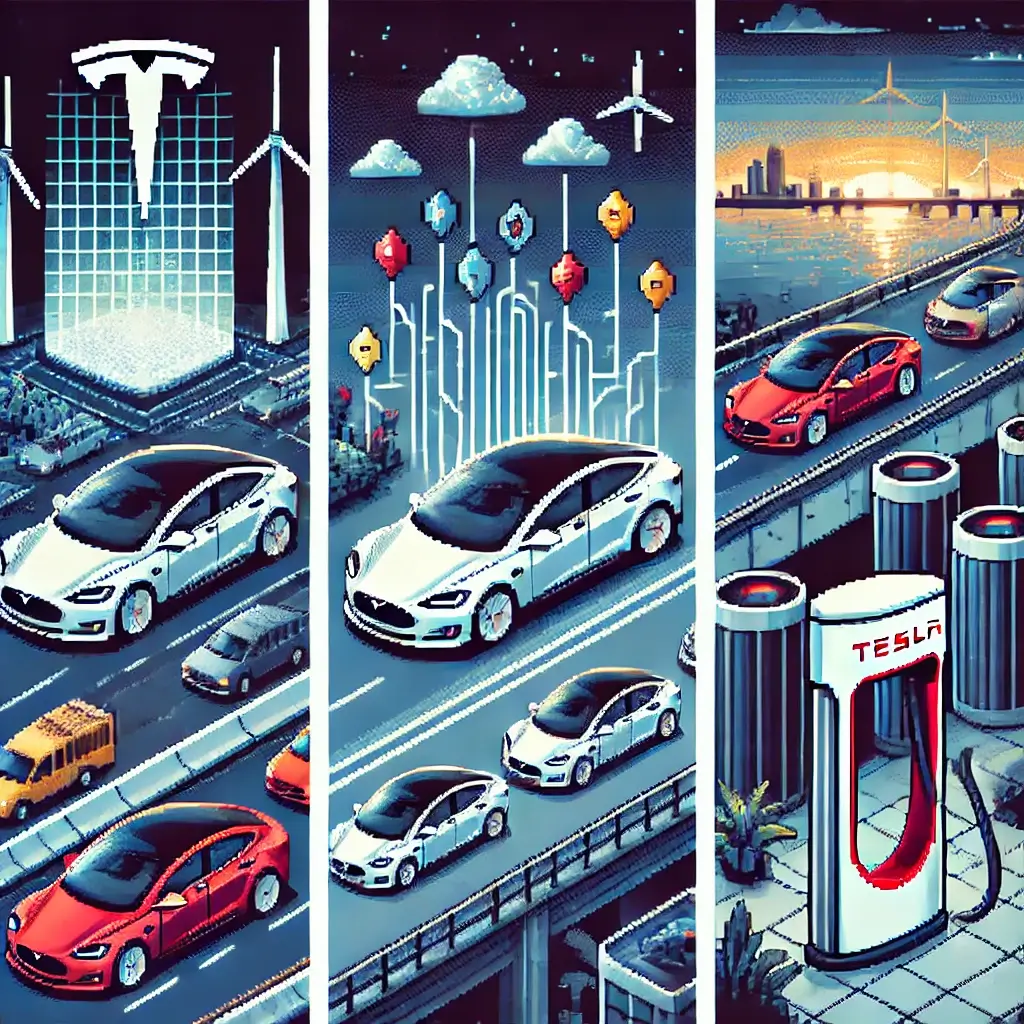
Tesla’s Data Infographic

Real-time Traffic Data: Live updates on congestion, accidents, and speed.

Road Condition Mapping: Identifies potholes, road damage, and surface irregularities.
Pedestrian & Cyclist Behavior: Provides insights into vulnerable road user patterns.
Traffic Whisperer: Tesla’s Impact on Urban Mobility
Now, let’s talk about the dreaded “T” word: traffic.
We all hate it.
But what if traffic could be managed, not just endured?
This is where Tesla’s **Full Self-Driving** (FSD) system comes into play.
When you have a fleet of FSD-enabled vehicles on the road, they aren’t just following the car in front of them.
They are communicating, not necessarily with each other yet, but with the central network, and operating as a synchronized, highly efficient unit.
Imagine a future where a significant portion of a city’s cars are Teslas or other similar autonomous vehicles.
Instead of the chaotic, stop-and-go mess we see today, these cars could be moving in perfect harmony, adjusting their speed and distance to maintain a continuous, smooth flow.
This “platooning” or synchronized movement could drastically reduce congestion, improve travel times, and even cut down on fuel consumption and emissions.
And it’s not just about the cars themselves.
Think about the domino effect.
Fewer traffic jams mean less idling, which means cleaner air.
Smoother traffic flow means less wear and tear on roads, which means lower maintenance costs for the city.
This is the kind of ripple effect that can genuinely transform an urban environment.
Plus, let’s be honest, it’s just a more pleasant driving experience.
Who wouldn’t want that?
The Backbone Builder: How Tesla is Redefining Infrastructure
Okay, let’s shift gears and talk about infrastructure.
When you hear “infrastructure,” you probably think of roads, bridges, and power grids.
And you’d be right.
But Tesla is changing what that word means in the context of the **smart city**.
They’re building their own version of infrastructure, one that is both physical and digital.
On the physical side, you have the Supercharger network.
This isn’t just a bunch of fancy charging stations.
It’s a decentralized, interconnected grid of energy hubs that can take pressure off the traditional power grid.
Imagine a future where these Superchargers are not just for cars, but for the city itself.
They could be integrated with the city’s power grid, acting as massive energy storage units, helping to balance the load during peak hours and providing backup power during outages.
This is where Tesla’s **Powerwall** and **Megapack** technologies come into play, offering a scalable, clean energy solution that cities could adopt to become more resilient.
Then there’s the digital infrastructure.
Every Tesla on the road is a node in a vast network.
They’re communicating with each other and with the city’s systems (in theory, at least) to create a seamless, integrated urban experience.
Think about a future where your car automatically finds and reserves a parking spot for you, or where traffic lights adjust their timings based on real-time data from the cars approaching an intersection.
This isn’t science fiction; it’s the logical next step in urban development.
It’s all about creating a city that’s not just a collection of buildings and roads, but a living, breathing ecosystem that responds to the needs of its inhabitants.
Frequently Asked Questions (FAQ)
1. How does Tesla collect data anonymously?
Tesla cars collect data from their sensors and upload it to the company’s servers. This data is anonymized to protect user privacy, meaning it’s not tied to a specific driver or vehicle. It’s used in an aggregated format to improve Autopilot and Full Self-Driving capabilities for the entire fleet.
2. What are the benefits of Tesla’s Supercharger network for a city?
The Supercharger network provides a robust and reliable charging infrastructure for electric vehicles, which can help a city transition away from fossil fuels. Additionally, these charging stations can be integrated with energy storage solutions like Powerwalls, helping to stabilize the local power grid and provide backup power during emergencies.
3. Is it possible for a city to use Tesla’s data for urban planning?
While Tesla has not publicly announced any formal partnerships with cities for data sharing, the potential is huge. City planners could, in theory, use the anonymized, aggregated data on traffic patterns, road conditions, and parking availability to make more informed decisions about infrastructure development, traffic management, and urban design.
4. How can Tesla’s FSD improve traffic congestion?
A large number of autonomous vehicles like Teslas operating on FSD could create a more synchronized and efficient traffic flow. By reducing sudden braking and accelerating, and maintaining optimal following distances, these vehicles could significantly decrease traffic jams, improve travel times, and reduce fuel consumption.
5. How do Tesla’s energy solutions contribute to a smarter city?
Tesla’s Powerwall and Megapack energy storage solutions can help cities manage their energy consumption more efficiently. They can store energy from renewable sources, provide grid stability during peak demand, and offer a reliable backup power source, all of which are critical components of a modern, resilient smart city.
The Road Ahead: A Glimpse into a Tesla-Powered Future
So, where does this all lead?
We’re witnessing a fascinating convergence of automotive technology, data science, and urban planning.
Tesla’s role in the smart city ecosystem is far more profound than just selling electric cars.
It’s about providing the building blocks for a new kind of urban life, one that is more connected, more efficient, and more sustainable.
Of course, there are challenges.
Data privacy is a huge one.
The ethical implications of autonomous systems are another.
And let’s not forget the sheer complexity of integrating a private company’s network with public infrastructure.
But the potential is enormous.
Imagine a city where traffic is a thing of the past, where the air is cleaner, and where the power grid is resilient and decentralized.
A city that uses real-time, anonymized data to adapt and evolve, just like a living organism.
That’s the future **Tesla** is helping to build, one car, one Supercharger, and one byte of data at a time.
And I, for one, am excited to see what’s next.
If you’re as fascinated by this topic as I am, here are a few links to some excellent resources that dive even deeper.
They’re not just for the experts; they’re for anyone who wants to understand the forces shaping our urban future.
Tesla, Smart City, Data, Traffic, Infrastructure
🔗 11 Shocking Ways Extreme Weather Is Changing Our Planet Posted August 11, 2025 🔗 Weather & EV Range Drop Posted August 20, 2025, 05:35 UTC 🔗 EV Charging Solutions Posted August 19, 2025, 11:32 UTC 🔗 7 EV Road‑Trip Hacks Posted August 19, 2025, 07:55 UTC 🔗 Tesla Model Y Accessories Posted August 18, 2025, 06:27 UTC 🔗 Tesla Autopilot Hardware Posted (날짜 미기재)