The Mind-Blowing Evolution of Tesla Autopilot Hardware: From AP1 to HW4+!
Hey there, fellow Tesla fanatics and tech enthusiasts!
Have you ever just sat in your Tesla, hands on the wheel (as you should), but felt that little tingle of awe as the car seems to just… drive itself?
I mean, it’s not magic, it’s engineering, but sometimes it sure feels like it.
I’ve been on this journey with Tesla for years, and let me tell you, watching the brain of the car—the Autopilot hardware—evolve has been absolutely mind-blowing.
It’s a rollercoaster of ambition, challenges, and some seriously clever problem-solving.
Let’s get real for a second: the path to full self-driving isn’t a straight line.
It’s more like a twisty, turny mountain road with some unexpected detours.
We’ve gone from a system that was basically a fancy cruise control to a digital co-pilot that’s constantly getting smarter.
And trust me, the hardware at the heart of it all is the real hero of this story.
I want to take you on a deep dive, a real nitty-gritty exploration of how Tesla’s Autopilot hardware has changed over the years, from the very first AP1 all the way to the futuristic HW4+.
It’s a tale of processing power, sensor suites, and the constant pursuit of a truly autonomous future. —
Table of Contents
—
The AP1 Genesis: When Tesla Took a Leap
Let’s rewind a bit, back to the early days.
Think about 2014-2016.
The idea of a car driving itself was still something you mostly saw in sci-fi movies.
That’s when Tesla first introduced **Autopilot 1**, or **AP1**.
It was a game-changer.
But here’s a little secret for you: Tesla wasn’t actually building the “brain” of the car themselves.
They were using off-the-shelf hardware from a company called Mobileye.
Mobileye’s EyeQ3 chip was the core of the system.
This chip, along with a radar from Bosch and a camera from Mobileye, formed the first generation of Tesla’s advanced driver assistance system.
It was a brilliant move, really.
Instead of spending years and billions of dollars developing their own chip from scratch, they leveraged existing technology to get a massive head start.
I remember the first time I saw it in action.
It could hold a lane, change lanes with a flick of the turn signal, and even manage speed based on the car in front.
It felt like magic.
But it had its limitations.
The system was heavily reliant on the Mobileye chip’s vision processing, which was great for its time but not capable of the complex, nuanced decisions required for full autonomy.
The system was a closed box, and Tesla couldn’t simply “add” new features or make big changes to how it worked.
This was a major sticking point, and it led to the big, bold decision that would change everything.
That brings us to the next chapter of our story.
—
The AP2 Leap: Tesla Takes Control
This is where the plot thickens, my friends.
In October 2016, Tesla announced that every new car being produced would have a completely new **Autopilot 2.0** hardware suite.
This wasn’t just a simple update; it was a full-blown revolution.
They were done with relying on a third party.
Tesla was bringing the brains in-house.
The new system was powered by NVIDIA’s Drive PX 2 chip.
But the real secret sauce wasn’t just the chip; it was the **sensor suite**.
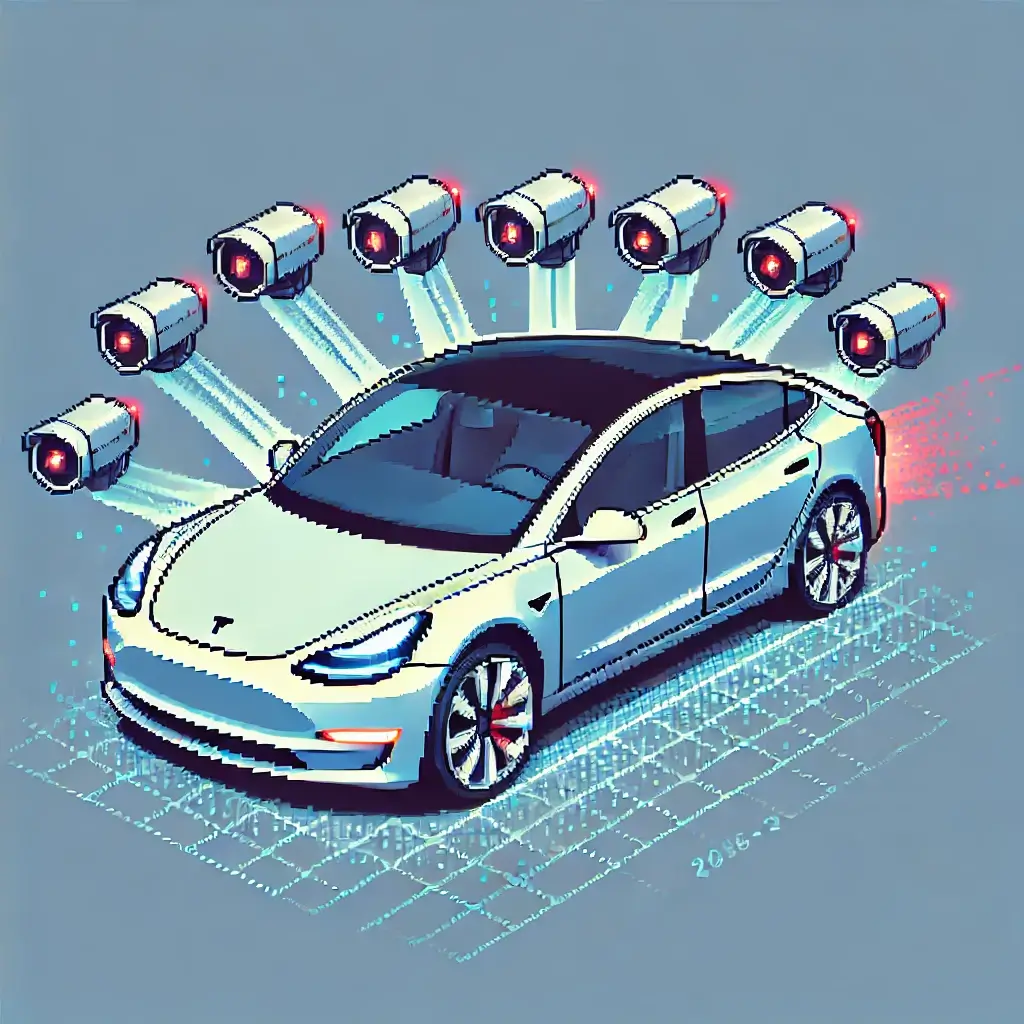
AP2 cars came with a whopping eight cameras, a new radar, and a dozen ultrasonic sensors.
Eight cameras!
That was unheard of at the time.
It gave the car a full 360-degree view, letting it see what was happening all around it.
Think of it like giving a human an extra set of eyes on the back of their head, and on the sides, too.
The difference was night and day.
While the first AP2 cars were a little buggy at launch (because, let’s face it, they were building a new system from scratch and still collecting data), the potential was absolutely immense.
This hardware laid the foundation for every future feature, from summon to Navigate on Autopilot.
The NVIDIA chip was powerful, but as Tesla’s ambitions grew, it became clear they needed even more processing power.
They were trying to do things that were simply beyond the scope of a commercial off-the-shelf chip.
This is where Elon Musk’s famous phrase, “The car is an information appliance,” really started to ring true.
They were treating the car’s hardware like a smartphone, and they realized to truly unlock its potential, they had to design the chip themselves.
It was a crazy, audacious goal, but that’s what Tesla does best.
—
The AP3 Breakthrough: The Age of the FSD Chip
And now we get to the crown jewel, the moment many of us were waiting for.
In 2019, Tesla unveiled **Autopilot 3.0**, a hardware suite built around their custom-designed Full Self-Driving (FSD) computer chip.
It’s a beautiful piece of engineering, but what makes it so special?
For one, it’s a dual-chip design.
They’ve got two FSD chips on the same board, working in parallel.
If one chip fails, the other one can take over instantly, a critical safety measure.
The FSD chip itself is a beast.
It was specifically designed for neural network processing—the kind of work needed to analyze camera footage and make real-time driving decisions.
While the NVIDIA chip was a powerful general-purpose GPU, the FSD chip was a specialized tool, a surgeon’s scalpel designed for one purpose: to run Tesla’s FSD software as efficiently as possible.
The numbers are staggering.
The FSD chip is supposedly over 21 times faster than the NVIDIA chip it replaced.
This incredible leap in processing power meant that the car could now process more data, more quickly, leading to smoother, more human-like driving behavior.
It’s the reason why FSD Beta has been able to make such incredible progress.
This chip is the brain behind the “unsupervised” part of FSD, where the car makes complex turns, navigates intersections, and handles tricky urban environments.
I’ve seen it firsthand, and it’s truly a marvel.
It’s like going from a beginner driver to a seasoned pro.
And for those of us who have older Tesla vehicles with AP2 or 2.5 hardware, Tesla even offers a retrofit to upgrade to the AP3 computer, a testament to their long-term commitment to their customers and their FSD vision.
The FSD computer isn’t just a chip; it’s a declaration of independence, a statement that Tesla is serious about controlling its own destiny in the autonomous driving space.
Infographic: The Tesla Autopilot Hardware Journey
AP1 (2014-2016)
The Beginning:
- 🧠 Brain: Mobileye EyeQ3
- 👁️ Cameras: 1 front-facing
- 📡 Sensors: Radar + Ultrasonics
- 💡 Key Feature: Basic Autopilot, Lane keeping
Third-Party Chip
AP2 / 2.5 (2016-2019)
The Transition:
- 🧠 Brain: NVIDIA Drive PX 2
- 👁️ Cameras: 8 cameras (360° view)
- 📡 Sensors: New radar + Ultrasonics
- 💡 Key Feature: Foundation for FSD, Summon
Expanded Sensors
AP3 (2019-2023)
The Revolution:
- 🧠 Brain: Tesla FSD Chip (Dual)
- 👁️ Cameras: 8 cameras (same as AP2)
- 📡 Sensors: Radar (until 2021)
- 💡 Key Feature: FSD Beta, Urban driving
In-House FSD Chip
HW4+ (2023-Present)
The Future:
- 🧠 Brain: FSD Chip (next-gen)
- 👁️ Cameras: Upgraded, Higher Res
- 📡 Sensors: 4D Radar
- 💡 Key Feature: Redundant processing, Better vision
More Power, Better Sensors
—
From AP3 to HW4: The Next-Gen Mind of the Car
Just when you thought it couldn’t get any better, along comes **Hardware 4**, or **HW4**.
This is the latest and greatest, and it’s currently being installed in new Tesla vehicles.
It’s not a radical, from-the-ground-up redesign like the leap from AP1 to AP2 or AP2 to AP3.
Instead, it’s a massive, systematic upgrade to the entire Autopilot system.
Think of it as taking that super-powered FSD chip and making it even more of a powerhouse.
The new HW4 computer is rumored to have a next-generation FSD chip that’s even faster and more efficient.
But the most significant changes are in the sensors.
Tesla is introducing higher-resolution cameras.
The image quality is sharper, which means the car can see more detail and make more accurate decisions.
Imagine trying to read a street sign from a distance with an old, blurry camera versus a new, crystal-clear one.
That’s the kind of improvement we’re talking about.
And here’s the kicker: HW4 brings back **radar** in a big way.
After moving away from it in 2021 in favor of a “vision-only” approach, Tesla has reintroduced a new **4D radar**.
This isn’t your grandad’s radar.
A 4D radar can not only detect objects and their speed but also their height and elevation, giving the car a more complete picture of the world.
It’s a huge step forward for safety and redundancy, especially in adverse weather conditions like heavy rain or snow.
For those of us who have followed this journey, it’s like a full-circle moment.
Tesla tried a bold experiment with vision-only, learned what it could and couldn’t do, and now they’re back with a hybrid approach that leverages the best of both worlds.
It shows a company that is willing to iterate, to learn, and to be agile.
And for the future, rumors of HW5 and beyond are already swirling.
It’s a never-ending cycle of innovation, and it’s what makes this whole thing so exciting.
—
Decoding the Hardware: A Detailed Comparison
Okay, let’s get into the weeds a little bit, because this is where it gets really interesting.
I want to break down each of these hardware suites so you can truly appreciate the scale of this evolution.
It’s like comparing a bicycle to a race car.
They both get you from point A to point B, but the experience is completely different.
AP1 (Mobileye): The Solid Foundation
This was the first step.
The **Mobileye EyeQ3 chip** was a great starting point.
It worked.
It was reliable.
It could handle basic highway driving, and it did it well.
The problem was its closed nature.
Tesla couldn’t innovate on top of it.
They couldn’t just write a new software update to handle a new road sign because the chip’s core functionality was locked down by a third party.
It was a fantastic first date, but not a long-term marriage.
AP2 / 2.5 (NVIDIA): The Visionary
This was the visionary leap.
With the **NVIDIA Drive PX 2**, Tesla got control.
They got the ability to use **eight cameras** and process more data.
The system could see so much more.
The early days of AP2 were rough, though.
The software wasn’t fully baked, and it was a steep learning curve for everyone, including the car.
But this is where Tesla’s data flywheel really started spinning.
Every mile driven by an AP2 car was a treasure trove of data that could be used to train the neural network.
AP2.5 was a minor revision, a sort of half-step, that added a secondary processor for redundancy.
It was a good chip, but it was just a pit stop on the way to the real destination.
AP3 (FSD Computer): The Specialist
This is the big one.
The **FSD Computer** isn’t just a chip; it’s a custom-built machine learning engine.
The performance leap from AP2 to AP3 is simply off the charts.
It can process the camera feeds much, much faster.
It has the horsepower to run a complex neural network that can handle things like unprotected left turns and navigating busy roundabouts.
The FSD Beta program, which allows owners to test the cutting-edge FSD software, is only possible because of this chip.
It’s the beating heart of Tesla’s autonomous vision.
HW4 (Next-Gen FSD): The Redundancy King
HW4 is all about refining and fortifying the system.
The next-gen FSD chip is more powerful, but the real story is the sensors.
The **higher-resolution cameras** and the reintroduction of the **4D radar** add layers of redundancy and accuracy.
Imagine you’re driving at night and the camera can see a pedestrian from a mile away.
Now, imagine a 4D radar can also detect that same pedestrian and their motion, even if the camera’s view is obscured by fog.
That’s the power of HW4.
It’s a system designed to be more robust and safer than ever before.
—
Why Does This Hardware Evolution Matter to You?
You might be thinking, “This is all super technical, but what does it mean for me, the driver?”
That’s a fantastic question, and the answer is simple: it affects your car’s capability, its future potential, and even its resale value.
If you have an older Tesla with AP1, you’re limited to the features that Mobileye and Tesla developed for that hardware.
No FSD, no summoning, no Navigate on Autopilot.
It’s a perfectly good system, but it’s not on the upgrade path.
If you have an AP2 or AP2.5 car, you have the potential to be a part of the FSD revolution, but you need the **AP3 retrofit**.
This upgrade is a game-changer, but it’s a one-time thing.
Once you get the new computer, your car is ready for the future of Tesla’s software updates.
If you have an AP3 or HW4+ car, you’re on the cutting edge.
Your car can run the most advanced FSD software.
You’re the one getting the cool, new features first.
You’re the one participating in the FSD Beta.
And you’re the one with the most future-proof vehicle.
The constant hardware upgrades are Tesla’s way of pushing the boundaries of what’s possible.
It’s not just about selling a car; it’s about building a platform that can get better over time.
It’s an investment in a future where your car is not just a vehicle, but a constantly evolving piece of technology.
—
The Future of Tesla Autopilot: What’s Next?
The journey doesn’t end here.
Tesla’s relentless pursuit of autonomous driving is a never-ending saga.
So, what’s next for the Autopilot hardware?
Rumors of a new **HW5** are already circulating.
What would that even look like?
Most likely, it would be another leap in processing power, but perhaps with a new focus on even more advanced sensor technology.
Maybe even a full integration of a LiDAR-like system, though Tesla has famously resisted that so far.
They’re all-in on a vision-first approach, and the 4D radar is their way of augmenting that vision without adding the huge cost and complexity of a LiDAR system.
But who knows?
The future is always in motion, and what seems impossible today could be a reality tomorrow.
One thing is for certain: Tesla is not slowing down.
They are constantly collecting data, improving their neural network, and pushing the boundaries of what a car can do.
This journey is far from over.
—
A Personal Look at the Journey
I remember the first time I got in a Tesla with Autopilot.
It was a Model S with the AP1 hardware, and I was absolutely floored.
The car seemed to be driving itself, and it was a glimpse into a future I had only dreamed of.
It felt like being in a movie.
Then, I got to drive an AP3 car.
The difference was staggering.
The car’s confidence was on a completely different level.
It handled complex highway interchanges with ease, and it was so smooth and precise.
It felt less like a computer and more like a skilled, invisible driver.
It’s like comparing a calculator to a supercomputer.
They both do math, but the scale of their abilities is just worlds apart.
This is why I believe in this technology so much.
It’s not perfect yet, and there’s still a long way to go.
But the progress is undeniable, and it’s all thanks to this incredible, relentless evolution of the hardware.
It’s a story of innovation, risk-taking, and the unshakable belief that a better, safer future is possible.
I’m excited to see what comes next, and I can’t wait to be a part of the next chapter.
Tesla Autopilot, FSD Chip, Hardware Evolution, Autonomous Driving, HW4
🔗 Raw Materials Powering an EV Posted 2025-08-16 08:27 UTC 🔗 Tesla Showdown: Lease vs Buy Posted 2025-08-15 06:28 UTC 🔗 Tesla Service Center Visit Posted 2025-08-14 07:23 UTC 🔗 Tesla Smart Home Integration Posted 2025-08-13 08:47 UTC 🔗 Public EV Charging Etiquette Posted (no date provided) 🔗 The EV Gold Rush: 3 Raw Materials That Matter Posted 2025-08 (Blogspot)