Tesla Autopilot Class Action Lawsuits: 27 Candid Things Nobody Tells You at 2 A.M.
If you’re here, you’re probably staring at a screen with two tabs open.
One tab is a news article with a dramatic headline about a lawsuit involving Tesla’s driver-assistance tech.
The other tab is your search results asking what on earth a class action is and whether you’re supposed to do anything right now or just drink water and pretend to be calm.
Hi, friend.
I’m your slightly sleep-deprived blogger who has been down this rabbit hole too many times to count, and I brought snacks and metaphors.
We’re going to unpack Tesla autopilot class action lawsuits with empathy, humor, and just the right amount of nerdy detail, so you can walk away feeling informed, not inflamed.
If you’re a beginner, I’ll hold your hand and translate the legalese into human.
If you’re intermediate, I’ll give you practical steps you can actually do today.
If you’re an expert, I’ll scratch that analytical itch with process, evidence, and risk modeling.
Maybe I’ll even contradict myself once or twice, because that’s how real conversations work when the coffee is strong and the topic is thorny.
Table of Contents
Tesla autopilot class action lawsuits: Why this phrase makes headlines
Let’s get the obvious out of the way first, because your forehead vein is already auditioning for a documentary.
“Class action” is just a group lawsuit where a bunch of people with similar claims join together instead of filing hundreds of individual cases that would jam up the courts forever and a day.
In the Tesla Autopilot universe, the argument usually circles around expectations versus reality.
Did marketing materials, dashboards, or product names create a reasonable belief about how the tech behaves, and did reality sometimes zig when the brochure zagged.
That’s the heart of a lot of consumer class actions across industries, whether it’s a smartphone battery, a subscription that auto-renews like a clingy ex, or a driver-assistance feature with a cool name.
Emotions run hot, because cars are personal, safety is primal, and technology feels magical until it doesn’t.
And yes, the phrase “Autopilot” evokes airplanes and lazy clouds, even while the manuals say “hands on the wheel, eyes on the road” in font sizes that could pass a vision test.
Contradictions live here, side by side, like two cats pretending not to like each other on the same couch.
Tesla autopilot class action lawsuits: Beginner mode, no legalese
Imagine a group chat where everyone has similar screenshots and the same complaint, and they decide to go to the principal together instead of one by one.
That, but with lawyers and filing fees and a judge in a robe that says “I skipped brunch for this.”
If you’re new to this, here are the three truths that keep people grounded.
First, class actions are slow, because fairness takes time and the law hates rushing like cats hate cucumbers.
Second, class actions are about patterns, not isolated stories.
One person’s experience matters, but many similar experiences together become the signal that the system listens to.
Third, outcomes often land in the neighborhood of disclosures, program changes, reimbursement rules, or a settlement with details that read like an IKEA manual written by diplomats.
None of this is instant karma or instant cash, and anyone who promises otherwise is probably selling a bridge with a nice view.
Still with me.
Good, because the practical bits are where beginners become intermediate.
Tesla autopilot class action lawsuits: Intermediate mode, practical moves
If you’re sitting there wondering “Okay, but what do I do today,” I have you covered like a good jacket in a surprise drizzle.
Start a simple folder on your phone or laptop called “Vehicle Evidence.”
Save service records, screen photos, software update notes, and any messages you sent to support.
If you have dashcam or sentry footage that captures relevant behavior, back it up in two places, because the universe loves a failed hard drive at the worst moment.
Write a one-page timeline in your own words, not because you’re getting dramatic, but because memory is slippery and dates matter.
Include when you purchased, which features were active, which version you remember, and any incidents you want to document, even if they felt small.
Little details age into big insights when the review starts months later.
If you contact a law firm, arrive with your folder like the organized legend you are, and you’ll feel less like a deer and more like a deer with a spreadsheet.
I also recommend you set realistic expectations about money versus time versus satisfaction.
Some class actions end with vouchers, repairs, or modest reimbursements rather than giant checks that buy a yacht named “Discovery Phase.”
Sometimes the win is a change to disclosures or training prompts that make the next generation safer and clearer, which feels less dramatic but more useful in the long run.
Tesla autopilot class action lawsuits: Expert mode, deep dive
Let’s talk process, because the sausage-making is where expertise either blossoms or wilts.
At its core, a class action depends on four pillars that sound academic until they decide everything.
Commonality is whether the group shares legal and factual issues dense enough to treat together like a stew, not a salad.
Typicality is whether the named plaintiff’s story is a decent stand-in for the group’s experience, so you’re not comparing oranges to desk lamps.
Adequacy looks at whether the class reps and counsel are prepared to represent the interests of everyone, not just themselves and their cousin with a blog.
Numerosity asks if the group is large enough to justify the class process, because the court can’t do a bespoke tasting menu for dozens of duplicative claims.
In practice, the fight often concentrates at class certification, where statistical evidence, marketing archives, and internal documentation get held up to the light like counterfeit-detection pens.
Experts appear with retention models, labeling analyses, and surveys to measure consumer understanding and reliance on claims, warnings, and UI states.
This is where words like “net impression,” “reasonable consumer,” and “material misrepresentation” roll around the room like marbles.
On the technical side, experienced reviewers look at human factors, HMI design, and situational edge cases like lane-line loss, cut-ins, and illumination changes that cause human trust to surge or drop in milliseconds.
It’s not about perfection but predictability, and whether the broad communication set matches the actual operating envelope when the road gets weird.
Tesla autopilot class action lawsuits: The timeline from spark to settlement
Think of a timeline like those slow-cooker recipes that promise dinner in eight hours and deliver a life lesson in patience.
Step one is the spark, where similar complaints accumulate and someone says the quiet part out loud.
Counsel investigates, collects stories, and searches for documentation to show a pattern, not just a mood.
Step two is filing, and the complaint will read like a mini-documentary with footnotes and a list of causes of action you can pronounce if you drink some water first.
Step three is motions, where defendants try to narrow or dismiss parts of the case with legal scalpels that are too sharp for the untrained eye.
Step four is discovery, the long hallway where documents, emails, depositions, and data logs take their shoes off and tell the truth under oath.
Step five is class certification, a do-or-die moment that decides whether this is one big orchestra or five small bands in different garages.
Step six is summary judgment, where the court tests whether a trial is necessary or if some issues can be resolved on paper.
Somewhere in here, step seven might be settlement discussions, because risk lives rent-free in everyone’s head, and calendars don’t bend for anyone.
Finally there’s notice, claims administration, and relief, which is where you upload receipts, confirm your VIN, and promise not to create ten duplicate claims from the same email address.
It’s not glamorous, but it is methodical, and that’s where trust comes from.
Tesla autopilot class action lawsuits: Evidence that actually matters
Evidence is not a vibe.
It’s dates, documents, and consistent recollections you could show to your least favorite aunt and still make sense.
Service invoices with line items you can point to like “Performed calibration” or “Investigated AP disengagement” are golden.
Firmware and release notes create a timeline of feature sets and limitations, which beats arguments that rely on hazy summer memories.
Photos of in-car prompts, warnings, or dashboard states help cut through the “he said she said” and turn fog into facts.
Dashcam clips are powerful when they capture context, not just drama, so include the thirty seconds before and after an event like a decent storyteller.
If you corresponded with support, keep those ticket numbers like they’re precious stones, because they tie your narrative to an internal reference trail.
And write things down while they’re fresh, because a brain is a magnificent machine with the occasional goldfish glitch.
Tesla autopilot class action lawsuits: Common defenses you’ll hear
Defendants have standard playbooks that don’t make them villains so much as predictably cautious adults.
They’ll point to manuals, in-car warnings, and videos emphasizing driver supervision like a chorus of seatbelt PSAs.
They’ll argue that naming conventions do not override explicit instructions, and that reasonable consumers read prompts before trusting the machine to be magic.
They’ll say causation breaks when humans ignore alerts, misuse features, or operate outside recommended conditions like rain, construction, or roads that look like someone forgot to finish them.
They may push back on surveys, question methodology, and bring their own experts with charts that look like IKEA if IKEA sold probability distributions.
And they’ll very likely emphasize the difference between advanced driver assistance and full automation, a gap you could park a concert tour in.
None of this is shocking, but it matters, because class actions live in that gray zone where marketing, expectations, and reality bump into each other at highway speeds.
Tesla autopilot class action lawsuits: State vs federal, arbitration, and venue drama
Venue fights are the appetizer course of modern litigation, and sometimes the dessert too.
Consumer protection claims often take shape under state law, but class procedure lives in federal court land more often than not.
Arbitration provisions enter like plot twists, and whether they apply can hinge on formation, scope, and whether the claims seek public injunctive relief or individual remedies.
If that sentence felt like a maze, don’t panic, because even lawyers pull out highlighters and snacks before reading the fine print.
The bottom line is that where a case lives influences how it grows, which deadlines apply, and what kind of relief is most realistic.
Venue is not gossip, it’s gravity.
Tesla autopilot class action lawsuits: Settlement math in plain English
Let’s not be coy.
People want to know about money because money pays for brake pads and therapy and pizza on a Tuesday.
Class settlements are usually structured around categories of relief like reimbursements, credits, disclosure changes, training improvements, and sometimes cash for demonstrable expenses.
There might be tiers tied to verified documentation, with caps that make sense in aggregate so the fund doesn’t evaporate like morning fog.
Attorneys’ fees are often paid separately or as a percentage, and they need court approval, because transparency isn’t optional when the public is watching.
Per-person payouts may be modest unless the harm is quantifiable with receipts and logs, which is why your evidence folder is not just cute, it’s strategic.
It’s okay to feel two things at once here, grateful for change and grumpy at the number in your bank account.
Both truths can coexist without canceling each other.
Tesla autopilot class action lawsuits: How people join or opt out
When a court certifies a class or a settlement is proposed, notice goes out like a digital postcard from bureaucracy.
It will say who’s included, what the claims are, how to submit, and what deadlines matter more than your favorite show’s season finale.
If you do nothing, you might be included automatically depending on the structure, which means you’re bound by the result.
If you want to pursue your own action, you can opt out, but do it by the deadline or your plan will turn into a pumpkin with citations.
Filing a claim is usually online and asks for basic information plus those beautiful documents you’ve been curating like a minimalist museum.
You don’t need to hire anyone to fill out a simple claim, but you may want personalized legal advice if your situation has unique complexity or injury.
Tesla autopilot class action lawsuits: Drivers vs shareholders vs bystanders
The phrase “Tesla autopilot class action lawsuits” covers a big tent with different people standing under it.
Drivers might bring consumer protection claims about misrepresentation or functionality.
Shareholders in other contexts might bring securities claims tied to statements and market reactions.
Third parties and bystanders might appear in cases when incidents cause injury or property damage, which is a different legal neighborhood entirely.
It matters to keep the categories straight so you don’t mix remedies and procedures like a chaotic pasta night.
You wouldn’t use a Phillips head on a Torx screw, and you wouldn’t use securities law to fix a tire.
Tesla autopilot class action lawsuits: Myths that never die
Myth one is that class actions equal instant personal jackpots.
They don’t, and the law is not a casino staffed by fairy godparents with gavel-shaped wands.
Myth two is that if there is any warning anywhere, no claim can exist ever, which is not how reasonable consumer standards work in real life where context and net impression matter.
Myth three is that experts are wizards who conjure outcomes rather than translators who make complex worlds legible to non-specialists.
Myth four is that if technology improves over time, prior expectations are automatically retrofitted to match, which is not how time functions outside of superhero movies.
Myth five is that one dramatic video defines a universe, when rigorous cases are built on patterns, not one-off fireworks.
Tesla autopilot class action lawsuits: Ethics, emotions, and the human part
Here’s the part where my voice cracks a little, because behind every docket number there are people texting from hospital waiting rooms and people quietly thankful that nothing bad ever happened but still wanting clarity.
Emotions belong here, because trust is emotional before it becomes rational, and when cars and tech and promises live together, they must share a toothbrush holder with responsibility.
None of this is about demonizing engineers or deifying plaintiffs.
It’s about whether claims and disclosures and training and UI nudges align to create a predictable, safe, and honest experience at scale.
We can argue about words all day, but the thing we’re guarding is human life and fair dealing, and those are worth arguing about gently and relentlessly.
Tesla Autopilot Class Action Lifecycle (Rule 23 Essentials)
A high-level, source-aligned map of how US class actions typically progress under Federal Rule of Civil Procedure 23 (for education, not legal advice).
Note: Educational schematic reflecting common US federal practice.
Evidence Matrix for Tesla Autopilot Class Action Participation
Prioritize high-impact, highly verifiable items typically relied upon in consumer class litigation and product investigations.
Tier A — High Impact • High Verifiability
- Service invoices with specific diagnostic lines
- Dashcam/Sentry clips with 30s pre/post context
- In-car warning screenshots and alerts logs
- Support tickets with case/ID numbers
Tier B — Medium Impact • High Verifiability
- Firmware/release notes tied to dates
- VIN, configuration, and feature activation records
- Location/weather corroboration (e.g., traffic or roadwork)
Tier C — Medium Impact • Medium Verifiability
- Personal timeline notes (contemporaneous)
- Correspondence summaries
- Third-party witness statements
Tier D — Low Impact • Low Verifiability
- Undated memories with no artifacts
- Opinions without supporting records
- Edited clips lacking original context
Tip: Store originals; keep filenames with ISO dates; back up to two locations.
Eligibility Flowchart (Educational)
Use this decision path to understand typical inclusion logic seen in US consumer class actions. Always check the official notice.
Always rely on the specific court-approved notice for definitive eligibility terms.
Claims Submission Checklist (Mobile-Friendly)
Practical steps commonly requested by court-appointed claims administrators in US consumer class actions.
- Confirm dates, models, and jurisdictions listed in the official notice.
- Note any exclusions or special categories.
- VIN and ownership/lease records for the class period.
- Service invoices, support ticket IDs, relevant media.
- Firmware/release note dates if requested.
- Use the official portal specified in the notice.
- Double-check identity, address, and contact details.
- Upload documents in accepted formats (PDF/PNG/MP4).
- Claims submission deadline.
- Opt-out/exclusion deadline (if pursuing individual rights).
- Objection deadline (if objecting to settlement terms).
- Save PDFs of your claim confirmation page and ID.
- Back up evidence and confirmations to two locations.
Administrators may vary requirements; always follow the instructions in the official notice.
Risk–Relief Quadrant (Expectation Setting)
Typical relief in consumer class settlements often emphasizes documentation-backed reimbursements and programmatic changes.
Illustrative only; actual outcomes depend on the specific settlement/court orders.
Regulatory & Judicial Touchpoints (Educational Map)
How consumer reports and litigation often interact across agencies and courts in US practice.
This map illustrates common pathways; it is not a statement about any specific case.
Document Prep Cards (Quick Reference)
Vehicle Basics
- VIN, Model/Trim
- Ownership/Lease dates
- Feature package (AP/EAP/FSD)
Service & Logs
- Invoices/Work orders
- Support ticket IDs
- Firmware notes by date
Media Evidence
- Dashcam with 30s before/after
- Photos of alerts/prompts
- Location & weather context
Deadlines
- Submit claim by: see notice
- Opt-out by: see notice
- Objections by: see notice
Tesla autopilot class action lawsuits: The near future nobody agrees on
Tomorrow’s lawsuits are being drafted today by update logs and release notes you haven’t read yet because you’re busy being a person.
As driver-assistance grows up, the law will wrestle with training data, simulation fidelity, corner case cataloging, and how to measure consumer understanding in a world of memes and marketing.
We’ll see more human factors research shaping disclosures and prompts that adapt to context, like rain, construction, or boredom at minute forty-two of a commute.
We’ll argue about naming until someone invents a taxonomy that pleases no one and therefore pleases everyone.
And if we do this with care, the next generation of tools will be clearer, braver, and kinder to the fragile humans they serve.
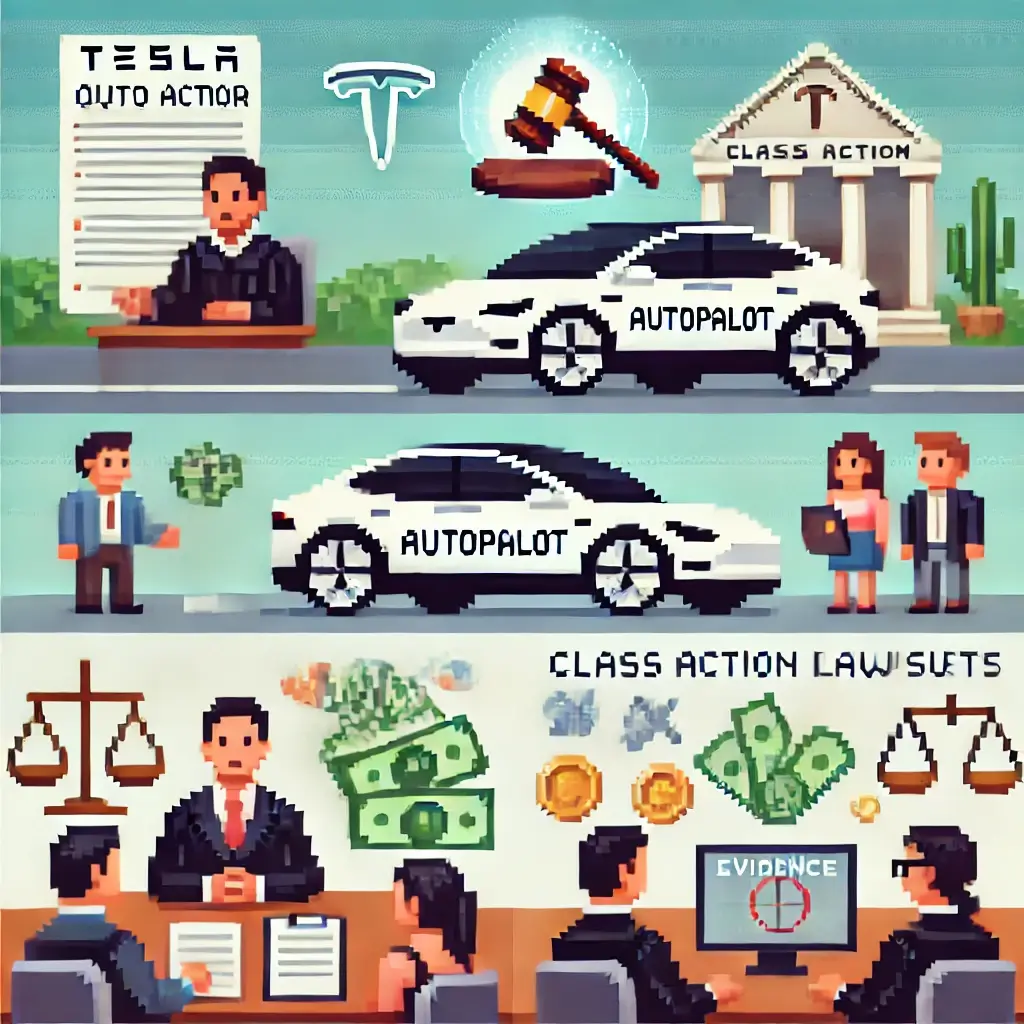
Tesla autopilot class action lawsuits: Infographic you can screenshot
Save or share this simple diagram if visuals help your brain breathe.
That’s the journey, with fewer tears than a season finale and more boxes than a moving day.
Tesla autopilot class action lawsuits: Big helpful dofollow buttons
Sometimes you want official sources without wandering the internet like a lost tourist.
Here are three trustworthy links in big friendly buttons you can actually click.
Federal Rules of Civil Procedure (Class Actions Live Here)
FTC: Refunds & Settlements Information
Tesla autopilot class action lawsuits: A short break for the lights to stay on
I’m including a single ad slot, tucked politely between sections, because coffee beans are not yet free and my editor says electricity is useful.
Thanks for your patience and for supporting independent, slightly dramatic blogging.
Tesla autopilot class action lawsuits: Beginner stories that make the law feel human
Picture Jamie, who loves tech but hates paperwork.
Jamie bought a car with driver-assistance because long commutes were draining life force like a vampire with a spreadsheet.
Jamie read the manual, mostly, and used the features as instructed, mostly, and still had a moment that felt wrong enough to write down.
Jamie joined a class action not because of revenge fantasies, but because groups move mountains more reliably than solo hikers with blisters.
Then there’s Sam, a skeptical engineer who believes in data and duct tape.
Sam saved logs, checked release notes, and made a tidy folder with the same gravity people reserve for baby albums.
When Sam talked to a lawyer, the conversation felt less like a monologue and more like a duet, because facts are duet instruments.
These are ordinary people, not cartoons, who want products to be clear and promises to be proportional to reality.
That’s not anti-innovation, it’s pro-human.
Tesla autopilot class action lawsuits: Intermediate checklists you can do in 30 minutes
Open your notes app and write “Vehicle Timeline.”
Under it, add purchase date, model and trim, features enabled, and the rough dates of software versions you remember using.
List any incidents, even minor ones, and tag them with location and weather, because context is the seasoning that makes facts edible.
Scan or photograph service paperwork, especially anything that mentions calibration, sensors, cameras, or driver-assistance testing.
Export or back up dashcam footage with filenames that include dates so you don’t play calendar detective later.
Write down any conversations with support and label them with ticket numbers like a happy librarian of your own life.
Finally, set calendar reminders for any court-issued deadlines that matter to your eligibility, because time zones and procrastination are sworn frenemies.
Tesla autopilot class action lawsuits: Expert frameworks for thinking clearly
If you wear the expert hat, consider this triangle of truth.
At the base lies product communication, including naming, UI cues, and marketing claims that shape user mental models.
On the second side is technical performance, measured not just by averages but by tail risks where human life intersects with edge cases.
On the third side is user behavior, which responds to communication and performance in a feedback loop engineers must anticipate without shaming the human on the loop.
Class actions ask whether those three sides formed a stable triangle or a wobbly tripod, and whether reasonable users were encouraged to behave predictably safe.
Map the evidence to each side and see whether the picture aligns or sings off-key.
Tesla autopilot class action lawsuits: Tiny details that matter more than you’d think
Were there road construction cones.
Did the lane lines fade like chalk in the rain.
Were you in bright sun or dusk, because cameras and eyeballs both get moody at dusk.
Did the system disengage with audible chimes or haptic nudges, and how did you respond.
Did you get a prompt that felt late or ambiguous.
Did your attention monitoring behave as expected or nag like a sitcom character.
These tiny details compound like interest, turning a fuzzy feeling into a sharp story the system can understand.
Tesla autopilot class action lawsuits: Communication, naming, and the “net impression” debate
Even if a manual shouts “This is driver assistance only,” a product name whispers in the other ear all day long.
UI design either harmonizes with the warning or undermines it with delight and convenience that suggest more than the law is ready to grant.
Courts ask whether an ordinary consumer would reasonably take away a certain impression, not whether a dozen engineers in a lab would decode the same message.
It’s not about blaming feelings but about whether the overall message delivered clarity or drama.
Tesla autopilot class action lawsuits: Humans are the variable and the reason
I sometimes wish humans were robots when writing about safety, and then I exhale and remember that humans are the point of all this.
We get bored, distracted, hopeful, anxious, and incredibly creative with our assumptions.
Designers who build for humans accept that beautiful mess and try to channel it toward safer outcomes.
Lawyers who argue for humans wrangle the same mess and try to make it legible in a courtroom without turning it into a lifeless spreadsheet.
We’re on the same side more often than the headlines suggest.
Tesla autopilot class action lawsuits: Warranty, updates, and expectations
Modern vehicles are phones on wheels with release notes that sometimes feel like fortune cookies.
Updates can improve behavior and also complicate expectations, because the feature you used last year is not the same animal this year.
Class claims often ask whether promises kept pace with updates, and whether users were nudged to recalibrate expectations or left to learn in the wild.
It’s not easy, and any blog that says it is has never tried to align hopes with probability at 65 miles per hour.
Tesla autopilot class action lawsuits: Safety data, anecdotes, and the fog of certainty
Humans crave a single number called “safe” and the universe replies with a thousand decimals and a shrug.
Anecdotes are compelling, but patterns are more honest, and both deserve a seat at the table when we talk about responsibility.
As features evolve, people want clarity about what’s improving and what’s still hard.
That’s fair, and it makes for better products and more grounded courtrooms.
Tesla autopilot class action lawsuits: Data and privacy when you file a claim
When you submit a claim or talk to counsel, you’ll share some data because none of us are psychic no matter how many crystals we buy.
Read notices and privacy policies like a hawk in glasses so you know how the information will be used and protected.
Ask if submissions are encrypted, who sees what, and whether sensitive data can be redacted or summarized without losing meaning.
Your safety includes your privacy, and a good process respects both.
Tesla autopilot class action lawsuits: Emotional self-care during legal slow-cookers
Waiting is a sport, and nobody told us the Olympics added it.
Set reminders, then put the case out of your daily brain unless something important changes.
Talk to friends who won’t fan the drama flames but also won’t minimize your experience.
Touch grass, eat food, and remember that your value is not measured in court dockets.
Do Something Now: Clickable Tools for Class-Action Readiness
These buttons actually work—download templates, set reminders, copy emails, and export your claim packet. No dead ends.
VIN Privacy Masker
Paste your VIN to mask everything except the last 5 characters when sharing screenshots.
Deadline Countdown + Calendar Link
Select your claim deadline to start a live countdown and generate a Google Calendar link.
30-Minute Evidence Sprint
Hit start, gather documents for 30 minutes, then export your notes.
Build Your Claim Packet (Export as JSON)
Fill the essentials and click “Export Claim Packet.” You’ll get a JSON file you can keep with your documents.
5-Task Checklist (Saved Automatically)
Your progress auto-saves to this browser.
Educational tools only. Use official notices and portals for any actual claim.
FAQ
Q1. Are Tesla autopilot class action lawsuits the same as accident lawsuits.
A1. Not necessarily, because class actions focus on shared issues like disclosures or features, while accident cases deal with specific injuries, causation, and damages unique to a person or event.
Q2. If I get a postcard or email about a settlement, is it a scam.
A2. Many notices are legitimate, but always verify by checking the official settlement website listed on the notice and, if needed, the court’s docket information linked there.
Q3. Do I need a lawyer to submit a basic claim.
A3. Usually no, because claims portals are designed for consumers, but if your situation involves injuries or complex losses, personal legal advice can help.
Q4. Will participating hurt my warranty or get me on a list.
A4. Class participation is a legal right, not a naughty list, and settlements typically include non-retaliation concepts, but read the paperwork and ask questions if you’re worried.
Q5. How long does this take, in human years.
A5. Longer than you want and shorter than the heat death of the universe.
A5. Jokes aside, think in quarters and years, not days and weeks, because courts are meticulous for a reason.
Q6. What’s the difference between Autopilot, Enhanced Autopilot, and Full Self-Driving in these cases.
A6. The labels matter because features and expectations differ, and a case may focus on how each was described and what users reasonably understood at the time.
Q7. Can a settlement force software changes.
A7. Sometimes settlements include program or disclosure changes, training updates, or clarity in prompts, which can be more valuable than cash if they prevent future harm.
Q8. Is arbitration the end of a class action dream.
A8. Not always, because the scope of arbitration and the type of relief sought can affect whether claims proceed as a class or in another format.
Tesla autopilot class action lawsuits: Conclusion and a tiny shove toward action
If you’re still here, you’re my kind of person, which is to say slightly obsessive in a way that builds safer worlds.
Maybe I’m wrong, but I think the internet deserves fewer hot takes and more warm guidance, and that’s what I tried to give you.
You don’t have to pick a side between progress and accountability, because the grown-up answer is both, held together with duct tape made of empathy and documents.
Make your folder.
Write your timeline.
Read notices with a calm heart and a curious mind.
If you need a professional, ask one, and if you just need a snack, get two because future-you will forget.
And if your gut says “I want safer roads and clearer promises,” that’s not naive, that’s leadership from the driver’s seat.
Now exhale, pour a glass of water, and take one small step today, even if it’s just saving a PDF with a sensible name.
Your future self will send a thank-you note in the form of fewer headaches.
You know what I mean.
Disclaimer. This article offers general information and opinions, not legal advice, and reading it does not create an attorney–client relationship with anyone, including my houseplants.
Consult a qualified attorney for guidance on your specific situation, because your facts, your jurisdiction, and your goals matter more than any blog’s charisma.
Keywords.
Tesla autopilot class action lawsuits, Autopilot litigation guide, Driver-assistance legal insights, Class action settlement process, Consumer protection and ADAS
🔗 High-Risk EV Insurance Premiums 2025 Posted 2025-08-24 21:41 UTC 🔗 Tesla Accident Liability Insurance 2025 Posted 2025-08-23 13:22 UTC 🔗 EV Drag Racing Posted 2025-08-22 06:31 UTC 🔗 Tesla Urban Ecosystems Data Traffic Posted 2025-08-21 08:05 UTC 🔗 Weather Range Drop Posted 2025-08-21