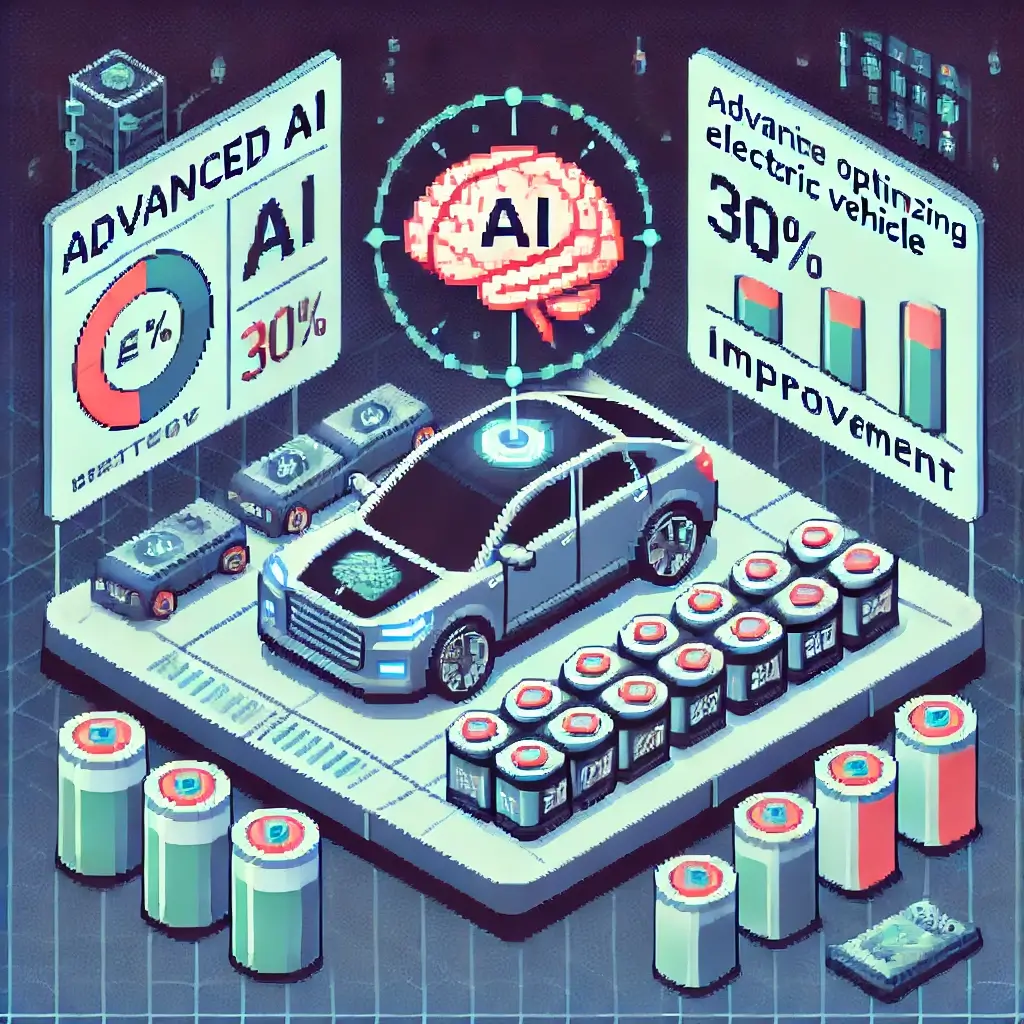
Unleash 30% More Range: How AI and Machine Learning Are Revolutionizing EV Battery Life!
Hey there, fellow EV enthusiasts and curious minds!
Have you ever wondered what truly limits the electric dream?
It’s the battery, right?
That miraculous power source that drives our silent, emission-free rides.
But let’s be honest, battery life, range anxiety, and degradation are still the elephants in the garage.
What if I told you that the very brains of our digital age—Artificial Intelligence (AI) and Machine Learning (ML)—are already quietly working behind the scenes, not just to make these batteries better, but to make them last significantly longer?
And not just a little bit, but we’re talking about extending their useful life by potentially 30% or more!
It’s like finding a secret supercharger that’s always with you.
For years, battery technology has been a bottleneck, a stubborn hill to climb in the EV revolution.
We’ve seen incremental improvements, sure, but the game-changer isn’t just in new materials or chemistry anymore.
It’s in the smart, predictive power of AI and Machine Learning, transforming how we understand, manage, and even design EV batteries.
It’s no longer just about building a better battery; it’s about making our existing batteries smarter and more resilient.
Imagine your EV battery as a living organism, constantly aging, constantly reacting to its environment and how you treat it.
Just like we monitor our own health, these advanced systems are tirelessly collecting data, learning patterns, and making real-time decisions to keep your battery in its prime.
It’s like having a personal battery longevity coach, always on duty, ensuring you get the most out of every single kilowatt-hour.
This isn’t science fiction; it’s happening right now, and it’s set to profoundly change the EV landscape.
So, buckle up, because we’re about to take a deep dive into how AI and Machine Learning are not just optimizing EV battery life, but absolutely revolutionizing it.
We’ll uncover the secrets behind this intelligent revolution, from predicting degradation to optimizing charging, and even discovering new battery materials.
You might just find yourself looking at your EV, or your future EV, with a whole new appreciation for the hidden intelligence under its hood.
Let’s roll! —
Table of Contents
—
Introduction: The Battery Conundrum and the AI Promise
Let’s face it: for all the electric vehicle’s marvels—the instant torque, the silent glide, the zero tailpipe emissions—the battery remains the centerpiece of both awe and anxiety.
It’s the heart of the EV, but like any heart, it’s susceptible to wear and tear.
Battery degradation isn’t just a technical term; it’s the gradual decline in a battery’s capacity and performance over time, leading to less range and slower charging.
It’s the silent thief of your EV’s youth.
Think about your smartphone battery.
Remember how it used to last all day when it was new, and now, after a couple of years, you’re constantly scrambling for a charger?
EV batteries, while far more sophisticated, face similar challenges, albeit on a much larger and more critical scale.
The stakes are higher when you’re talking about a vehicle that costs tens of thousands of dollars and needs to reliably take you hundreds of miles.
For decades, engineers have been pushing the limits of electrochemistry to squeeze more energy into smaller, lighter packs.
But there’s a limit to what traditional material science alone can achieve.
That’s where Artificial Intelligence (AI) and Machine Learning (ML) stride onto the stage, not as mere supporting acts, but as the new protagonists in the battery saga.
These technologies offer a paradigm shift, moving us from reactive battery management to proactive, predictive optimization.
Imagine a world where your EV battery doesn’t just age gracefully, but intelligently.
Where it anticipates its own wear, adjusts its charging habits, and even cools itself precisely when needed, all to extend its vibrant, youthful life.
This isn’t a distant dream; it’s the reality AI and ML are building right now.
By harnessing vast amounts of data from millions of miles driven and charging cycles completed, these smart systems can discern patterns, identify risks, and recommend actions that human engineers simply couldn’t process at scale.
It’s like moving from a doctor who only treats symptoms to one who can predict illnesses years in advance based on your daily habits and genetic predispositions.
This isn’t just about making batteries last longer for the sake of it; it’s about making EVs more accessible, more reliable, and ultimately, more sustainable for everyone.
It’s about pushing the boundaries of what electric transportation can achieve, ensuring that every mile driven is as efficient and long-lasting as possible.
This is the promise of AI in the world of EV batteries, and it’s a promise that’s already delivering exciting results.
Battery degradation, EV range, AI, Machine Learning, Electric Vehicles —
Understanding Battery Degradation: The Silent Killer of Range
Before we dive into how AI and ML are solving the battery dilemma, let’s get a clear picture of what we’re up against: battery degradation.
It’s a complex beast, but understanding its mechanisms is key to appreciating the brilliance of the AI solutions.
At its core, battery degradation is the irreversible loss of charge capacity and power capability over time and use.
It’s not like running out of gas; it’s more like your fuel tank slowly shrinking with every refill.
So, what causes this insidious shrinking?
There are a few primary culprits, often working in concert:
- Calendar Aging: This is the natural aging process, even if the battery just sits there, like a car slowly rusting in a garage. It’s influenced by temperature and the battery’s state of charge (SoC). Keeping a battery at very high (e.g., 100%) or very low (e.g., 0%) SoC for extended periods can accelerate this type of degradation.
- Cycle Aging: Every time you charge and discharge a battery, it undergoes microscopic changes within its electrochemical structure. Think of it like bending a paperclip repeatedly; eventually, it weakens and breaks. Over thousands of cycles, these changes accumulate, leading to a loss of active material and increased internal resistance.
- High Temperatures: Heat is the arch-nemesis of lithium-ion batteries. Elevated temperatures accelerate chemical reactions that lead to degradation, such as the growth of the Solid Electrolyte Interphase (SEI) layer on the anode, which consumes lithium ions and impedes ion flow. This is why proper thermal management is crucial.
- High Charging/Discharging Rates: Pushing a battery too hard, either by rapid charging (DC fast charging) or aggressive driving (rapid acceleration/deceleration), can generate excessive heat and mechanical stress on the battery’s components, leading to faster degradation.
- State of Charge Extremes: As mentioned with calendar aging, consistently charging to 100% and discharging to near 0% puts significant stress on the battery’s electrodes, leading to cracking, delamination, and loss of lithium. The sweet spot for longevity is often considered to be between 20% and 80% SoC.
It’s not just one thing; it’s a complex interplay of these factors.
And here’s the kicker: every battery is slightly different, and every driver’s habits are unique.
This makes predicting and mitigating degradation a monumental task for traditional battery management systems (BMS), which often rely on pre-programmed rules and limited real-time adaptability.
It’s like trying to manage a bustling city with only a few traffic lights and no real-time traffic data.
You can do it, but it’s far from optimal.
This is precisely where AI and ML step in.
They bring the ability to process unimaginable volumes of data—from individual cell voltages and temperatures to charging histories and driving styles—and identify subtle patterns that betray the early signs of degradation.
They can differentiate between normal wear and tear and accelerated damage, allowing for tailored interventions that can significantly extend the battery’s useful life.
Without understanding this complex challenge, the elegance and power of the AI solutions would be lost.
But now that we grasp the enemy, let’s see how AI is truly a game-changer in this fight.
Battery degradation, Lithium-ion batteries, EV maintenance, Charging cycles, Battery health —
AI’s Crystal Ball: Predicting Battery Health and Lifespan
Imagine if your EV could tell you, with incredible accuracy, exactly how much longer its battery would perform optimally, or even warn you about potential issues long before they become problems.
That’s not a fantasy; it’s the power of AI-driven predictive analytics in action for EV batteries.
Gone are the days of simply looking at a static “state of health” percentage that tells you little about the future.
AI gives us a crystal ball, peering into the battery’s future based on its past and present.
So, how does this magic happen?
It all starts with data—mountains of it!
Modern EVs are essentially data centers on wheels, constantly collecting information from hundreds of sensors within the battery pack.
This includes individual cell voltages, temperatures, current flows, charging and discharging rates, ambient conditions, driving patterns (aggressive acceleration, regenerative braking), and even geographical data.
This raw data is the fuel for AI algorithms.
Machine Learning models, particularly deep learning neural networks, are then trained on this massive dataset.
They learn to identify intricate, non-linear relationships and subtle patterns that are invisible to the human eye or traditional mathematical models.
For example, an ML model might discover that a specific combination of high ambient temperature, frequent DC fast charging, and a particular driving style leads to an accelerated degradation rate in a certain battery chemistry.
It’s like a master detective identifying a unique fingerprint from millions of possibilities.
Here’s a glimpse into what AI’s crystal ball can reveal:
- Accurate State of Health (SoH) Estimation: Beyond simple voltage readings, AI can provide a much more nuanced and accurate SoH by considering a multitude of factors and comparing it against vast datasets of healthy and degraded batteries. This means less uncertainty about your battery’s true capacity.
- Remaining Useful Life (RUL) Prediction: This is where the “crystal ball” really shines. Based on current and historical data, AI can predict how many more cycles or years your battery has left before it reaches a predefined end-of-life threshold (e.g., 80% of original capacity). This is invaluable for both owners planning for resale and manufacturers offering warranties.
- Early Anomaly Detection: AI models can spot subtle deviations from normal battery behavior that might indicate an impending fault or accelerated degradation, such as an odd temperature spike in a specific cell or an unexpected voltage drop. This allows for proactive maintenance, preventing minor issues from escalating into major, costly repairs.
- Personalized Degradation Models: Because AI learns from individual driving and charging habits, it can create a personalized degradation model for each specific vehicle. This means the advice you get is tailored to YOU and YOUR EV, not just a generic average.
This predictive power isn’t just for car owners; it’s a goldmine for manufacturers and fleet operators.
Imagine being able to optimize warranty policies, forecast demand for replacement batteries, or even implement over-the-air software updates to mitigate potential degradation factors in specific vehicle batches.
It’s transforming battery management from a guessing game into a highly informed, data-driven science.
The ability of AI to foresee the future of your EV battery is truly a game-changer, giving drivers peace of mind and significantly extending the lifespan of these vital components.
Predictive analytics, Battery health, AI in EVs, Remaining useful life, Data analysis —
ML’s Masterpiece: Intelligent Charging for Maximum Longevity
If you ask any battery expert about the single most impactful factor for battery longevity, beyond temperature, it’s often how you charge it.
And this is precisely where Machine Learning steps in to create a masterpiece of optimization: intelligent charging.
Forget the old “just plug it in” mentality.
ML-powered charging isn’t just about filling up the electrons; it’s about doing it in the smartest, most gentle way possible to preserve your battery’s health for years to come.
Traditional charging systems follow fixed, pre-programmed algorithms.
They don’t know if it’s scorching hot outside, if you just drove 200 miles, or if you only need 30 miles of range for your morning commute.
They just push electrons according to a generic curve.
But ML changes everything by making charging dynamic, adaptive, and highly personalized.
Here’s how ML conducts its intelligent charging symphony:
- Adaptive Charging Profiles: Instead of a one-size-fits-all approach, ML algorithms analyze a multitude of factors in real-time:
- Battery State of Health (SoH): A newer battery might handle faster charging more gracefully than an older, slightly degraded one.
- Current Battery Temperature: Charging a cold battery too fast can cause lithium plating, while charging a hot battery accelerates degradation. ML adjusts the charge rate to maintain an optimal temperature window.
- Ambient Temperature: The outside weather significantly impacts internal battery temperatures, and ML accounts for this.
- User Driving Habits and Needs: Do you routinely drive short distances? Or do you often embark on long road trips? ML can learn your patterns. If you typically only drive 30 miles a day, it might recommend charging only to 80% overnight, even if you set a 100% target, knowing that a full charge isn’t necessary and is harder on the battery.
- Time of Day and Grid Conditions: Some systems even integrate with smart home energy management, optimizing charging for off-peak electricity rates or when renewable energy is abundant.
- Optimized Charging Speeds and End Points: ML can recommend, and in some cases automatically implement, ideal charging speeds. For instance, it might reduce the charging rate slightly as the battery approaches full, mitigating stress on the cells. It can also suggest charging to an optimal percentage (e.g., 80% or 90%) for daily use, reserving 100% for longer trips, knowing that consistently topping off to 100% can accelerate degradation.
- Smart Pre-conditioning: Before a fast-charging session, ML can trigger the battery’s thermal management system to pre-condition the battery to an optimal temperature. This ensures maximum charging speed and efficiency while minimizing stress and potential damage. Think of it as warming up before a sprint.
- Avoiding “Bad” Habits: If you consistently leave your car plugged in at 100% for days, or if you regularly deplete it to near 0%, the ML system can detect these patterns and provide gentle reminders or even slightly adjust the charging behavior to mitigate the negative effects. It’s like a gentle nudge from your car, saying, “Hey, maybe let’s not push it quite so hard tonight.”
This isn’t about preventing you from using your EV how you want; it’s about empowering you with the knowledge and automation to make your battery last as long as possible, delivering consistent performance for years.
It’s about making charging a proactive, health-conscious process, rather than a mere transactional one.
The result?
A battery that maintains its capacity much longer, leading to sustained range and performance, and ultimately, a happier EV owner.
This level of intelligent charging is truly a masterpiece of Machine Learning, safeguarding the longevity of your most valuable EV component.
Charging optimization, EV charging, Machine Learning, Battery longevity, Smart charging —
Keeping Cool: AI-Powered Thermal Management
Remember how I mentioned that heat is the arch-nemesis of lithium-ion batteries?
It’s not an exaggeration.
Every degree above the optimal operating temperature can shave off precious cycles from your battery’s life.
This is where AI-powered thermal management swoops in, acting like a super-smart climate control system specifically designed for your EV battery.
It’s about maintaining that “Goldilocks” zone—not too hot, not too cold, but just right.
Traditional battery thermal management systems (BTMS) often rely on pre-set thresholds and reactive cooling or heating.
They might kick in the cooling system when the battery hits a certain temperature, or heat it up if it’s too cold for optimal charging.
While effective to a degree, this approach can be inefficient and sometimes react too late to prevent stress.
AI, however, elevates thermal management from reactive to predictive and adaptive.
Here’s how AI ensures your EV battery keeps its cool (and stays warm when needed):
- Predictive Cooling/Heating: Instead of waiting for the battery to get too hot, AI anticipates it. Based on your navigation route, driving style, external temperature, and even upcoming charging sessions, the AI can predict when and where the battery is likely to experience thermal stress.
- Planning a long, fast drive up a mountain pass? The AI might proactively start cooling the battery before you even begin the ascent.
- Heading towards a DC fast charger on a cold winter day? The system can pre-heat the battery to its optimal charging temperature, ensuring faster and safer charging from the moment you plug in. This isn’t just about speed; it significantly reduces the stress of charging a cold battery.
- Granular Temperature Control: EV battery packs are composed of hundreds, sometimes thousands, of individual cells. Temperature variations across these cells can lead to uneven degradation, where some cells degrade faster than others, limiting the overall pack’s performance.
- AI, leveraging data from countless temperature sensors within the pack, can identify these hotspots and cold spots. It can then direct cooling or heating precisely where it’s needed most, rather than just cooling the entire pack uniformly. Think of it like having individual thermostats for every room in a house, rather than just one central one.
- Optimized Component Usage: The BTMS itself consumes energy. AI algorithms can optimize the use of pumps, fans, and refrigeration units to cool or heat the battery only as much as necessary, thereby conserving energy and maximizing the vehicle’s range. It’s about doing more with less, intelligently.
- Learning from Experience: Over time, the AI system learns how your specific driving habits and local climate impact your battery’s thermal profile. It adapts and refines its thermal management strategies, becoming even more efficient and effective at maintaining optimal temperatures uniquely for your vehicle.
This intelligent thermal management is a silent guardian, tirelessly working to shield your battery from its biggest enemy—heat.
By preventing excessive temperatures and maintaining optimal conditions, AI dramatically slows down the rate of degradation, ensuring your EV battery stays robust and reliable for a longer, more productive life.
It’s not just a cool feature; it’s essential for extending the life and performance of your EV’s most critical component.
Thermal management, Battery cooling, AI, EV performance, Heat protection —
Beyond Management: AI in Battery Design and Material Discovery
So far, we’ve talked about how AI and ML optimize the *management* of existing EV batteries, making them last longer through intelligent charging, prediction, and thermal control.
But the story doesn’t end there.
The true frontier where AI is making monumental strides is in the very *design* and *discovery* of the next generation of battery materials and architectures.
This is where AI transforms from a helpful assistant into a groundbreaking scientist, accelerating innovation at a pace previously unimaginable.
Imagine traditional battery research: a chemist in a lab, meticulously synthesizing new compounds, testing them in small cells, then scaling up—a slow, painstaking process often taking years, even decades, to bring a new material from concept to commercialization.
It’s like searching for a needle in a colossal haystack, one straw at a time.
AI and Machine Learning change the game entirely.
Here’s how AI is revolutionizing battery design and discovery:
- Accelerated Material Discovery: AI algorithms can sift through vast databases of chemical compounds and predict their properties—energy density, power output, stability, degradation pathways—before they are even synthesized in a lab.
- This process, known as “materials informatics,” uses ML to learn the relationships between a material’s atomic structure and its electrochemical performance. It can then suggest novel combinations or modifications that are most likely to yield superior battery characteristics.
- Instead of random trial and error, AI guides researchers directly to the most promising candidates, saving immense time and resources.
- One fantastic example is Google’s DeepMind using AI to discover new stable inorganic compounds, which could include materials for batteries. Discover New Materials with AI (DeepMind)
- Optimizing Battery Cell Design: It’s not just about the materials; it’s also about how they’re put together. AI can simulate countless battery cell designs, electrode thicknesses, separator compositions, and electrolyte formulations to find the optimal configuration for a given application (e.g., high energy density for long-range, high power for fast charging).
- This includes optimizing internal structures to minimize resistance, improve ion flow, and reduce stress points that lead to degradation.
- Predicting Degradation in New Chemistries: Before a new battery chemistry even sees the light of day in a real vehicle, AI can predict its likely degradation pathways and rates under various operating conditions. This allows researchers to fine-tune materials and designs to proactively mitigate these issues, rather than discovering them years later in real-world testing.
- “Digital Twins” for Virtual Testing: AI enables the creation of highly accurate “digital twins” of battery cells and packs. These virtual replicas can be subjected to extreme stress tests and accelerated aging simulations in a fraction of the time and cost it would take with physical prototypes. This allows for rapid iteration and validation of new designs.
This proactive application of AI to battery R&D is nothing short of revolutionary.
It’s accelerating the pace of discovery, allowing us to move beyond incremental improvements to truly transformative breakthroughs.
We’re talking about batteries that are not only more energy-dense and powerful but also inherently more stable and longer-lasting from their very inception, thanks to the guiding hand of AI.
This is the future of battery technology, being shaped by algorithms and data, and it’s incredibly exciting to watch unfold.
Battery design, Material discovery, AI in R&D, Electrochemical properties, Digital twins —
The Road Ahead: Challenges and the Future of AI in EV Batteries
Alright, so we’ve painted a pretty rosy picture of AI’s role in supercharging EV battery life, and for good reason—it’s truly transformative!
But like any cutting-edge technology, it’s not without its bumps in the road.
Understanding these challenges is just as important as celebrating the successes, as they define the next frontiers of innovation.
Here are some of the key hurdles and exciting prospects for AI in EV batteries:
- Data Quality and Volume: AI thrives on data, but it needs *good* data—clean, consistent, and comprehensive. Collecting vast amounts of high-fidelity data from millions of vehicles, ensuring its accuracy, and effectively labeling it for ML algorithms is a colossal task. Furthermore, data privacy and security concerns must be rigorously addressed.
- Interpretability and Trust: Sometimes, advanced AI models, particularly deep learning networks, can be “black boxes.” They provide accurate predictions, but understanding *why* they made a certain prediction can be difficult. For safety-critical applications like EV batteries, engineers need to trust and interpret the AI’s reasoning, especially when making decisions about warranty, maintenance, or potential safety issues. This is an active area of research—making AI more “explainable.”
- Computational Resources: Training and deploying sophisticated AI models that process real-time data from hundreds of sensors across a global fleet require immense computational power. This means significant investment in cloud infrastructure and edge computing capabilities within the vehicles themselves.
- Standardization: As different manufacturers adopt their own AI-driven battery management strategies, there’s a need for some level of industry standardization to ensure interoperability, reliable data exchange, and consistent performance metrics.
- Regulatory Landscape: The rapid evolution of AI in autonomous systems and critical components like batteries will inevitably lead to new regulatory frameworks. Navigating these while fostering innovation will be crucial.
The Exciting Future: What’s Next?
Despite these challenges, the trajectory for AI in EV batteries is unequivocally upwards.
Here’s what we can look forward to:
- AI-Powered Second-Life Batteries: AI will play a critical role in evaluating and repurposing EV batteries for stationary energy storage applications (e.g., home power backup, grid stabilization) after they’ve finished their automotive life. AI can accurately assess the remaining capacity and degradation of individual packs, making the second-life market more viable and sustainable. Check out how companies like Redwood Materials are tackling battery recycling and repurposing: Redwood Materials (Battery Recycling)
- Self-Healing Batteries (with AI’s help): While true “self-healing” batteries are still a ways off, AI could contribute to systems that identify micro-cracks or localized degradation early and initiate mild self-repair mechanisms, such as localized temperature adjustments or minor chemical interventions.
- Closer Integration with Grid Management: EVs can become massive distributed energy storage units. AI will enable sophisticated Vehicle-to-Grid (V2G) and Vehicle-to-Home (V2H) functionalities, allowing EVs to intelligently buy and sell power to the grid or power your home, all while prioritizing battery health.
- Hyper-Personalized Battery Management: Imagine your car knowing you always commute exactly 40 miles and recommending the optimal charge level for *your* specific journey, factoring in traffic, weather, and even your driving style that day. The level of personalization will only increase.
The road ahead for AI in EV batteries is not just about overcoming technical hurdles; it’s about continuously learning, adapting, and integrating these intelligent systems more seamlessly into the entire EV ecosystem.
The goal is a future where battery degradation is not a major concern, and EV range anxiety becomes a relic of the past.
And with AI leading the charge (pun intended!), that future looks brighter than ever.
AI challenges, Battery future, Data quality, Explainable AI, V2G —
Real-World Impact: How This Changes Your EV Experience
Okay, so we’ve delved deep into the technical wizardry of AI and ML in EV batteries.
But what does all this really mean for *you*, the EV owner, or the prospective EV buyer?
How does this tech translate into a tangible, improved experience?
The real-world impact is profound, changing everything from your daily commute to the long-term value of your investment.
Let’s break it down:
- Extended Range and Peace of Mind: This is perhaps the most immediate and exciting benefit. By mitigating degradation and optimizing every aspect of battery use, AI ensures your battery maintains its capacity for much longer. This directly translates to more range, day after day, year after year. That gnawing range anxiety? It becomes a distant memory when you know your battery is being meticulously cared for. It’s like your car actively trying to keep its youth, so you can keep exploring without a worry.
- Higher Resale Value: A battery that has degraded minimally holds significantly more value. When it comes time to sell or trade in your EV, a healthier battery means a stronger negotiating position and a better return on your investment. AI-optimized batteries are essentially a future-proofing mechanism for your vehicle’s value. This is a big one, as battery degradation has historically been a concern for used EV markets.
- Reduced Maintenance Costs: By predicting and preventing issues, AI can significantly reduce the need for costly battery repairs or even replacements. Early detection of anomalies means smaller, more manageable interventions, saving you money and inconvenience down the line. It’s like predictive maintenance on steroids, keeping your wallet happier and your car on the road.
- Faster and Safer Charging: With intelligent pre-conditioning and adaptive charging rates, AI ensures that your fast-charging sessions are not only quicker but also less detrimental to battery health. You get the speed you need without the hidden cost of accelerated degradation. This is crucial for making long-distance EV travel more seamless and less stressful.
- More Sustainable Transportation: By extending the lifespan of EV batteries, AI contributes directly to environmental sustainability. Longer-lasting batteries mean fewer resources are needed for replacements and less waste generated, reinforcing the eco-friendly mission of electric vehicles. It’s a win for your car, your wallet, and the planet.
- Improved User Experience: Imagine an app that not only tells you your current range but also provides personalized charging recommendations based on your next trip, the weather, and even the health of specific cells. This level of intelligent, proactive guidance makes owning an EV even more intuitive and enjoyable. Tesla, for instance, uses a sophisticated battery management system that learns and adapts to extend battery life. You can learn more about their approach to battery technology here: Tesla Battery Care Information
In essence, AI and ML are turning the EV battery from a potential point of anxiety into a core strength, a reliable and intelligent component that actively works to serve you better for longer.
It’s about making the EV ownership experience not just sustainable and thrilling, but also incredibly practical and economically sound.
The future of EV batteries, powered by AI, is not just brighter; it’s lasting longer and performing better than ever before.
EV experience, Resale value, Maintenance costs, Sustainable transport, User experience —
Conclusion: The Dawn of the Perpetually Powerful EV Battery
Well, folks, we’ve journeyed through the intricate world of EV batteries and seen how Artificial Intelligence and Machine Learning are not just tinkering around the edges but fundamentally transforming their very existence.
From the subtle dance of electron flow to the grand scale of global energy grids, AI is proving to be the silent hero behind the longevity and performance of our electric vehicles.
It’s truly ushering in the dawn of the perpetually powerful EV battery.
We started with the challenge: battery degradation, that invisible force that slowly saps your EV’s vitality.
We then unpacked how AI’s predictive analytics acts as a crystal ball, foreseeing the future of your battery’s health, alerting you to potential issues before they become headaches.
Then, we admired ML’s masterpiece in intelligent charging, adapting to your habits and the environment, ensuring every charge is a gentle, health-conscious boost rather than a brute-force fill-up.
We saw how AI-powered thermal management keeps your battery in its optimal “Goldilocks” zone, shielding it from the ravages of extreme temperatures.
And perhaps most excitingly, we looked beyond mere management to how AI is accelerating the very discovery and design of next-generation battery materials, paving the way for inherently better, longer-lasting power sources.
The impact of these innovations isn’t just academic; it’s tangible.
It means more range for your daily drives, greater peace of mind knowing your investment is protected, higher resale values, and fewer costly repairs.
It means faster, safer charging sessions and a more sustainable overall transportation ecosystem.
The EV you drive today, or the one you’ll drive tomorrow, is increasingly powered not just by lithium ions, but by intelligent algorithms working tirelessly to maximize every single joule.
So, the next time you silently glide past a gas station, take a moment to appreciate the invisible intelligence under your floorboards.
The AI and Machine Learning systems are working hard, making sure your EV battery isn’t just good for the environment, but also incredibly reliable, efficient, and long-lasting for you.
The future of electric mobility isn’t just bright; it’s intelligently powered, and it’s lasting longer than ever before.
This is the true revolution—a sustainable future, one smart battery at a time.
EV battery life, AI optimization, Machine Learning, Electric Vehicles, Future mobility