Tesla’s Gigafactories: Unlocking 5X Growth & Insane Investment Returns!
Alright, buckle up, because we’re about to take a deep dive into something truly revolutionary: Tesla’s Gigafactories.
Forget everything you thought you knew about traditional car manufacturing plants. These aren’t your grandpa’s assembly lines.
We’re talking about colossal hubs of innovation, efficiency, and sheer audacity that are fundamentally reshaping the automotive and energy landscapes.
As someone who’s spent years dissecting supply chains and sniffing out game-changing investment opportunities, I can tell you, Tesla’s approach is unlike anything else out there.
It’s not just about building cars; it’s about vertically integrating, innovating at warp speed, and, frankly, having the guts to rewrite the rulebook.
If you’re an investor looking for where the future is being built, or just a curious mind wondering how Tesla does what it does, you’re in the right place.
Let’s peel back the layers and see what makes these Gigafactories tick, and why they represent such a compelling opportunity.
Trust me, by the end of this, you’ll have a whole new appreciation for what Tesla is achieving. —
Table of Contents
—
The Genesis of the Gigafactory: A Manufacturing Marvel Unleashed
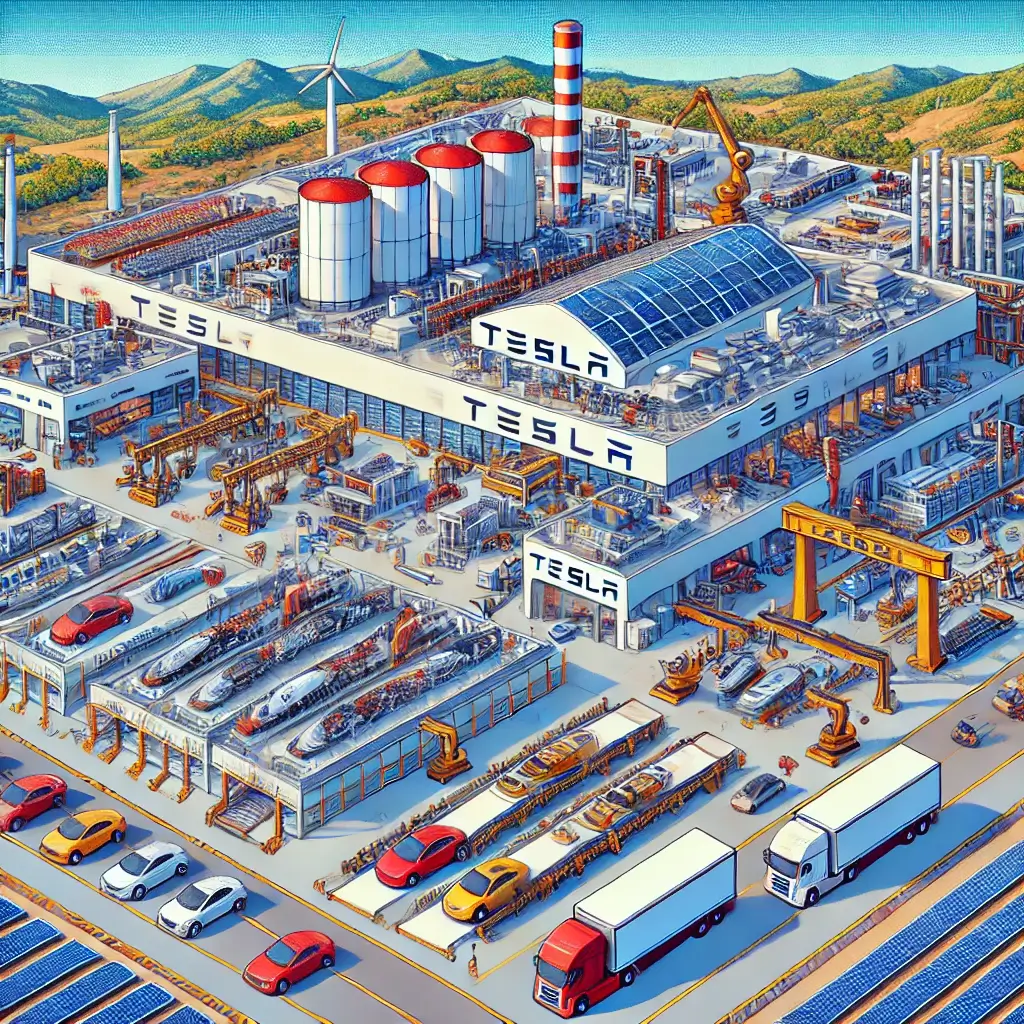
Imagine a factory so vast, it could swallow several traditional manufacturing plants whole. That’s a Gigafactory for you.
The very concept was born out of necessity. When Elon Musk envisioned scaling electric vehicle production to millions of units annually, he quickly realized that conventional supply chains and manufacturing processes simply wouldn’t cut it.
He needed something radically different, something that could integrate every single step of the production process under one massive roof – from raw materials to finished vehicles and even batteries.
This wasn’t just about efficiency; it was about control, speed, and ultimately, cost reduction.
The first true “Gigafactory” was Gigafactory 1 in Nevada, primarily focused on battery production in partnership with Panasonic.
It was a bold, unprecedented move.
Before that, battery manufacturing was largely fragmented, with components sourced from various suppliers globally.
By bringing it in-house, Tesla aimed to dramatically reduce battery costs – the single most expensive component in an EV – and accelerate production.
The lessons learned from Giga Nevada became the blueprint for subsequent Gigafactories in Shanghai, Berlin, and Texas.
Each new Gigafactory isn’t just a copy-paste; it’s an evolution, incorporating new innovations, learnings, and efficiencies.
For instance, Gigafactory Shanghai was famously built at breakneck speed, demonstrating Tesla’s ability to execute large-scale projects with incredible agility.
Gigafactory Berlin and Texas introduced revolutionary “Giga Press” machines, fundamentally changing how car bodies are cast, reducing complexity, cost, and weight.
It’s like watching an athlete constantly break their own records – each iteration is stronger, faster, and more refined.
The sheer scale and ambition of these facilities are mind-boggling, and they represent a core competitive advantage for Tesla.
They are not just factories; they are ecosystems designed for rapid iteration and massive scalability. —
Unpacking the Supply Chain Secrets: How Tesla Rewrote the Rules
The traditional automotive supply chain is a tangled web of Tier 1, 2, and 3 suppliers, each providing specialized components, often spread across continents.
It’s robust, but it’s also slow, costly, and highly vulnerable to disruptions (we all saw what happened during the chip shortage, right?).
Tesla, with its Gigafactory strategy, fundamentally disrupted this model.
Their secret sauce? Aggressive vertical integration and localization.
Instead of relying on an extensive network of external suppliers for everything, Tesla brings more and more of the manufacturing process in-house.
Think about it: they design their own chips, make their own seats, produce their own battery cells (or at least a significant portion), and even manage much of their own logistics.
This isn’t just a little bit of integration; it’s a deep, strategic dive into controlling every step possible.
For example, at Gigafactory Texas, they’re not just assembling cars; they’re aiming to produce 4680 battery cells, cast enormous single-piece front and rear underbodies using the Giga Press, and even paint in-house with incredibly advanced processes.
This level of control means several things:
Reduced Costs: Cutting out middlemen and optimizing processes leads to significant cost savings. Every dollar saved in production is a dollar that can be passed on to the customer or invested back into R&D.
Increased Speed and Agility: When you control more of your supply chain, you can react faster to changes, innovate more quickly, and scale production far more rapidly.
Enhanced Quality Control: Bringing more processes in-house allows Tesla to maintain tighter control over the quality of components, ensuring everything meets their stringent standards.
Resilience to Disruptions: While no company is entirely immune, a more integrated supply chain is inherently less susceptible to external shocks.
It’s a high-risk, high-reward strategy. It requires massive upfront investment and an incredible amount of engineering prowess.
But when it works, as it clearly has for Tesla, it creates an almost unassailable competitive moat.
Other automakers are now scrambling to emulate parts of Tesla’s strategy, but they’re playing catch-up.
It’s like trying to build a modern skyscraper with 19th-century tools while someone else is already using robots and 3D printers. —
Vertical Integration on Steroids: Beyond Just Cars
When we talk about vertical integration at Tesla, it’s not just about building cars.
It’s about building an entire sustainable energy ecosystem.
This is where the vision truly broadens and where the long-term investment opportunity really shines.
Think about it: Tesla isn’t just selling you a car. They’re selling you:
The Vehicle: From design to final assembly, increasingly done in-house.
The Battery: The heart of the EV, with significant in-house R&D and production efforts (e.g., 4680 cells).
Charging Infrastructure: The Supercharger network, a proprietary and vast charging ecosystem that makes owning a Tesla incredibly convenient.
Software: Over-the-air updates, Full Self-Driving (FSD) development, and an integrated infotainment system that sets them apart.
Energy Storage: Powerwall and Megapack batteries, built using similar battery technology and manufacturing expertise, bringing grid-scale and home energy storage solutions to market.
Solar: Solar roof tiles and solar panels, integrating renewable energy generation directly into homes and businesses.
This is where the “Gigafactory” name truly comes into its own, extending beyond just car manufacturing.
A Gigafactory isn’t just for Teslas; it’s also for Megapacks and Powerwalls.
The manufacturing capabilities developed for automotive batteries are directly transferable to stationary energy storage, creating massive economies of scale and cross-utilization of resources.
This comprehensive, integrated approach means that Tesla controls more of its destiny than almost any other company in its competitive set.
They aren’t beholden to external suppliers for critical components or services to the same degree as their rivals.
It’s like owning the entire farm, from planting the seeds to selling the produce at the market, rather than just buying ingredients from various vendors.
This allows for unparalleled innovation, speed, and cost control across multiple synergistic business units.
It’s a powerful feedback loop: battery innovations for cars benefit energy storage, and vice versa.
This isn’t just smart business; it’s a strategic masterstroke that positions Tesla not just as a car company, but as a dominant force in the entire clean energy transition. —
Location, Location, Location: Why Gigafactories Land Where They Do
Ever wonder why Tesla picked Nevada, Shanghai, Berlin, and Texas for its Gigafactories?
It’s not just a dart throw on a map, believe me.
Each location is a meticulously calculated move, reflecting a shrewd understanding of geopolitics, logistics, and market access.
Let’s break it down:
Gigafactory Nevada (Sparks, Nevada, USA): This was the OG. The vast, open spaces of Nevada offered ample room for expansion, critical for a factory of this scale.
Proximity to the Fremont vehicle assembly plant in California was also a factor, as the initial focus was battery production for those vehicles.
Favorable state incentives and a supportive regulatory environment sealed the deal.
Gigafactory Shanghai (Shanghai, China): This one was a game-changer.
Building a wholly-owned foreign factory in China was unprecedented for a foreign automaker, a testament to Tesla’s negotiating power and China’s desire for advanced manufacturing.
The location provided direct access to the world’s largest EV market, significantly reduced import tariffs, and established a critical export hub for Asia and Europe.
The speed of its construction was legendary, showcasing China’s infrastructure capabilities and Tesla’s aggressive timelines.
Gigafactory Berlin-Brandenburg (Grünheide, Germany): Located near Berlin, this factory was strategically chosen to serve the vast European market.
Germany’s renowned engineering talent, its central location in Europe, and proximity to major rail and road networks were key attractions.
Despite regulatory hurdles and environmental concerns (which Tesla navigated, albeit with some headaches), establishing a local production base was crucial to avoid import duties and reduce logistics costs for European sales.
Gigafactory Texas (Austin, Texas, USA): This facility is designed to be Tesla’s global headquarters and a colossal production hub for North America.
Texas offered a business-friendly environment, a central U.S. location for distribution, and a massive plot of land for future expansion.
It’s intended to produce Cybertrucks, Model Ys, and ultimately, 4680 battery cells, consolidating a significant portion of North American production and R&D.
The pattern here is clear: each Gigafactory is positioned to serve a major continental market, optimize logistics, mitigate tariffs, and tap into local talent pools and resources.
It’s a masterclass in global supply chain optimization, minimizing “miles traveled” for components and finished products, which not only saves money but also aligns with their environmental mission.
This strategic decentralization, combined with their centralized design and engineering, creates a powerful global manufacturing footprint. —
Technology at the Core: Robots, AI, and the Future of Production
Step inside a Gigafactory (or at least watch some of the amazing drone footage available online!), and you’ll quickly realize these aren’t your typical factories.
They are bleeding-edge technological marvels, packed with advanced robotics, AI, and sophisticated automation that would make a sci-fi author blush.
Tesla’s manufacturing philosophy is rooted in the belief that the “machine that builds the machine” is the ultimate product.
They are constantly iterating on their production processes, often more so than on the vehicles themselves.
Here are some of the key technological innovations:
Giga Press: This isn’t just a big machine; it’s a revolutionary manufacturing paradigm.
Instead of stamping and welding dozens or even hundreds of individual metal pieces to form a car’s underbody, the Giga Press casts enormous single pieces (like the front or rear frame) in a matter of seconds.
This dramatically reduces complexity, improves structural integrity, saves weight, and slashes production time and cost.
It’s a game-changer that other automakers are now desperately trying to replicate.
Advanced Robotics & Automation: From Kuka robots welding and moving components with incredible precision to automated guided vehicles (AGVs) transporting materials across the factory floor, automation is everywhere.
This not only increases efficiency and consistency but also allows for lights-out manufacturing in certain areas.
AI and Machine Learning: Beyond just physical robots, AI and machine learning play a crucial role in optimizing production lines.
Data from every step of the manufacturing process is collected and analyzed to identify bottlenecks, predict equipment failures, and constantly refine and improve efficiency.
It’s about making the factory itself smarter and more adaptive.
Integrated Production Lines: The concept of integrating multiple stages of production (e.g., stamping, body shop, paint shop, general assembly, and even battery production) under one roof is enabled by advanced logistical and control systems.
This minimizes transit time, reduces work-in-progress inventory, and allows for a smoother, more continuous flow.
Digital Twins: Many aspects of the Gigafactories are modeled digitally, allowing engineers to simulate and optimize processes virtually before implementing them physically.
This saves immense amounts of time and resources and reduces errors.
The goal is a seamless, highly automated, and continuously improving production system.
It’s a vision of manufacturing that looks more like a hyper-efficient data center than a traditional auto plant.
This relentless pursuit of manufacturing innovation is a cornerstone of Tesla’s long-term competitive advantage and a key reason why they can scale production so rapidly. —
The Investment Thesis: Why Tesla’s Gigafactories Are a Golden Ticket
Now, let’s talk turkey. If you’re an investor, why should Tesla’s Gigafactories get your heart racing?
Because they represent a foundational element of Tesla’s future growth and profitability.
Here’s the investment thesis, plain and simple:
Scalability Beyond Compare: The Gigafactories are designed for exponential growth. They enable Tesla to scale vehicle and battery production at a rate unmatched by competitors.
This isn’t just about building more cars; it’s about meeting the exploding global demand for EVs and energy storage, a market that is still in its early innings.
Cost Leadership & Margin Expansion: Vertical integration, Giga Press technology, and continuous manufacturing innovation lead to significant cost reductions per vehicle.
Lower costs mean higher profit margins, even as Tesla aims to make EVs more affordable for the masses.
In a highly competitive industry, cost leadership is a massive differentiator.
Resilience & Supply Chain Advantage: By controlling more of its supply chain in-house and localizing production, Tesla reduces its vulnerability to external shocks and geopolitical tensions.
This makes them more reliable in delivering products and less susceptible to the kind of disruptions that have plagued other manufacturers.
Diversified Revenue Streams: The Gigafactories aren’t just for cars.
They are central to Tesla’s energy storage (Powerwall, Megapack) and solar businesses.
This diversification means multiple avenues for revenue and profit growth, reducing reliance on just automotive sales.
The synergy between these divisions is a powerful economic engine.
Technological Moat: The manufacturing processes and proprietary technologies developed within the Gigafactories (like the Giga Press and advanced battery production) create a formidable competitive barrier.
It’s incredibly difficult and costly for rivals to replicate these advantages, giving Tesla a sustained lead.
Unlocking Future Growth: The efficient production capabilities of the Gigafactories are what will enable Tesla to introduce new products (like the Cybertruck, Robotaxi, or potentially a smaller, more affordable EV) and ramp them up to mass production quickly.
Without these factories, ambitious product roadmaps would remain just dreams.
In essence, the Gigafactories are the engine of Tesla’s long-term financial success.
They are capital-intensive, no doubt, but the return on that capital is immense, paving the way for sustained revenue growth, expanding margins, and ultimately, significant shareholder value creation.
This isn’t just about car sales next quarter; it’s about Tesla’s ability to dominate the clean energy transition for decades to come. —
The Road Ahead: Navigating Challenges and Opportunities
No journey of innovation is without its bumps, and Tesla’s Gigafactory saga is no exception.
While their achievements are remarkable, there are certainly challenges to navigate.
Let’s look at both sides of the coin:
Challenges:
Supply Chain Volatility: Even with extensive vertical integration, Tesla isn’t entirely immune to global supply chain issues.
Raw material prices (e.g., lithium, nickel) can fluctuate wildly, impacting battery costs.
Geopolitical tensions can also disrupt the flow of critical minerals or components not produced in-house.
Ramp-Up Headaches: Bringing new Gigafactories online and ramping up production to full capacity is incredibly complex and often fraught with delays and inefficiencies.
Musk himself has referred to this as “production hell.”
Each new product or manufacturing innovation brings its own set of challenges that need to be ironed out.
Intense Competition: While Tesla has a head start, traditional automakers and new EV startups are pouring billions into their own EV and battery production capabilities.
The competition for talent, resources, and market share is intensifying globally.
Regulatory Hurdles: Building massive factories and introducing new technologies often involves navigating complex environmental regulations, permitting processes, and local political landscapes.
Gigafactory Berlin faced significant delays due to environmental concerns, highlighting these potential roadblocks.
Labor & Workforce: Attracting and retaining a skilled workforce capable of operating and maintaining these advanced facilities is a continuous challenge.
The “factory of the future” still needs highly competent people.
Opportunities:
Further Cost Reductions: As Gigafactories mature and production processes are refined, there’s still significant room for further cost reductions, particularly in battery production.
This will enhance profitability and enable even more competitive pricing.
New Product Launches: The existing and planned Gigafactories are critical for bringing anticipated products like the Cybertruck, Semi, and potentially a mass-market compact EV to fruition.
These new vehicles unlock vast new market segments.
Energy Business Expansion: The synergy between EV battery production and stationary energy storage (Powerwall, Megapack) is a massive growth area.
As grids become more reliant on renewables, the demand for grid-scale storage will explode, and Tesla is uniquely positioned to capitalize on this.
Licensing & Partnerships: While speculative, as Tesla’s manufacturing expertise becomes increasingly sophisticated, there might be opportunities down the line to license their production technologies (e.g., Giga Press) to other industries or even competitors, creating new revenue streams.
Global Market Penetration: With Gigafactories strategically located on different continents, Tesla is well-positioned to expand its market share globally, reducing shipping costs and import duties, and tailoring products to local preferences where necessary.
The key here is Tesla’s unwavering commitment to continuous improvement and problem-solving.
They don’t shy away from challenges; they tackle them head-on, often with unconventional solutions.
This agile, engineering-first approach is what gives them an edge in navigating these complexities and turning them into opportunities. —
What’s Next? Giga-Expansion and Beyond
If history is any guide, Tesla isn’t done building Gigafactories.
Elon Musk has often spoken about the need for at least 10-12 Gigafactories globally to achieve his vision of transitioning the world to sustainable energy.
So, what could be next?
More in North America: While Giga Texas is huge, the sheer size of the North American market might eventually warrant another facility, perhaps in the Northeast or Canada, to optimize logistics.
Southeast Asia: With rapidly growing economies and increasing EV adoption, a Gigafactory in a country like Indonesia (known for nickel reserves, critical for batteries) or India (a massive untapped market) seems highly probable.
Musk has already indicated interest in India.
Latin America: Mexico recently secured a Gigafactory, which will likely focus on a next-generation, more affordable vehicle platform.
This marks a significant step into the Latin American market and reinforces Tesla’s commitment to cost-effective production.
Specialized Gigafactories: We might also see more specialized facilities.
Perhaps a “Terafactory” dedicated solely to Megapack production, or a “Megafactory” for optimizing specific component manufacturing like advanced motors or specialized chips.
The future of Tesla’s manufacturing strategy involves not just more factories, but smarter factories.
Expect even greater levels of automation, further integration of AI, and continued refinement of processes like the Giga Press, potentially leading to fully integrated casting for entire vehicle bodies.
The goal is to achieve an “unboxed process,” where parts move as little as possible, and the entire production line is streamlined to an unprecedented degree.
This relentless pursuit of manufacturing perfection is what will allow Tesla to hit its ambitious production targets of millions of vehicles annually, and equally importantly, drive down costs to make EVs truly accessible to everyone.
It’s an incredibly exciting roadmap, and each new Gigafactory announcement or production milestone is a signal of Tesla’s continued march towards its overarching mission. —
My Two Cents: Why This Matters to You
Look, I’ve been in the game long enough to know that buzzwords come and go.
But when you peel back the layers on Tesla’s Gigafactories, you realize this isn’t just hype; it’s a fundamental shift in how complex products are manufactured at scale.
It’s about relentless innovation, a healthy disregard for convention, and an unyielding focus on efficiency.
For the average person, it means faster adoption of sustainable transportation and energy solutions, ultimately leading to a cleaner planet and potentially cheaper products.
For investors, it represents a company building a durable competitive advantage through superior production capabilities.
It’s not just about what car Tesla sells today; it’s about the factories they’re building that will enable them to sell millions more tomorrow, across diverse product lines.
The Gigafactories are the silent, humming giants that power Tesla’s ambitions.
They are complex, challenging, and at times, frustrating to ramp up, but their long-term strategic value is undeniable.
Keep your eyes on these colossal hubs of innovation.
They are not just building cars and batteries; they are building the future, one Giga-pressed part at a time.
And that, my friends, is why they are so incredibly fascinating and, dare I say, a truly insane investment opportunity.
Want to dig deeper? Check out these reliable resources:
Tesla Investor Relations (Production & Deliveries) Learn About the Giga Press Bloomberg’s Tesla Coverage
Tesla, Gigafactories, EV, Supply Chain, Investment