3 Shocking Reasons Why Cobalt-Free Battery Investments Are Exploding!
Hey there, fellow forward-thinkers and savvy investors!
Are you ready to talk about something truly groundbreaking?
Something that’s not just about making a buck, but also about making a real difference in the world?
If so, then buckle up, because we’re about to dive deep into the fascinating, complex, and incredibly promising world of **cobalt-free battery solutions.**
Now, I know what some of you might be thinking: “Batteries? Really? Isn’t that a bit… dry?”
And to that, I say: Absolutely not!
This isn’t your grandpa’s flashlight battery we’re talking about.
We’re talking about the very backbone of our electric future – from the sleek EVs gliding silently down our streets to the renewable energy grids powering our homes.
And here’s the kicker: the traditional approach has a dirty little secret, a thorny ethical dilemma wrapped up in a precious metal called **cobalt.**
But fear not, because humanity, in its infinite ingenuity, is finding a way forward, a better way, a **cobalt-free** way!
And let me tell you, the investment opportunities in this space are not just good; they’re potentially explosive.
So, let’s explore the ethical imperative and the financial goldmine that awaits in **cobalt-free battery solutions.** —
Table of Contents
—
What’s the Deal with Cobalt, Anyway?
Alright, let’s get down to brass tacks.
For years, **cobalt** has been a critical component in the cathodes of lithium-ion batteries.
Think of it as a key ingredient that helps stabilize the battery and prevent it from overheating, while also allowing for higher energy density.
That means more power, more range, and a longer lifespan for your devices and electric vehicles.
Sounds pretty good, right?
On paper, absolutely.
But here’s where the plot thickens, and it’s a plot twist no one wants to ignore anymore.
A staggering amount – we’re talking over 70% – of the world’s **cobalt** comes from one place: the Democratic Republic of Congo (DRC).
Now, the DRC is a nation of immense natural beauty and incredibly resilient people, but it’s also a place where the extraction of this vital mineral has become synonymous with some truly horrific practices.
I mean, if you’ve ever seen the documentaries or read the reports, it’s enough to make your stomach churn.
It’s a classic case of demand far outstripping ethical supply, leading to a scramble that, frankly, has exploited the most vulnerable. —
The Ethical Dilemma of Cobalt Mining
This isn’t just about supply chains or market volatility.
This is about human lives, pure and simple.
The **cobalt** mining industry in the DRC is unfortunately riddled with severe human rights abuses.
We’re talking about child labor – yes, children, some as young as seven or eight, digging in perilous, unregulated artisanal mines.
They’re exposed to toxic dust, face constant threats of tunnel collapses, and work for paltry wages, if any, just to survive.
And it’s not just the children.
Adult miners often endure equally deplorable conditions, lacking basic safety equipment, fair pay, and any form of job security.
The environmental impact is also devastating, with widespread pollution of water and soil, leading to significant health problems for local communities.
It’s a vicious cycle, where the demand for shiny new gadgets and eco-friendly cars inadvertently fuels a dark underbelly of human suffering and environmental degradation.
As consumers, we might not always see it, but trust me, it’s there, lurking beneath the surface of our high-tech conveniences.
And as investors, ignoring it isn’t just morally questionable; it’s also financially shortsighted.
The tide of public opinion is turning, and companies tied to these unethical supply chains are increasingly facing scrutiny, boycotts, and reputational damage.
It’s simply not sustainable, ethically or financially.
For more on this, check out reports from organizations like Amnesty International, who have done extensive research on the subject:
Why Cobalt-Free Isn’t Just a Buzzword: It’s a Necessity
So, what’s the alternative?
The answer, my friends, lies in innovation, ingenuity, and a strong dose of ethical resolve.
The push for **cobalt-free battery solutions** isn’t just a trend; it’s a fundamental shift, a necessity driven by a confluence of ethical, economic, and strategic factors.
Firstly, the ethical imperative is clear.
Consumers, especially younger generations, are increasingly demanding products that align with their values.
They want to know that the goods they purchase aren’t made at the expense of human suffering or environmental destruction.
Companies that can offer truly ethical products will gain a significant competitive edge and build invaluable brand loyalty.
Secondly, there’s the economic reality.
**Cobalt** is expensive, and its price is notoriously volatile, heavily influenced by geopolitical instability in the DRC and global demand surges.
Removing **cobalt** from the equation offers a path to lower production costs and more predictable pricing, which is a massive win for manufacturers and, ultimately, for consumers.
Imagine the stability this brings to long-term planning for electric vehicle manufacturers or renewable energy developers!
Thirdly, and perhaps most crucially, there’s the strategic advantage.
Relying on a single, politically unstable region for such a critical resource is a huge supply chain risk.
It’s like putting all your eggs in one very shaky basket.
Diversifying away from **cobalt**, or eliminating it entirely, enhances supply chain resilience and reduces geopolitical vulnerabilities.
It’s about securing a sustainable, long-term future for essential technologies without being held hostage by a single resource or region.
This isn’t just about feeling good; it’s about smart business and future-proofing our technological advancements. —
The Rise of LFP and Other Contenders in the Cobalt-Free Race
Now, let’s talk about the stars of the show in the **cobalt-free battery** world.
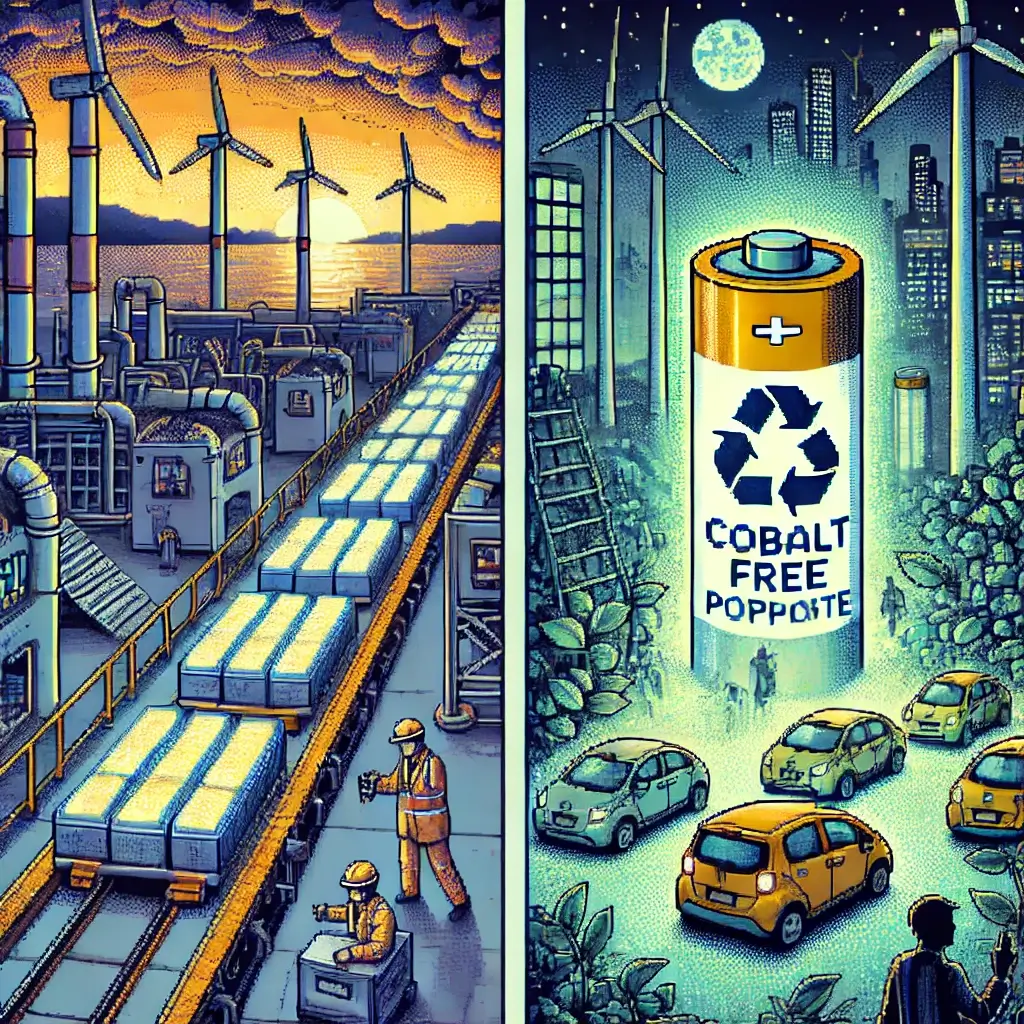
The front-runner, and arguably the most talked-about solution right now, is the **Lithium Iron Phosphate (LFP) battery.**
You might have heard about them, especially with Tesla making big moves into LFP for some of its models.
And why not?
LFP batteries don’t use **cobalt** or nickel, relying instead on abundant and less problematic materials like iron and phosphate.
Their benefits are pretty compelling:
Cost-Effectiveness: LFP batteries are generally cheaper to produce than their **cobalt**-heavy counterparts (NMC/NCA), making EVs more accessible to a wider market.
Safety: They are renowned for their thermal stability and safety, meaning a lower risk of overheating or thermal runaway.
Longevity: LFP batteries boast a longer cycle life, meaning they can be charged and discharged many more times before their capacity significantly degrades.
Sustainability: With no **cobalt** and less reliance on other critical minerals, their environmental footprint is significantly reduced.
Now, they do have a slight drawback in terms of energy density compared to some **cobalt**-rich batteries, which historically meant less range for EVs.
But here’s the exciting part: advancements in LFP technology are rapidly closing that gap.
Manufacturers are continuously improving their designs, stacking cells more efficiently, and refining chemistries to boost performance.
It’s like watching a real-time race where the underdog is gaining serious ground!
Beyond LFP, there are other exciting avenues being explored, though they might be a bit further down the road for widespread adoption:
Sodium-ion Batteries: Sodium is incredibly abundant and cheap, and while current versions don’t match lithium-ion in performance, they could be a game-changer for grid storage or lower-range applications.
Solid-state Batteries: These are the holy grail for many, promising even higher energy densities, faster charging, and greater safety by using a solid electrolyte instead of a liquid one. Many of these formulations aim to be **cobalt-free** as well.
Manganese-rich Chemistries: Some researchers are exploring batteries that use higher proportions of manganese, which is more abundant and less problematic than **cobalt**, while reducing or eliminating **cobalt** content.
The innovation happening in this space is truly mind-blowing.
It’s a testament to human ingenuity and our collective drive to build a better, more sustainable future.
For a deeper dive into LFP battery technology and its impact, check out resources from industry leaders like CATL:
Financial Implications and Market Potential: Where the Money Is
Alright, let’s get to the part that really piques the interest of many of you: the financial upside.
Because let’s be honest, while ethics are crucial, smart investing is about identifying where the market is headed, and the market is screaming “**cobalt-free**!”
The global battery market is already massive, but the shift towards **cobalt-free solutions** is creating a whole new wave of opportunities.
Think about it: every major automotive manufacturer is either actively researching, developing, or already integrating LFP batteries into their electric vehicle lineups.
Tesla, Ford, Volkswagen – they’re all in.
This isn’t a niche market; it’s becoming mainstream.
Here’s why the financial implications are so significant:
Cost Reduction and Profit Margins: As mentioned, **cobalt-free** batteries are cheaper to produce. This translates directly into better profit margins for battery manufacturers and, potentially, more affordable EVs for consumers, driving even greater adoption.
Market Share Growth: Companies that successfully pivot to **cobalt-free** solutions, especially LFP, are poised to capture significant market share.
They’re not just offering an alternative; they’re offering a better, more sustainable, and economically viable product.
Supply Chain Stability: Reduced reliance on a volatile **cobalt** supply means more stable production schedules and less exposure to price shocks, which is a huge advantage in a competitive market.
ESG (Environmental, Social, Governance) Investment Appeal: Investors are increasingly prioritizing ESG factors.
Companies with strong ethical sourcing and sustainable practices are more attractive to a growing pool of conscious capital.
Being **cobalt-free** is a massive tick in the ESG box.
Government Incentives and Regulations: Governments worldwide are pushing for electrification and sustainable practices.
Expect more incentives and regulations that favor battery technologies with transparent and ethical supply chains, further boosting the **cobalt-free** market.
We’re talking about a multi-trillion-dollar industry over the next decade, and the slice of that pie dedicated to **cobalt-free battery solutions** is going to grow exponentially.
It’s like being at the dawn of the internet or the early days of mobile phones.
The potential is truly mind-boggling.
For insights into the broader EV battery market and its projections, reputable sources like BloombergNEF offer valuable data:
Investment Strategies for the Cobalt-Free Future
So, you’re convinced, right?
You see the writing on the wall, the ethical imperative, and the colossal financial opportunity.
Now, how do you actually get a piece of this action?
Investing in the **cobalt-free battery** space isn’t just about picking one winner; it’s about understanding the ecosystem.
Here are a few angles to consider, like a seasoned pro:
Battery Manufacturers Leading the Charge: Look for companies that are aggressively investing in and scaling up their LFP or other **cobalt-free** battery production.
These are the direct beneficiaries of the shift.
Think giants like CATL, BYD, and other emerging players who are making significant strides in this area.
Material Suppliers: It’s not just about the finished battery.
Consider companies that supply the raw materials for **cobalt-free** batteries, such as lithium, iron, and phosphate.
As demand for LFP skyrockets, so too will the demand for these foundational elements.
This is where things can get a bit technical, but a little research goes a long way.
EV Manufacturers Embracing LFP: Companies like Tesla, Ford, and even Volkswagen are incorporating LFP batteries into their models, particularly for standard range vehicles.
Their success directly correlates with the success of **cobalt-free** solutions.
Look for automakers making clear commitments to diversify their battery chemistries.
Battery Recycling and Second-Life Companies: This is an often-overlooked but absolutely critical piece of the puzzle.
As millions of EV batteries reach end-of-life, the ability to efficiently recycle and reuse their components (especially the valuable ones like lithium and iron from LFP) will become a massive industry in itself.
It’s the circular economy in action, and it’s essential for true sustainability.
Innovation and R&D Firms: Keep an eye on smaller, innovative companies or startups that are working on next-generation **cobalt-free** chemistries, solid-state batteries, or advanced manufacturing processes.
These can be riskier investments, but the payoff could be monumental if they hit a breakthrough.
Think of them as the wildcards in your investment deck.
Remember, diversification is key.
Don’t put all your eggs in one basket, even if that basket is made of cutting-edge **cobalt-free** materials.
Do your homework, understand the companies, and invest for the long haul. —
Risks and Challenges to Consider
Now, no investment is without its risks, and I’d be doing you a disservice if I didn’t lay out the potential bumps in the road.
While the **cobalt-free battery** future looks incredibly bright, there are still challenges that need to be navigated:
Technological Hurdles: While LFP has made incredible strides, further improvements in energy density and performance are always ongoing.
Other emerging technologies like sodium-ion or solid-state batteries still face significant hurdles in terms of commercial scalability and cost-effectiveness.
It’s a race, and not every technology will win.
Raw Material Supply and Processing: Even without **cobalt**, the demand for lithium, graphite, and other battery materials is surging.
Ensuring a stable, ethical, and sustainable supply of these materials, along with the processing capacity, is a continuous challenge.
Bottlenecks can still occur, and prices can fluctuate.
Competition and Market Saturation: As the market grows, so does the competition.
New players are entering the space, and existing ones are ramping up production.
While this is generally good for innovation, it means companies will need to continually differentiate themselves on cost, performance, and sustainability.
Geopolitical Factors (Still Present): While reducing reliance on the DRC for **cobalt** is a win, the broader supply chain for battery materials is global and can still be affected by geopolitical tensions, trade policies, and resource nationalism.
Regulatory and Policy Changes: Government incentives and regulations can change, impacting market dynamics.
While the overall trend favors sustainable technologies, specific policies could shift.
It’s important to approach this with a balanced perspective.
These aren’t reasons to shy away, but rather factors to keep in mind as you assess your investment choices.
Due diligence is your best friend here! —
The Future Is Now, and It’s Cobalt-Free
So, there you have it, folks.
The journey to a **cobalt-free battery** future is not just an idealistic dream; it’s a rapidly unfolding reality.
It’s a story of innovation, ethical responsibility, and incredible economic opportunity.
From the harrowing realities of artisanal **cobalt** mining to the groundbreaking advancements in LFP technology, we are witnessing a pivotal moment in the history of energy and technology.
As an investor, getting in on this trend early means aligning your portfolio with the values of a more sustainable world, while also tapping into a market that is set for exponential growth.
The shift to **cobalt-free** solutions isn’t just about avoiding bad practices; it’s about actively building a better, more resilient, and ethically sound foundation for our electrified future.
It’s about powering our cars, our homes, and our lives with batteries that don’t come with a hidden cost of human suffering.
This is more than just a smart investment; it’s an investment in a cleaner, fairer, and more prosperous world for everyone.
So, are you ready to be part of this electrifying revolution?
I certainly am!
Cobalt-Free, LFP Batteries, Sustainable Investing, EV Technology, Ethical Supply Chain