Unleashing the Volt: 5 Reasons EV Drag Racing is the New Frontier
Have you ever felt that jolt? That neck-snapping, gut-punching surge of acceleration that pins you to your seat and makes you question the laws of physics? For decades, that feeling was the exclusive domain of roaring internal combustion engines. We’d spend hours, days, and fortunes trying to squeeze out a few more horsepower, listening to the symphony of pistons and turbos. It was our religion. But let’s be honest, that religion is getting an electrifying new testament, and it’s called EV drag racing.
I remember the first time I saw a Tesla Plaid launch. I was at a local track, and the air was thick with the smell of high-octane fuel and burning rubber. Then, this… silent rocket… just, went. No fanfare, no drama, just a silent, terrifyingly fast blur. It was like watching a magic trick where you knew how it was done, but you still couldn’t believe your eyes. That’s the feeling that’s drawing a whole new generation into the world of performance tuning—a world that is now buzzing, not roaring.
Table of Contents
The Shocking Truth: What is EV Performance Tuning?
If you’re anything like me, you grew up on a steady diet of muscle cars and JDM legends. We knew the names of camshafts and the sweet spot of a turbo spool. We lived by a simple code: more air, more fuel, more power. But EV performance tuning is a completely different animal. It’s less about brute mechanical force and more about a delicate dance of electrons and software. Think of a gas engine as a big, roaring lion you have to feed and train. An electric motor is like a silent cheetah—it’s already lightning fast, and your job is to make sure nothing gets in its way.
So, what does that actually mean? It means a lot of the old tricks are out the window. You’re not porting heads or swapping out carburetors. Instead, you’re looking at things like software recalibrations, upgrading the battery management system (BMS), and even swapping out motors for higher-output versions. It’s a bit like being a magician. You can’t see the magic happening, but you sure feel the result. You’re manipulating the very flow of energy, and that is a fascinating new challenge for us gearheads.
The most accessible mods are often the simplest. We’re talking about better tires to handle the insane instant torque—because what’s the point of a rocket motor if you can’t put the power down? Then there are suspension and brake upgrades. Remember that silent cheetah? It might be fast, but it’s also heavy. The battery pack adds a ton of weight, and you need robust suspension to keep it from wallowing like a hippopotamus in a mud bath. And those brakes? You’re going to want to stop that freight train, so bigger, better brakes are non-negotiable. It’s all about making the car handle the power it already has, which is often a mind-boggling amount from the factory.
The aftermarket is still catching up, but it’s a gold rush. Companies are popping up everywhere, offering specialized parts for popular EVs. We’re on the bleeding edge of something new, something exciting, and that’s a thrill in itself. It’s like being in the early days of personal computers; the potential is limitless, and every day brings a new discovery.
More Than Just Raw Power: The Art of the EV Drag Racing Launch
Let’s talk about the launch. In a gas car, the perfect launch is a delicate ballet of timing. You’re feathering the throttle, watching the revs, and trying to find that razor’s edge between burning out and bogging down. It’s a mix of art, intuition, and a little bit of prayer. With an EV, that entire process is condensed into a single, brutal moment. There’s no clutch to dump, no gears to shift. Just 100% of the torque, instantly, all at once. It’s like a light switch, not a dimmer.
This instant torque is both a blessing and a curse. It’s why EVs are so unbelievably quick off the line. But it’s also why they can be so difficult to master. The challenge isn’t making the power, it’s controlling it. The car’s computer, the vehicle control unit (VCU), is doing a thousand calculations a second to manage that power, to keep the wheels from spinning into oblivion. This is where the real nuance of EV drag racing comes in. You aren’t just tuning the car; you’re tuning its brain. You’re telling it how to deliver that power, how much traction to allow, and how to manage the battery’s immense output. It’s a far cry from swapping jets on a carburetor, isn’t it?
I’ve seen guys spend all day at the track, not trying to get more power, but just trying to perfect their launch. They’re making tiny adjustments to software settings, tire pressures, and suspension geometry, trying to shave a few hundredths of a second off their time. This is where the real expertise lies. It’s no longer just about who has the biggest engine; it’s about who understands the technology the best. That’s a beautiful thing, because it levels the playing field. Anyone with a passion for learning and a laptop can get into the game.
Ready to Start Drag Racing? The NHRA Has Your Back!
Breaking the Mold: Popular EVs for Drag Racing
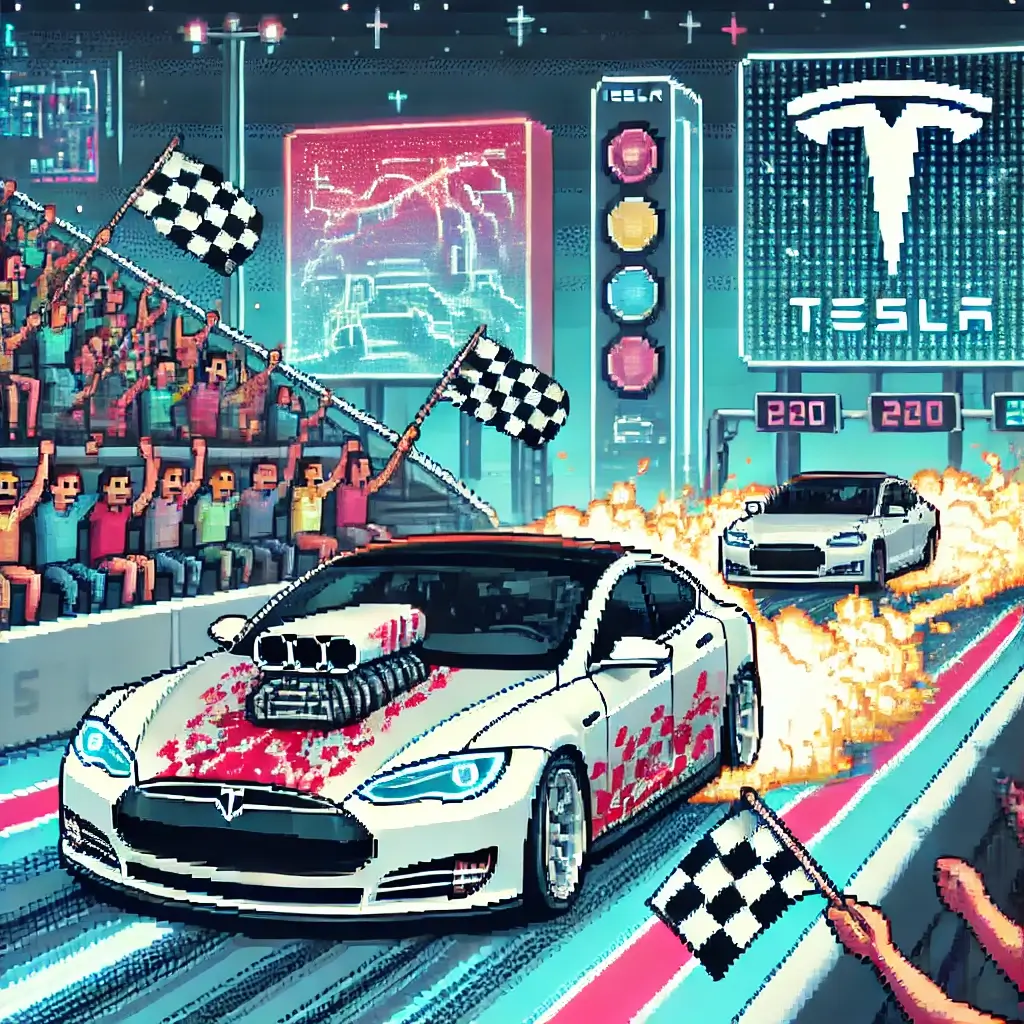
When you think of a drag car, you probably picture a souped-up Mustang or a classic Challenger. The sound, the smell, the look—it’s all part of the lore. But now, we’ve got a whole new cast of characters showing up to the party, and they are here to win. The undeniable king of the quarter-mile right now is the Tesla Model S Plaid. It’s a beast right out of the box, and it’s shattered records left and right. Its performance is so mind-bendingly good that it’s essentially the benchmark for all other EV drag racing contenders.
But it’s not just Tesla. Hyundai has entered the chat with the Ioniq 5 N, a car that’s been praised for its track-focused performance and “fun-to-drive” feel. Porsche, with the Taycan, has proven that a luxury sports car can be an absolute monster on the drag strip. And let’s not forget the Lucid Air, which combines incredible range with ludicrous acceleration. The competition is heating up, and it’s no longer a one-horse race. This is fantastic news for everyone, because competition breeds innovation.
The real beauty of this new niche is the diversity. You’re seeing everything from modified road cars to purpose-built dragsters. The creativity is flowing because the rules are still being written. We are all pioneers in this new electric frontier, and that’s a very exciting place to be. We are figuring out what works, what doesn’t, and what’s possible, all together. It’s a true community effort.
See the Latest & Greatest EVs on the Market!
Getting in the Driver’s Seat: How to Start EV Performance Tuning
Feeling that spark? Do you want to dip your toes into this electrifying world? The great thing about EV performance tuning is that the entry point can be much more accessible than in the past. You don’t need a massive garage full of tools or a deep understanding of internal combustion. You just need a passion for performance and a willingness to learn something new. Start small. A good set of sticky tires can make a world of difference. Then, look at suspension upgrades. Coilovers and sway bars can completely transform how your car feels and launches.
The most intimidating part for most people is the software, but it’s becoming more and more user-friendly. Companies like Ingenext are developing tools that let you tweak performance settings without needing a degree in computer science. It’s about empowering enthusiasts, not gatekeeping the technology. The community is also a huge resource. The National Electric Drag Racing Association (NEDRA) is a fantastic place to start. They have a wealth of information on their website, from safety guidelines to build tips. Don’t be shy; reach out, ask questions, and learn from those who are already blazing a trail.
Think of it like learning a new language. At first, it’s confusing and alien. You don’t know the words or the grammar. But over time, you start to pick it up, and before you know it, you’re having full conversations. The world of electric performance is just like that. It might seem strange at first, but with a little effort, you’ll be speaking the language of volts and amps in no time.
SEMA Explores the Future of EV Tuning!
Safety First: The Hidden Challenges of EV Drag Racing
Okay, let’s get real for a moment. With great power comes great responsibility. Drag racing is inherently dangerous, whether you’re in a gas car or an EV. But EVs present a unique set of challenges that we need to be aware of. The biggest one? The battery. It’s a massive power source, and if it’s damaged in a crash, it can create a fire that is incredibly difficult to extinguish. This is why some racetracks, like Willowbank Raceway in Australia, have been hesitant to embrace EVs fully. They have valid concerns about the risks, and it’s something we need to take seriously.
The key is to follow the rules and use the right equipment. The NHRA and NEDRA have very specific safety requirements for EVs running at certain speeds. We’re talking about things like roll cages, proper battery isolation, and even specialized fire suppression systems. This isn’t about being a buzzkill; it’s about making sure you and everyone around you goes home safe at the end of the day. Don’t cut corners. It’s not worth it.
Another concern is the “live” chassis. In a gas car, if the engine is off, it’s off. But with an EV, even after a crash, the car can still be electrically “live,” which is a serious hazard for first responders. This is why having external kill switches and clearly marked safety protocols is so crucial. We are pioneers, but we also have to be the adults in the room. We have to show the world that this is a sport that can be done safely and responsibly.
Future Forward: The Road Ahead for EV Drag Racing
The future of EV drag racing is brighter than the headlights on a semi-truck. The technology is evolving at an insane pace. We’re seeing battery tech improve, motors get smaller and more powerful, and software become more sophisticated. It’s like watching the first few episodes of a sci-fi show. You know it’s going to get wild, but you have no idea just how crazy it will be. We’re just at the beginning of this journey.
I believe we’ll see a day when EV drag racing is as mainstream as its gas-powered counterpart. The sport is already attracting a different kind of enthusiast—the tech-savvy, the early adopter, the person who loves a good challenge. It’s a fusion of engineering, technology, and pure, unadulterated speed. And honestly, what’s not to love about that?
For me, it’s not about replacing the old guard; it’s about adding a new chapter to the story of speed. The sound of a V8 will always be music to my ears, but the silent, brutal launch of an EV is a whole new kind of adrenaline rush. There’s room for both on the track, and I can’t wait to see what the next few years bring.
The EV Drag Racing Revolution
From Roar to Silent Surge: A New Era of Speed
EV Performance Tuning vs. ICE Tuning
Software & Electrons
EV tuning focuses on the car’s brain. Tweaking the Vehicle Control Unit (VCU), optimizing battery management systems, and enhancing power delivery through software updates are key.
Mechanical Upgrades
Traditional ICE tuning involves physical modifications like turbochargers, camshafts, and exhaust systems. It’s about modifying a complex machine with many moving parts.
Instant Torque
EVs deliver maximum torque the moment you press the pedal. This eliminates the need for complex launch controls and gear shifting, leading to mind-bending acceleration off the line.
Torque & Power Curves
ICEs have a narrow “power band” where they produce peak performance, requiring precise shifting and engine management to stay in the sweet spot.
Key Upgrades for EV Drag Racing
- High-Performance Tires: The number one upgrade to handle instant torque and put power to the pavement.
- Suspension Upgrades: Heavy battery packs require robust suspension to manage weight transfer and improve handling during launches.
- Brake Systems: Heavier vehicles at high speeds need bigger and better brakes for safety and consistent performance.
- Battery & Thermal Management: Keeping the battery at an optimal temperature is crucial for performance and longevity.
The Future is Electric
The drag strip is evolving. With new cars like the Hyundai Ioniq 5 N and Lucid Air joining the Tesla Model S Plaid, the competition is getting hotter and the technology is advancing at a rapid pace. The silent revolution is just beginning.
FAQs: Your Burning Questions Answered
Q: Do EVs require less maintenance for drag racing?
A: Yes and no. They have far fewer moving parts, so you’re not dealing with oil changes, spark plugs, or transmissions. But you have a whole new set of maintenance considerations, like battery health monitoring, thermal management, and software updates. It’s a different kind of upkeep, but in many ways, it can be simpler.
Q: Are EV batteries dangerous in a crash?
A: As mentioned, they can be. High-voltage systems and a large energy source can pose a fire risk in a severe impact. This is why strict safety protocols, including a “live” chassis kill switch, are essential for EV drag racing.
Q: Can I use a regular EV for drag racing?
A: Most modern performance EVs, like a Tesla Plaid or a Lucid Air, are incredibly fast right off the showroom floor. You can absolutely take them to a local test-and-tune event to see what they can do. However, as you get faster, you’ll need to add safety equipment to comply with racing regulations.
Q: What’s the biggest challenge with EV tuning?
A: The biggest hurdle right now is the locked-down nature of a lot of the software. OEMs are very protective of their intellectual property, which makes deep-level tuning more difficult than with a gas car. But the aftermarket is working hard to find solutions, and the scene is evolving quickly.
EV drag racing, performance tuning, electric vehicle modification, drag racing, Tesla Plaid.
I chose this video because it shows the sheer power and speed of the Lucid Air, a popular EV for drag racing, from a driver’s perspective. Watching the Lucid Air Go!
🔗 Unleash the Future: How Tesla’s 17 Million Data Points Shape Tomorrow Posted 2025-08-21 08:05 UTC 🔗 Tesla Urban Ecosystems & Data Traffic Posted 2025-08-21 08:05 UTC 🔗 Weather & EV Range Drop Posted 2025-08-20 05:35 UTC 🔗 EV Charging Solutions Posted 2025-08-19 11:32 UTC 🔗 7 EV Road Trip Hacks Posted 2025-08-19 07:55 UTC 🔗 Tesla Model Y Accessories Posted (Date Not Provided)