The Shocking 5-Year Secret to Tesla Resale Value That No One Tells You
If you’re thinking about buying a Tesla, or even if you already own one, you’ve probably heard a lot of talk about how they hold their value.
For a long time, the common wisdom was that a Tesla depreciates less than a traditional gas car.
But the truth is, the story is a lot more complicated than that.
And it all boils down to one thing: the constant, relentless stream of software updates that makes your car feel like a smartphone on wheels.
We’re not just talking about minor bug fixes here.
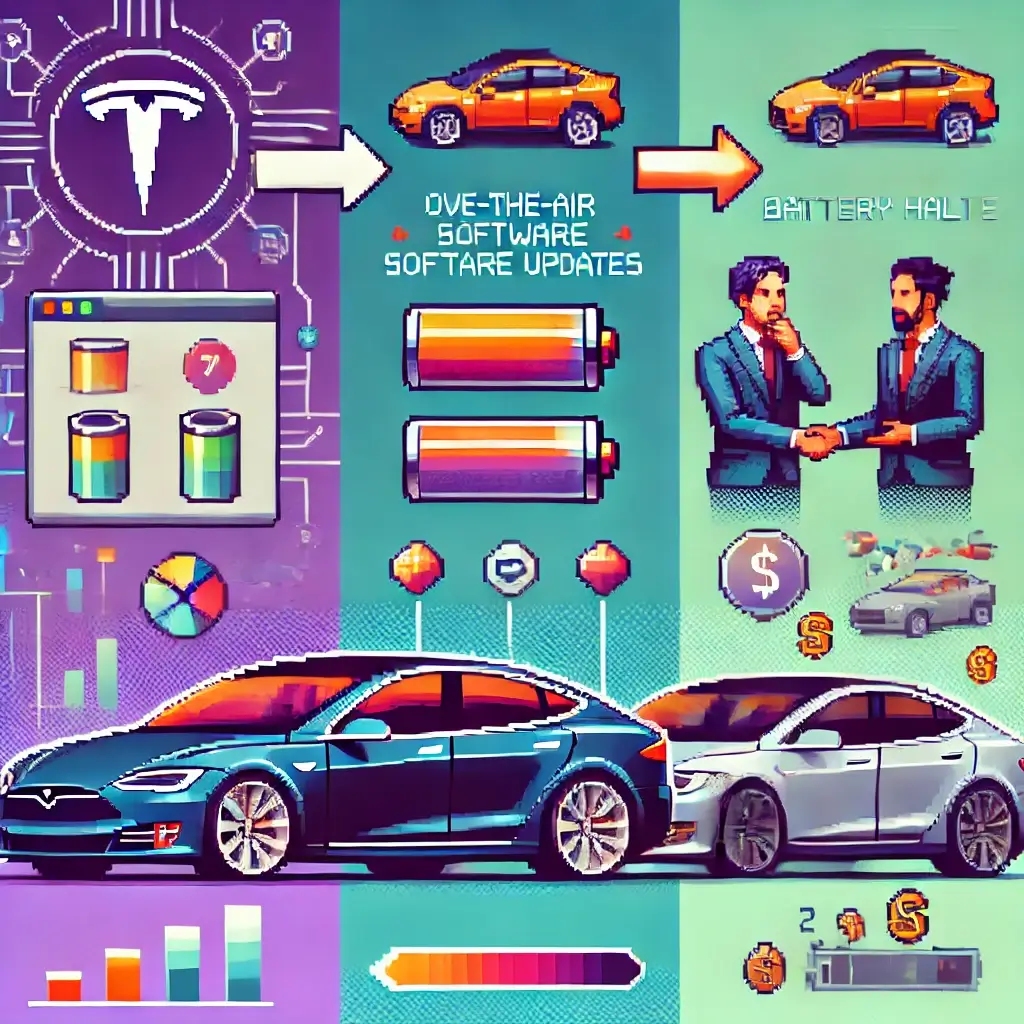
We’re talking about massive, game-changing over-the-air (OTA) updates that can fundamentally change the functionality, performance, and yes, even the resale value of your car.
It’s a double-edged sword, and if you’re not careful, it can slice a huge chunk out of your car’s worth when it comes time to sell.
I remember sitting in my Model 3 a few years back, just a year after I bought it, and an update came through.
I was excited, like a kid on Christmas morning.
I knew it was going to add some cool new feature or make the UI a little slicker.
And it did!
But then, I saw a post online about a brand new Model Y that had just been released, and it had a completely new infotainment processor and a heat pump.
Suddenly, my one-year-old car felt… old.
Even though the software was still fresh, the underlying hardware was already a generation behind.
That feeling, that little nagging voice in the back of my mind, made me wonder what that meant for the car’s future value.
And that’s the feeling we’re going to explore today.
We’re going to dive deep into the fascinating, frustrating, and sometimes financially frightening world of Tesla’s software updates and their surprising impact on what your car is really worth.
It’s not just a car; it’s a piece of evolving technology, and understanding that is the key to mastering its resale value.
Table of Contents
The Double-Edged Sword of Tesla Software Updates: A Blessing and a Curse
Think about your smartphone.
You buy it, and for the first few months, it’s the fastest, slickest thing you’ve ever owned.
Then, a year later, a major software update drops.
It might add some cool new features, but it might also make your battery drain faster or slow down some of your favorite apps.
Your Tesla is exactly the same, but with a price tag that’s a hundred times bigger.
On one hand, this is a massive blessing.
My car from 2019 has Sentry Mode, Dog Mode, and a bunch of games that didn’t even exist when I bought it.
A car that gets better over time?
That’s a mind-blowing concept that goes against everything we’ve been taught about car ownership.
For a traditional car, the moment you drive it off the lot, it’s at its peak.
It’s all downhill from there, in terms of features and technology.
With a Tesla, you might wake up one morning and discover you have a new feature you didn’t even know you wanted.
That’s incredibly cool, and it’s a huge selling point.
This is where the magic happens and where the narrative of “Teslas hold their value” really took hold.
The idea is that because the software is constantly improving, the car remains relevant and desirable for a longer period.
A used Tesla buyer isn’t just buying the car from two or three years ago; they’re buying the most up-to-date version of that car, with all the latest software goodies.
Or so the theory goes.
But here’s the other side of that coin, the dark side of the software update moon.
Sometimes, an update changes things for the worse, or at least for the different.
I remember one update that completely revamped the user interface, and a lot of people were furious.
They couldn’t find things, the controls were different, and it just didn’t feel as intuitive to them.
Sure, you get used to it, but it’s a jarring experience.
Now, imagine you’re a used car buyer.
You’ve done your research, you’ve read all the old reviews, and you’re expecting one thing, only to get in the car and discover the entire interface has been changed.
This kind of uncertainty can make a potential buyer nervous.
They’re not just buying the car, they’re buying into an ever-changing ecosystem, and that can be a little scary.
It adds an element of risk that a buyer of a traditional car just doesn’t have to think about.
They know exactly what they’re getting.
So, while software updates can add features and keep a car feeling modern, they can also introduce a level of instability and unpredictability that can affect buyer confidence.
And in the world of used cars, confidence is king.
FSD – The Million-Dollar Question That Affects Your Tesla Resale Value
Let’s talk about the big one: Full Self-Driving (FSD).
This is arguably the single biggest software-related factor that impacts a Tesla’s resale value, and it’s a total minefield.
When you buy a new Tesla, FSD costs a massive amount of money.
We’re talking tens of thousands of dollars for the current version.
The idea is that this is an investment in the future, a promise of a car that can drive itself, and a feature that will be worth even more as the technology matures.
But does that value actually transfer when you sell the car?
This is where things get really murky.
For a while, the answer was a resounding yes.
A car with FSD was worth significantly more than one without.
It was a clear-cut case of a high-value option adding to the car’s overall worth.
But then, things started to get complicated.
Tesla began offering FSD as a monthly subscription.
This fundamentally changed the equation.
Suddenly, a potential buyer could get access to FSD for a few hundred bucks a month, rather than having to buy a car that had it permanently attached for an extra ten or fifteen grand.
Why would a buyer pay a huge premium for a used car with FSD when they could just subscribe to it on a cheaper, non-FSD car?
It’s like buying a house with a solar panel system that’s a lease.
Sure, it’s a great feature, but if the new owner has to keep paying for it, it doesn’t add the same value to the home price as a system that’s been paid off and is fully owned.
This shift from a one-time purchase to a subscription model has thrown a wrench into the entire FSD resale value narrative.
A lot of people feel like their big investment in FSD has been devalued, and it’s hard to argue against that.
Furthermore, the FSD software itself is a moving target.
A car from 2016 that has the original Autopilot hardware can’t run the latest version of FSD, even with software updates.
Tesla had to offer retrofits, and even then, there were limitations.
This shows that FSD isn’t just a software thing; it’s also a hardware thing.
A buyer needs to be very, very careful about what they’re buying.
Is it a car with FSD capability?
Is it a car with the latest FSD hardware?
Has FSD been paid for outright or is it a subscription that doesn’t transfer?
All of these questions make a used Tesla with FSD a much more difficult and confusing thing to value than a regular car with a premium sound system.
This confusion can scare off potential buyers and force a seller to lower their price to move the car.
So, while FSD has the potential to add massive value, its ever-changing nature and the move to a subscription model have made it a huge gamble in the used car market.
It’s a feature that might make your car worth a little more, but it might not be the golden ticket you thought it was.
The Silent Killer: How Software Can Affect Battery Health and Your Resale Value
When you’re buying a used electric vehicle, the battery is everything.
It’s the heart and soul of the car.
And while you might think battery health is purely a function of chemistry and how the previous owner treated it, software plays a huge role.
Tesla’s software is constantly managing the battery, deciding how to charge it, how to cool it, and how to best maintain its longevity.
The goal is to provide the maximum amount of usable range for the longest period possible.
Sometimes, an update might change the battery’s charging curve or its thermal management system.
Most of the time, this is a good thing.
Tesla is always trying to optimize and improve the system.
But on some rare occasions, an update might cause a temporary dip in range or a different charging behavior.
This can cause a lot of worry among owners and can lead to a lot of FUD (fear, uncertainty, and doubt) in the used car market.
A potential buyer sees a car with slightly less range than they expected, and they might think the battery is degraded, when in reality, it’s just a temporary software calibration issue that might get fixed in the next update.
But by then, it’s too late.
They’ve already moved on to the next car.
This is a subtle, but very real, impact that software has on the resale value.
The perception of battery health, which is influenced by software, is often more important than the actual state of the battery.
I’ve seen it firsthand.
A friend of mine was trying to sell his Model S.
The buyer asked to see the battery health report, which Tesla doesn’t exactly provide in a nice, neat little printout like you get for a traditional car’s engine health.
The buyer then ran an independent diagnostic test and saw a slight variance in the expected range.
Even though this was a very minor issue that was likely a software anomaly, the buyer used it as leverage to talk down the price significantly.
My friend was left with the choice of either losing the sale or taking a big hit on the price.
He ended up taking the hit.
That’s the kind of subtle but powerful impact that software and the perception of its effects can have on your car’s value.
It’s not just about the hardware; it’s about the software’s ability to communicate the health of that hardware in a clear and consistent way.
And sometimes, it fails at that.
This is a major consideration for anyone looking to sell their Tesla in the future.
You have to be prepared to answer questions about battery health and be able to confidently explain that any perceived issues are likely just software-related, not a sign of a failing battery.
This is a conversation that gas car owners never have to have.
Hardware vs. Software: Why a New Part Can Wreck the Value of Your Older Tesla
Remember my story about the new Model Y with the heat pump?
That’s a perfect example of a hardware change that software can’t fix, and it’s a huge deal for resale value.
In the world of traditional cars, a model year update might include a new grille, a slightly different taillight design, or a new color option.
But the core mechanicals—the engine, the transmission—are usually the same for years.
Not so with Tesla.
Tesla is constantly innovating, and those innovations are often tied to new hardware.
A new processor for the infotainment system, a different type of battery pack, or a more efficient climate control system are all things that have been introduced in the middle of a model’s run.
And unlike a software update, you can’t just download a new heat pump.
When a new car comes out with a significant hardware upgrade, your older car, which may be only a year or two old, can instantly feel obsolete.
And this feeling isn’t just in your head; it’s a real factor for buyers.
A buyer who is cross-shopping a 2021 Model 3 and a 2022 Model 3 is going to be paying very close attention to these kinds of hardware differences.
If the 2022 model has a better processor, a longer-lasting battery, or a more efficient climate control system, the buyer will almost always choose that one, even if it costs a little more.
This puts downward pressure on the price of the older car, even if it’s in perfect condition and has all the latest software updates.
It’s like trying to sell a 2019 MacBook Pro when the 2020 version came out with the new M1 chip.
Even if the 2019 model is perfectly fine and runs the latest software, it’s just not in the same league.
The market knows this, and it prices the older model accordingly.
So, while software can add a lot of value, it can’t always overcome the limitations of the underlying hardware.
And because Tesla is so aggressive with its hardware innovations, this is a much bigger factor in their resale value than it is for any other carmaker.
It’s a vicious cycle.
Tesla innovates, which is great for new buyers.
But that innovation makes older cars feel outdated faster, which hurts their resale value.
It’s a crucial dynamic to understand if you’re planning on selling your Tesla in the near future.
You need to be aware of what hardware changes have been made since your car was built and be prepared to explain to a potential buyer why your car is still a great value, despite not having the latest and greatest heat pump.
What Can We Learn from the Market? An Unfiltered Look at Resale Trends
We’ve talked a lot about the theory of how software and hardware changes affect resale value.
But what does the actual data say?
For a long time, the data was very favorable for Tesla.
Studies from companies like iSeeCars.com and Kelley Blue Book showed that Tesla models consistently had some of the best resale values on the market.
A Model 3, for example, would retain its value far better than a comparable BMW 3 Series.
But the market is a living, breathing thing, and it’s constantly changing.
In the past year or two, we’ve seen some interesting shifts.
The massive price cuts on new Tesla models have had a ripple effect on the used car market.
When the price of a brand new car drops by thousands of dollars overnight, the value of every used version of that car drops with it.
This is a huge factor, and it’s something that is directly controlled by Tesla, not by market forces.
It’s a very unusual situation for a carmaker to be able to make such drastic changes to the price of their new cars, and it’s a huge risk for used car sellers.
Imagine you just bought a new Model Y for $60,000.
A few months later, Tesla drops the price of a new one to $50,000.
Your car, which was just a few months old, is now worth significantly less.
And that’s not even a software thing; that’s a pure business decision on Tesla’s part.
However, the software still plays a part here.
Because Tesla has so much control over the entire ecosystem, from the software to the pricing, they can manipulate the market in a way that other carmakers can’t.
They can release a new software update that adds a cool feature to the new cars, making the old cars feel less desirable, and then drop the price of the new cars to entice people to upgrade.
It’s a very clever, but very ruthless, strategy.
This is why it’s so important for a Tesla owner to be constantly aware of what’s happening in the market.
You can’t just assume your car is going to hold its value.
You have to be a proactive participant in the market, following the news, and understanding how new software and hardware releases will affect your car.
It’s not for the faint of heart.
It’s a fast-paced, constantly changing world, and if you’re not on top of it, you’ll be left behind.
But on the flip side, if you are on top of it, you can use this information to your advantage.
You can time your sale to happen just before a major hardware refresh or a massive price drop, and you can get the maximum value for your car.
It’s a high-risk, high-reward game, and it all revolves around the unique nature of Tesla as a technology company, not just a car company.
This is what makes Tesla’s resale value so fascinating.
It’s not just about the car; it’s about the entire ecosystem around it.
The Ultimate Guide for Tesla Sellers: How to Maximize Your Resale Value
So, you’ve decided to sell your Tesla.
Given everything we’ve talked about, what can you do to ensure you get the best possible price?
It’s all about a proactive, informed approach.
You can’t just put it on Craigslist and hope for the best.
Here are some concrete, actionable steps you can take to make sure you get every penny your car is worth.
First, you need to be a software expert.
You should know what software version your car is running and be able to explain what features it has that a car from a year earlier might not have.
Highlight these features in your listing.
Did a recent update add new games or a new infotainment layout?
Mention that!
It shows that your car is up-to-date and still a relevant piece of technology.
Second, if you have FSD, you need to be able to explain exactly what that means for a potential buyer.
Is it the subscription model or is it the paid, attached-to-the-car version?
Is it the latest hardware?
Be honest and clear about this.
The last thing you want is a buyer to feel like you’ve been deceptive, because that will kill the deal faster than you can say “autopilot.”
Third, you need to be prepared to talk about battery health.
Keep a record of your charging habits and be able to show a potential buyer that you’ve been a responsible owner who has followed best practices.
You can use a third-party app to monitor your battery health, which can provide an objective report that will give a buyer a lot of peace of mind.
This is a great way to overcome any FUD they might have about the battery.
Fourth, you need to use the right tools to value your car.
Don’t just use one website; use several.
Check out a few different sources to get a range of values.
I recommend using sites that specialize in used car valuations, as they have the best data.
Here are a few places to get you started:
Finally, and this is the most important piece of advice: tell a story.
Don’t just list the features of your car.
Tell a potential buyer about all the amazing trips you took in it, about how it felt to get that first software update, and about all the fun little surprises you’ve discovered.
Show them that this isn’t just a car; it’s a part of your life.
Because that’s what a Tesla is.
It’s an experience.
And if you can sell the experience, you can get a lot more for your car.
So, the next time someone asks you about the resale value of a Tesla, don’t just give them the standard answer.
Tell them the whole story.
Tell them about the software, the hardware, and the ever-changing market.
Tell them that a Tesla isn’t just a car; it’s an adventure.
And that adventure, for a proactive and informed owner, can be a very lucrative one indeed.
Tesla, Resale Value, Software Updates, FSD, OTA