Tesla’s 5,000+ Patents: The Shocking Strategy Behind Its Dominance!
I remember the day Elon Musk did something that sounded absolutely bonkers.
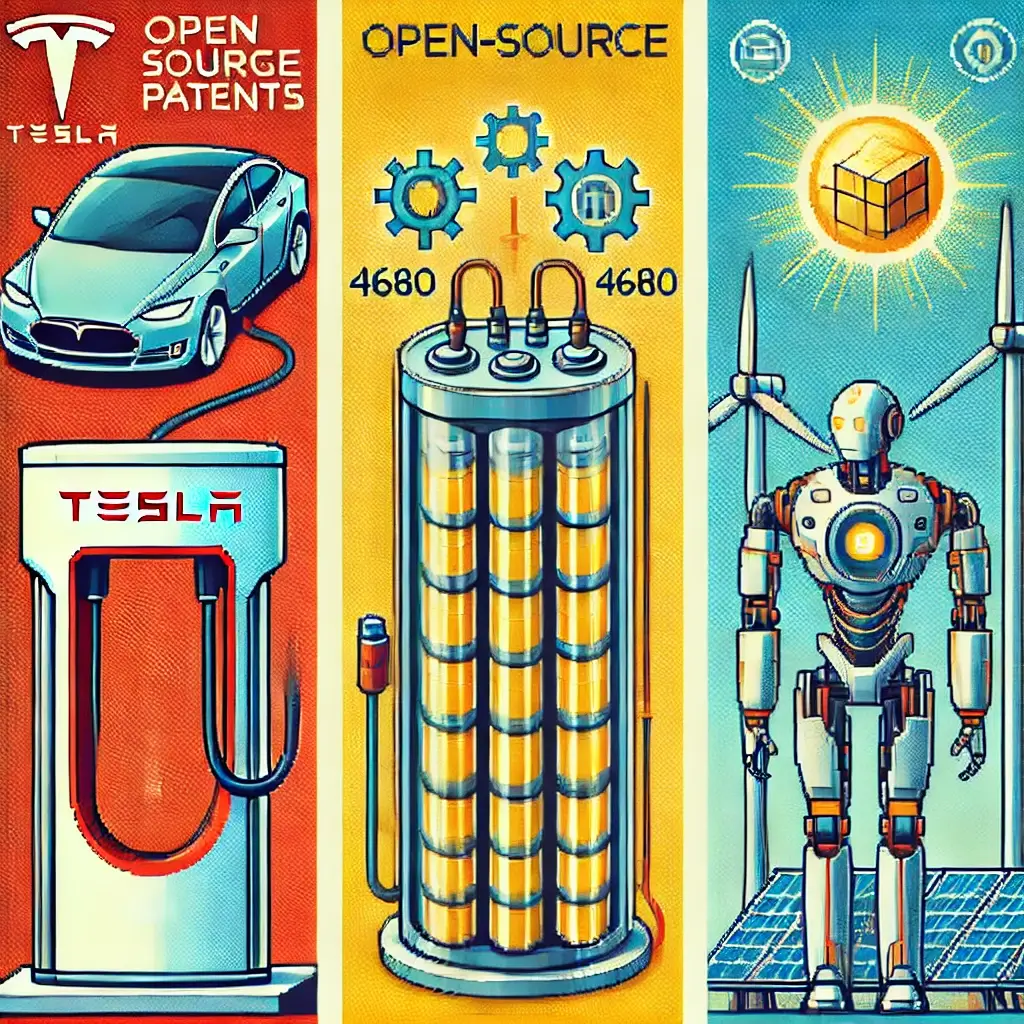
It was back in 2014, and he announced in a blog post titled “All Our Patent Are Belong to You” that Tesla would make its patents available to anyone who wanted to use them.
My jaw dropped.
My first thought was, “Is this guy serious?”
It felt like giving away the secret recipe to the world’s best burger.
Why would a company with such groundbreaking technology just…
give it away for free?
It was a move that flew in the face of everything I’d been taught about business and intellectual property.
But as I’ve come to learn, and as history has shown, it wasn’t an act of charity.
It was a masterstroke of strategy—a brilliant, audacious play that has profoundly shaped the entire electric vehicle (EV) industry.
It was a move that turned the tables, not just in the EV market, but in the entire tech world.
Today, Tesla’s patent portfolio is a behemoth, with over 5,000 patents filed globally, and it’s a story far more complex and thrilling than just giving away some blueprints.
It’s a story of a company using its intellectual property not just to protect its own innovations, but to bend the entire industry to its will.
It’s about building an ecosystem so dominant that everyone else has no choice but to play by your rules.
Think about it like this: If you want to be the best at something, you don’t just build a better product.
You build a better world for your product to live in.
And that’s exactly what Tesla did with its patents.
It’s like they were saying, “Go ahead, use our technology.
The more you use it, the more you help us build the infrastructure we need to dominate the future.”
So, what’s really inside this treasure chest of intellectual property?
What secrets does Tesla hold, and where is it heading next?
I’m going to take you on a deep dive into Tesla’s patents, from the legendary battery technology to the cutting-edge AI that’s driving the future—literally.
It’s not just a list of technical jargon; it’s a look into the mind of a company that thinks in decades, not quarters.
And trust me, what they’re doing right now is going to be talked about for years to come.
Tesla, Patents, EV, Elon Musk, Innovation
Table of Contents
Tesla’s Shocking 2014 Patent Strategy: The “Giveaway” That Wasn’t
You’ve probably heard the story before, but it’s worth revisiting because it’s the foundation of everything else.
On that fateful day in 2014, Elon Musk penned a blog post that sent shockwaves through the industry.
He announced that Tesla was opening up its patents to anyone “in good faith” who wanted to use them.
It was a move that seemed completely insane from a traditional business perspective.
Why would you voluntarily surrender a competitive advantage?
Why give your rivals the keys to your kingdom?
Well, the truth is, it was never really a giveaway.
It was an extremely clever form of cross-licensing.
The unwritten agreement was simple: you can use our patents, but in return, you can’t sue us for infringing on yours.
It was a handshake deal on a global scale.
The genius of this move was that it wasn’t just about charity; it was about accelerating the entire industry.
At the time, the EV market was tiny.
Tesla was a small fish in a massive pond dominated by gas-guzzling dinosaurs.
Musk realized that the biggest barrier wasn’t competition with other EVs—it was the lack of an EV infrastructure and the slow pace of adoption.
He knew that for Tesla to succeed in the long run, the entire EV ecosystem had to flourish.
By making their patents “open,” they encouraged other companies to enter the market and use their technology, which in turn helped grow the industry and build out the charging infrastructure.
It’s like planting seeds in a field.
You might not get to keep every single fruit, but you’ll have a massive, thriving forest that everyone, including you, can benefit from.
The strategy was a massive gamble, but it paid off spectacularly.
Today, Tesla’s technology—from its charging standard to its battery designs—has become an industry benchmark.
Companies that once scoffed at the idea are now adopting Tesla’s charging connector, and the EV market is booming.
Tesla didn’t just win the game; they changed the rules.
They understood that the real value wasn’t in hoarding a few patents, but in becoming the gravitational center of a new, sustainable world.
Want to learn more about the legal side of this fascinating strategy?
Check out this great article from Wired for a deeper dive.
Tesla, Patents, Open Source, Elon Musk, EV Market
The Powerhouse: Tesla’s Battery Technology Patents That Changed Everything
If the car is the body, the battery is the heart, and Tesla has spent years perfecting its beat.
When you talk about Tesla’s dominance, you have to start with its battery technology.
This is where the company has filed some of its most crucial and foundational patents.
They’re not just about making a battery that holds a charge; they’re about making it last longer, charge faster, and be safer.
One of the most innovative areas is battery thermal management.
If you’ve ever used your phone in the sun and felt it get hot, you know that heat is the enemy of batteries.
Excessive heat degrades the battery cells, reducing their lifespan and performance.
Tesla’s patents in this area are truly mind-blowing.
They’ve developed sophisticated systems that circulate coolant through the battery pack to keep it at an optimal temperature.
It’s like the car has its own internal air conditioning system just for the battery.
This isn’t just a minor improvement; it’s the difference between a battery that lasts 100,000 miles and one that can go for a million miles or more.
Think of it as a meticulously designed cooling system for the car’s most vital organ.
Another huge area is battery chemistry and cell design.
The famous “4680 cell” is a great example.
This isn’t just a new size; it’s a total redesign of the battery cell itself.
The patents cover everything from the internal structure to the new “tabless” design that allows for faster charging and better performance.
It’s a bit like taking a traditional cake recipe and not only using better ingredients but also inventing a new kind of pan that bakes it perfectly every time.
These innovations are not just theoretical; they are tangible improvements that give Tesla a massive advantage in range, efficiency, and cost.
And with every patent, they’re not just protecting an idea; they’re creating a new standard for what an EV battery can and should be.
It’s a relentless pursuit of perfection that shows up in every mile a Tesla drives.
For a closer look at the actual patents and their technical details, you can visit the U.S. Patent and Trademark Office (USPTO) website.
It’s like an archive of human innovation, and you’ll find plenty of Tesla’s work there.
Tesla, Battery, 4680 Cell, Thermal Management, EV Technology
Beyond the Battery: Key Tesla Patents in Charging & Manufacturing
While batteries might be the heart of Tesla, the company’s patent portfolio is far from a one-trick pony.
They’ve filed thousands of patents across a wide range of categories, proving that their vision extends well beyond the car itself.
Let’s talk about charging.
The Supercharger network is a huge part of the Tesla experience, and it’s backed by a ton of intellectual property.
The patents cover the entire system, from the physical connector design to the backend software that manages charging sessions and billing.
This isn’t just about building a plug; it’s about building a seamless, integrated network that makes owning an EV not just possible, but easy.
The North American Charging Standard (NACS) is a perfect example of how Tesla’s patents have become an industry standard.
It’s a testament to their foresight and their ability to build a better mousetrap—so good, in fact, that everyone else wants to use it.
But the patents don’t stop there.
Tesla has also heavily invested in manufacturing innovation.
This is one of the most underrated parts of their story.
Musk famously said that the “machine that builds the machine” is the real product.
And he wasn’t kidding.
Tesla has patents on everything from massive die-casting machines (the “Giga Press”) that can form a car’s entire rear underbody in one piece to advanced robotic assembly lines.
It’s a total reimagining of how cars are made, moving away from the traditional, complex assembly line to a more streamlined, efficient process.
Think of it like this: most car companies are still using tools from the last century.
Tesla is inventing entirely new ones.
This isn’t just about building cars faster; it’s about building them cheaper and with better quality.
The ability to patent these manufacturing processes is a huge strategic advantage, as it makes it incredibly difficult for competitors to catch up.
It’s not enough to copy the end product; you have to copy the entire factory, and that’s a much harder pill to swallow.
These patents show that Tesla’s vision is holistic.
They don’t just see a car; they see a complete ecosystem, from the raw materials to the final product and the infrastructure that supports it.
For a detailed look into the “Giga Press” and its impact, check out this video from a credible tech channel on YouTube.
Tesla, NACS, Giga Press, Manufacturing, Supercharger
Driving the Future: Tesla’s Patents in Self-Driving AI & Software
This is where things get really interesting and, frankly, a little bit sci-fi.
While the batteries and manufacturing are about the “how” of making cars, the patents in self-driving AI are all about the “what’s next.”
Tesla’s approach to autonomous driving, or Full Self-Driving (FSD), is fundamentally different from most other companies.
While many of its competitors rely on expensive and complex LiDAR sensors, Tesla has gone all-in on a vision-based approach.
They believe the car should “see” the world just like a human does, using a network of cameras and powerful neural networks to interpret the environment.
And you better believe they have thousands of patents protecting this approach.
These patents cover everything from the algorithms that process the camera data to the way the neural networks are trained on massive amounts of real-world driving data.
This is an incredibly difficult problem to solve, and Tesla’s patents are a testament to the sheer brainpower they’ve poured into it.
It’s not just about object detection; it’s about predicting what other cars, pedestrians, and cyclists are going to do next.
It’s about making split-second decisions that a human would take for granted.
Another fascinating area is data utilization and simulation.
Tesla has patents on using the data from its fleet of millions of vehicles to train its AI models.
Every time a Tesla is driven, it’s collecting valuable data that helps improve the FSD software for everyone.
It’s like a massive, global learning machine.
They also have patents on creating realistic simulations to test their software in a virtual environment, allowing them to iterate and improve without putting a physical car on the road.
This is a game-changer.
It allows them to test millions of scenarios that would be impossible to replicate in the real world.
It’s like a pilot training in a flight simulator—you can practice for every possible emergency without ever leaving the ground.
These patents show that Tesla’s focus is on becoming not just a car company, but an AI company that happens to make cars.
The car is just the vessel for the real product: the software that drives it.
To understand more about the vision-based approach and the science behind it, take a look at some of the papers and presentations from Tesla’s AI team.
They often share their research in detail.
Tesla, FSD, AI, Self-Driving, Neural Networks
The Road Ahead: What Tesla’s Newest Patents Tell Us About the Future
If you want to know what a company is really thinking, don’t just listen to the press releases.
Look at their patents.
Patents are a company’s secret roadmap to the future, and Tesla’s recent filings give us some incredible clues about where they’re headed next.
One of the most exciting areas is robotics.
Tesla is not just a car company anymore; it’s a robotics company.
The Optimus humanoid robot is a huge part of their long-term vision, and their patents reflect this.
They are filing patents on everything from the robot’s physical design and locomotion to the AI that controls its movements and interactions.
It’s a clear signal that they see a future where robots, not just cars, will be a core part of their business.
Imagine a world where Optimus robots are working in your factory, your warehouse, or even your home.
That’s the future Tesla is patenting today.
Another key area is advanced energy and infrastructure.
While they’ve been in the solar and energy storage business for a while, their new patents show a deeper integration of these technologies.
Think about patents for more efficient solar roof tiles, advanced energy management systems for homes, and even large-scale grid storage solutions.
Tesla is building a complete, vertically integrated energy ecosystem.
From the solar panels on your roof to the battery in your car to the grid storage in your neighborhood, they want to be a part of every step.
The patents are the building blocks of this new world.
And finally, there’s the relentless focus on cost reduction and scaling.
Many of Tesla’s newest patents are not for flashy new features, but for small, incremental improvements to their manufacturing process that can save them a few cents on every single car.
These are the patents that most people don’t notice, but they are the ones that will allow Tesla to reach a truly massive scale and build a car that is affordable for everyone.
They are quietly building a foundation that will make it nearly impossible for anyone to compete on cost.
Tesla’s patent portfolio is a living, breathing document of their ambition.
It shows a company that isn’t just focused on today’s products, but on creating the world of tomorrow.
They are patenting the future, one innovation at a time.
For more on the development of Optimus, you can find a lot of information on Tesla’s official blog and in their AI Day presentations.
Tesla, Optimus, Robotics, Energy Storage, Future Directions
Why Tesla’s Patents Matter to Everyone
You might be thinking, “Okay, this is all very interesting, but why should I, a regular person, care about a company’s patent portfolio?”
That’s a fair question.
But the truth is, Tesla’s patent strategy affects everyone, not just investors or engineers.
First, it’s a testament to the power of a long-term vision.
Musk’s decision to “open source” Tesla’s patents in 2014 was a bold move that prioritized the growth of the entire industry over a short-term competitive advantage.
This approach has accelerated the transition to sustainable energy and electric vehicles in a way that would have been impossible for one company alone.
It’s a lesson for all businesses: sometimes, the best way to win is to help everyone else get better.
Second, it shows that true innovation is about more than just one product.
Tesla’s patents aren’t just for the Model 3 or the Cybertruck; they’re for the batteries, the charging network, the manufacturing process, and the AI that will power the future.
They’re building an entire ecosystem, and that’s a much more powerful and defensible position than just having a good car.
The patents are the invisible threads that hold this whole world together.
And finally, it’s a window into the future.
By looking at what Tesla is patenting today—robotics, advanced energy solutions, new forms of manufacturing—we get a sneak peek at the world we’ll be living in tomorrow.
It’s not just about a better car; it’s about a better planet.
And Tesla’s patents are the legal and technical foundation on which that future is being built.
The next time you see a Tesla on the road, remember that it’s more than just a car.
It’s a collection of thousands of innovations, a living library of human ingenuity, and a bold bet on a future powered by clean energy.
Tesla, Patents, Innovation, EV, Future
🔗 Tesla Resale Value Posted 2025-08-10 06:40 UTC 🔗 Tesla Apps Posted 2025-08-09 04:12 UTC 🔗 EV Truck Showdown: Cybertruck Posted 2025-08-08 06:50 UTC 🔗 Tesla’s Epic Energy Gamble Posted 2025-08-07 06:16 UTC 🔗 EV Road Trip Tips for Tackling Charging Deserts Posted (Date Not Provided) 🔗 The $12,000 Secret: How Tesla Software… Posted 2025-08-?? (Time Not Provided)