7 Unignorable Truths About Personal Injury Lawyers for EV Accidents
Okay, confession time: I used to think a car accident was just a car accident, regardless of the vehicle. Gas, electric—what’s the difference? Turns out, everything. When an EV is involved, the playbook changes completely, and if you’re not ready, you’re toast. This guide isn’t about scaring you; it’s about giving you the raw, practical playbook to find the right personal injury lawyer who gets the nuances of these complex cases, saving you time, money, and a whole lot of headache.
Table of Contents
Why personal injury lawyers for EV accidents feels hard (and how to choose fast)
You’re probably here because something went wrong. Maybe you were hit by an EV, or you were in one that was hit. The adrenaline is still humming in your ears, and your head is spinning with questions. Who pays for the battery replacement? What about the high-voltage risks? The average lawyer doesn’t have a clue about this stuff, and finding one who does feels like a game of legal roulette. You’re short on time, maybe in some pain, and you need a trustworthy expert, not a generic billboard ad. My first big encounter with this was when a friend, a founder of a small tech startup, was T-boned by a Rivian. The car looked fine, but the battery pack was compromised. The body shop bill was astronomical, and the insurance company was fighting every single line item, claiming “it’s just a car.” My friend’s initial lawyer was completely out of his depth. It was a 90-day fight just to get the right expert on the phone. We lost so much time. This is exactly what we’re trying to avoid. You need a lawyer who speaks the language of lithium-ion, not just fender benders. A good lawyer in this space can save you months of back-and-forth and thousands of dollars in hidden costs.
- Standard personal injury lawyers may lack specific EV expertise.
- Specialized knowledge is crucial for proper valuation and liability.
- Early selection of the right lawyer can reduce claim time by 30-50%.
Apply in 60 seconds: Create a quick list of three key questions you’d ask any lawyer to assess their EV experience (e.g., “How many EV cases have you handled?”).
The goal is to move from overwhelm to clarity in a few quick steps. We’ll get into the specific questions to ask, the hidden risks to look for, and the frameworks to use for evaluating your options, all without getting bogged down in legal jargon. We’re cutting through the noise to find the signal. A great lawyer will tell you what you need to hear, not what you want to hear. They’ll tell you that the silent approach of an EV can sometimes lead to pedestrian liability issues or that a low-speed impact can still cause catastrophic battery damage. These are the details that win cases. This isn’t just about a settlement; it’s about getting back to normal as fast as possible. This is your personal cheat sheet.
3-minute primer on personal injury lawyers for EV accidents
So, what makes an EV crash different? First, the components. A simple rear-end collision in a gas car might be a new bumper and taillight. In an EV, that same impact could damage the battery pack, a multi-thousand-dollar component that requires specialized handling. The high-voltage system poses a serious risk to first responders and mechanics, which can complicate the initial response and subsequent repairs. You need a lawyer who understands this. Second, the “silent approach” problem. EVs are so quiet at low speeds that pedestrians, especially those who are visually impaired or distracted, may not hear them approaching. This can shift the blame and introduce new liability arguments that traditional car accident lawyers have never had to deal with. Third, data. EVs are computers on wheels. They collect data on speed, braking, and steering. A good lawyer knows how to subpoena this data to prove negligence or, conversely, to defend you. I saw this firsthand when a client of mine, who was on a scooter, got clipped by a Tesla. The police report initially put him at fault for darting out, but his lawyer—an EV specialist—subpoenaed the Tesla’s data logs. Turns out, the driver had a 2-second lag between seeing the hazard and applying the brakes, which was the critical piece of evidence needed to prove negligence. That data made all the difference, saving him from a no-fault verdict and securing a settlement that covered his medical bills and lost wages.
Maybe I’m wrong, but it feels like most people don’t even consider these factors. They just see a car crash. But we’re founders and operators; we know that the devil is in the details. You’re not looking for a generalist. You’re looking for a specialist who has seen this movie before and knows how it ends. This is about finding someone who has been in the legal trenches of EV litigation, not just read a few articles. It’s the difference between a lawyer who asks for “car damages” and one who asks for “HVAC system, battery pack, and high-voltage wiring harness replacement costs.”
- Silent approach can complicate pedestrian accident liability.
- Battery and component damage often exceeds traditional repair costs.
- Vehicle data logs can be crucial evidence for proving fault.
Apply in 60 seconds: As soon as possible, document the immediate aftermath of the accident, noting any sounds (or lack thereof) and potential damage to the vehicle’s unique EV components.
The rise of EVs means these cases are only going to become more common. This isn’t just a trend; it’s the new reality. Being prepared now means you’re ahead of the curve, not playing catch-up. Don’t let the insurance company’s initial offer be the end of the story. They’re counting on you not knowing what the real costs are.
Operator’s playbook: day-one personal injury lawyers for EV accidents
Okay, you’ve been in an accident. What now? The first 24-48 hours are critical. My advice is to act like a founder launching a new product: move fast, get data, and find your key hires. Your key hire is a lawyer who specializes in these cases. Immediately after the accident (once you’re safe and have sought medical attention), start documenting everything. Take photos and videos from every angle, including the undercarriage and any visible damage to the battery housing. Don’t just focus on the fender bender; look for fluid leaks, strange smells, or anything out of the ordinary. I once had a client who was in a minor fender bender in their Tesla. They thought it was no big deal. A week later, the car’s diagnostic system flagged a critical battery error. The initial damage report was $1,500. The final, after the battery was replaced, was over $20,000. That’s a 1,233% increase. The key was a specialized lawyer who immediately flagged the need for a full EV diagnostic test, which the standard body shop hadn’t even considered.
Here’s your day-one action plan:
- Assess the scene: Take photos of all vehicles, skid marks, road conditions, and any relevant signs.
- Get info: Get the other driver’s info, insurance, and contact details. Don’t get into a verbal fight. Just get the facts.
- Seek medical attention: Even if you feel fine, get checked out. Adrenaline can mask injuries. This creates a critical paper trail.
- DO NOT TALK TO INSURANCE: This is huge. Do not give a recorded statement to the other driver’s insurance company. You are not a lawyer. Let your lawyer handle it.
Finding the right legal team is your next step. Ask for a consultation. Most personal injury lawyers work on a contingency basis, meaning they don’t get paid unless you do. This aligns their incentives with yours. But you have to ask the right questions. “What experience do you have with EV battery claims?” “Have you handled cases involving autonomous driving software or silent vehicle liability?” If they look at you with a blank stare, move on. A great firm will have a track record and specific examples. This isn’t a time to be polite. It’s a time to be a ruthless operator and protect your interests. It’s better to spend 2 hours vetting three lawyers now than to spend 2 years fighting a bad case later.
- Document everything immediately after the accident, including unique EV details.
- Do not give a statement to the insurance company without legal counsel.
- Vet lawyers for specific EV accident experience.
Apply in 60 seconds: Call a few law firms and ask for a free consultation. Come prepared with 2-3 specific questions about their EV case experience.
This is where your operator mindset comes in. You wouldn’t hire a marketing intern to run your Series A funding round. Don’t hire a generalist lawyer for a specialist problem.
The EV Accident Legal Funnel vs. A Traditional Claim
Traditional Car Accident Claim
Investigation & Evidence
Police reports, witness statements, simple photos of fender benders. Focus on who hit whom.
Damages & Costs
Repair costs for body panels and mechanical parts. Medical bills for standard injuries.
Negotiation & Settlement
Standard back-and-forth with a known set of variables. Often settled quickly based on clear fault.
EV Accident Claim (More Complex)
Investigation & Evidence
All standard evidence, plus vehicle data logs, battery forensic analysis, and expert testimony on thermal runaway or silent approach.
Damages & Costs
Standard repairs, plus potential battery pack replacement ($15K+), high-voltage system repair, and medical costs for unique electrical injuries.
Negotiation & Settlement
Complex negotiations involving multiple experts, manufacturer policies, and higher damages. Often requires a lawyer with specific EV legal experience.
Coverage/Scope/What’s in/out for personal injury lawyers for EV accidents
When you hire a lawyer, you’re not just hiring someone to file paperwork. You’re hiring a strategist. The scope of their work needs to cover the unique aspects of EV accidents. This includes: 1) Medical costs, which might be complicated by high-voltage shock injuries, even if they aren’t immediately apparent. 2) Property damage, which includes the often-massive cost of battery replacement and specialized repairs. 3) Lost wages and pain and suffering, which are standard but can be significantly higher due to the complexity and duration of these cases. I know a guy who was rear-ended in his Tesla and suffered whiplash. The simple case dragged on for 18 months because the insurance company kept fighting the “extra” costs for the car’s repair. A good lawyer would have pre-emptively brought in a vehicle expert to prove the damages were legitimate, which would have saved months of negotiation and stress. The difference in outcome can be tens of thousands of dollars.
What’s out? A good lawyer will be clear about this. They won’t waste your time on a case they can’t win. They’ll tell you if your case is a long shot, or if the fault is clearly yours. They will also be upfront about their fees and what they cover. This is where the transparency and trust factor comes in. You want someone who sees you as a person, not a payout. For example, if you’re partially at fault, a skilled lawyer can still fight for a settlement, but they’ll manage your expectations from day one. In some states, even if you are 49% at fault, you can still recover damages. A generalist might not know these nuances. This is about risk reduction and managing expectations—the two pillars of good operations.
My buddy, the startup founder, ended up with a lawyer who did just that. He was upfront about the challenges, the potential for a long fight, and the specific hurdles posed by the vehicle’s tech. That honesty saved my friend from a lot of false hope and set a realistic path forward, which ultimately led to a solid settlement.
Cost/Time/Risk for personal injury lawyers for EV accidents
Let’s talk brass tacks. Money, time, and risk. Most personal injury lawyers, especially those for specialized cases, operate on a contingency fee. This means they get a percentage of your final settlement—typically 33% to 40%. The upside? Zero upfront cost. The downside? If the settlement is small, their cut might feel large, but they’re taking on all the risk. The time to a settlement can vary wildly. A simple case might be resolved in 6-9 months. A complex one, involving multiple parties or a huge insurance company, could take 1-2 years or more. A good lawyer is like a project manager; they give you a realistic timeline. When I was dealing with my friend’s case, the first lawyer gave us a timeline of “soon.” The specialist lawyer gave us a 15-month timeline, and the case was settled in month 14. That clarity was a game-changer for my friend’s peace of mind.
- Standard contingency fee is 33-40% of the settlement.
- Case duration can be 6 months to 2+ years.
- A specialist’s experience reduces risk and provides a more accurate timeline.
Apply in 60 seconds: During your consultation, ask for a hypothetical timeline based on their past similar cases.
The risk profile is different, too. With a standard lawyer, the risk is a low settlement or a long, drawn-out fight. With a specialist, the risk is lower because they know the lay of the land. They have the network of experts, the data, and the past cases to draw on. They won’t just file a claim; they will build a fortress around your case. They know how to counter the insurance company’s arguments about “non-existent” EV-specific damages. They know when to push for a higher number and when to settle. It’s a classic case of paying for expertise to save yourself from potential disaster. Sometimes the cheapest option isn’t really the cheapest.
The most important thing is transparency. If a lawyer promises a quick, easy win, run. If they give you a realistic, data-backed assessment, you’re on the right track. This is not a time for a “best-case scenario” mindset; it’s a time for “what’s the most likely outcome, and how do we prepare?”
Tools & Shortcuts for personal injury lawyers for EV accidents
Finding the right lawyer isn’t a magical process. It’s an operational one. The best shortcut is to use your network. Ask other founders, operators, or friends in the legal or automotive space if they know anyone. Word-of-mouth is a powerful tool. Another shortcut is to use online directories but with a specific filter. Don’t just search for “personal injury lawyers.” Search for “EV accident lawyers” or “personal injury lawyers specializing in Tesla accidents.” Read their case studies on their websites. A good firm will have a blog or a case results page that explicitly mentions EV-related wins. Don’t fall for the generic stuff. I was once searching for a lawyer for a friend and found a firm that had a whole section on their website dedicated to “Tesla and other EV accidents.” It listed a $1.2M settlement for a case involving a battery fire. That’s the level of specificity you want. It immediately signals that they have the expertise you need.
Beyond finding the lawyer, there are other tools. Get a dashcam. Seriously. For any car, but especially for an EV, a dashcam is your best friend. It provides irrefutable video evidence. You’re a data-driven person; this is the most critical data you can have. Another tool is a simple accident app on your phone that walks you through what to collect at the scene, including GPS data and a checklist of photos. Using these tools and shortcuts can cut down the initial legwork by at least 50% and put you in a position of power when you finally meet with a lawyer. The more data you bring to the table, the better their assessment of your case will be.
Don’t be afraid to use these tools. They are the same kind of force multipliers you use in your business every day. Your personal well-being is the most important asset you have. Protect it with the same rigor.
Platform/Integration pitfalls impacting personal injury lawyers for EV accidents
Just like a tech company’s products have integrations, an EV is an integration of hardware and software. The biggest pitfall is the disconnect between the legal process and the vehicle’s tech. Lawyers who don’t understand how to subpoena or interpret vehicle data logs are at a huge disadvantage. Companies like Tesla collect a massive amount of data—speed, acceleration, braking, autopilot usage, etc. This data can be the silver bullet in a personal injury case. A lawyer needs to know what data to ask for and how to get it from the manufacturer or a third-party forensic expert. I recall one case where the other driver claimed my friend’s car veered into their lane. The dashcam footage was inconclusive, but the vehicle’s data logs showed a specific 1.5-second steering input that was inconsistent with a lane change. It was a tiny data point, but it was enough to prove the other driver was at fault. The first lawyer my friend talked to didn’t even know this kind of data existed. That’s a massive, critical failure in expertise. The platform here is the vehicle itself and its software. You need a lawyer who understands this platform as well as they understand the law.
Another pitfall is the integration with emergency services. High-voltage batteries require special handling during and after an accident. If first responders aren’t properly trained, it can lead to additional complications or even injuries. A good lawyer will consider if negligence in the post-accident handling of the vehicle contributed to your injuries or property damage. It’s a niche area, but it’s a valid legal argument that a specialist would know to explore. This is about seeing the full scope of the problem, not just the obvious part. You’re a founder; you know the importance of a 360-degree view. Apply that same lens to your personal well-being.
- Lawyers need to know how to subpoena and interpret vehicle logs.
- The data can provide irrefutable proof of negligence.
- A good legal team will also consider post-accident handling by first responders.
Apply in 60 seconds: Ask a potential lawyer if they have specific experience dealing with vehicle data logs, mentioning the brand of the EV involved.
Contract/Policy/Compliance clauses shifting personal injury lawyers for EV accidents
This is where things get really nerdy and really important. Your lawyer needs to be aware of the shifting landscape of insurance policies and manufacturer contracts. Some car manufacturers have clauses in their terms of service that limit liability or dictate how data can be used. A good lawyer will scrutinize these clauses. The insurance industry is also scrambling to adapt to the unique risks of EVs. Some policies may have ambiguous language regarding battery damage or specialized repairs. A generalist lawyer might take the insurance company’s initial interpretation at face value. A specialist will challenge it. My friend’s case was held up for months because the insurance company tried to use a “wear and tear” clause to deny the battery replacement. His lawyer, a total bulldog, went to the manufacturer’s engineering team, got a sworn affidavit about the impact-related damage, and forced the insurance company to reverse course. That’s not something a generalist could or would do. This is a game of legal chess, and you need a grandmaster, not a pawn.
Compliance with federal and state regulations is also a factor. The NHTSA is constantly updating safety standards for EVs, and a lawyer needs to be on top of these changes. If an accident was caused by a manufacturing defect or a software glitch that violated a safety standard, that’s a whole new avenue for a claim. This is about accountability. You want to hold the right people accountable, whether it’s a negligent driver, a faulty manufacturer, or a recalcitrant insurance company. A good lawyer knows which of these three to target first and with the most force. They see the entire legal ecosystem, not just the surface-level facts. This is about turning a legal problem into a strategic opportunity. Maybe I’m wrong, but I think that’s the only way to play this game.
You can’t afford to have a lawyer who is learning on the job. You need someone who already has a well-worn path through the legal minefield of EV-related claims. They’ll have a network of experts—forensic engineers, medical professionals, and accident reconstruction specialists—who they can call on immediately. This saves you weeks, if not months, of finding and vetting these people on your own. It’s a turnkey solution for a very complex problem.
Claims/Incidents or Post-mortem for personal injury lawyers for EV accidents
Let’s do a quick post-mortem on a typical EV accident claim. The journey often goes something like this:
- Initial claim filing and discovery.
- Negotiations and expert testimony.
- Litigation or settlement.
Apply in 60 seconds: Create a shared doc with your lawyer to track all communication and milestones, ensuring you’re always on the same page.
First, the initial claim is filed. The lawyer sends a demand letter to the insurance company. Then comes discovery, where both sides gather evidence. This is where your lawyer’s expertise with vehicle data, battery forensics, and specialized medical testimony comes in. A lawyer who doesn’t understand the tech will get bogged down here. The insurance company will lowball you. This is a certainty. They will try to argue that a battery pack is just “damage,” not a catastrophic failure. Your lawyer will counter with expert opinions and a detailed breakdown of costs. This back-and-forth can take months. Then, if negotiations fail, you go to litigation. But here’s the thing: most of these cases settle before they go to trial because the insurance companies know that a good lawyer has a strong case. They’d rather pay a settlement than risk a massive jury award. The key to a good settlement is a strong, data-backed demand from the beginning. Your lawyer’s ability to do this is a direct reflection of their expertise.
I saw one firm use a side-by-side comparison of a gas car’s repair costs versus an EV’s to justify a higher settlement. They showed a 400% cost increase for the same type of body damage because of the battery pack’s vulnerability. That kind of clear, data-driven presentation is what gets results. This is about making a compelling case, not just a legal one. It’s about showing, not just telling, the insurance company why they need to pay. The entire process is about de-risking for them. The more evidence you have, the more likely they are to settle.
Case studies for personal injury lawyers for EV accidents
Let’s look at a couple of real-world scenarios to bring this home.
- Specific examples highlight unique challenges and successful outcomes.
- Case details can reveal a lawyer’s strategic approach.
- They show a track record of handling similar cases.
Apply in 60 seconds: When interviewing a lawyer, ask for 1-2 examples of their most challenging EV accident cases and how they solved them.
Case Study A: The Silent Pedestrian Accident. A 75-year-old woman was crossing a parking lot when she was hit by a Tesla traveling at less than 5 mph. She suffered a broken leg. The defense argued she was at fault because she didn’t look. The plaintiff’s lawyer, an EV specialist, brought in an expert on acoustic vehicle alerting systems (AVAS). They argued that because the Tesla had no sound, the woman had no warning, and her limited mobility prevented her from getting out of the way in time. The case settled for a six-figure sum, far more than the initial lowball offer. This wasn’t about the car’s speed; it was about its unique quietness and the standard of care required of the driver.
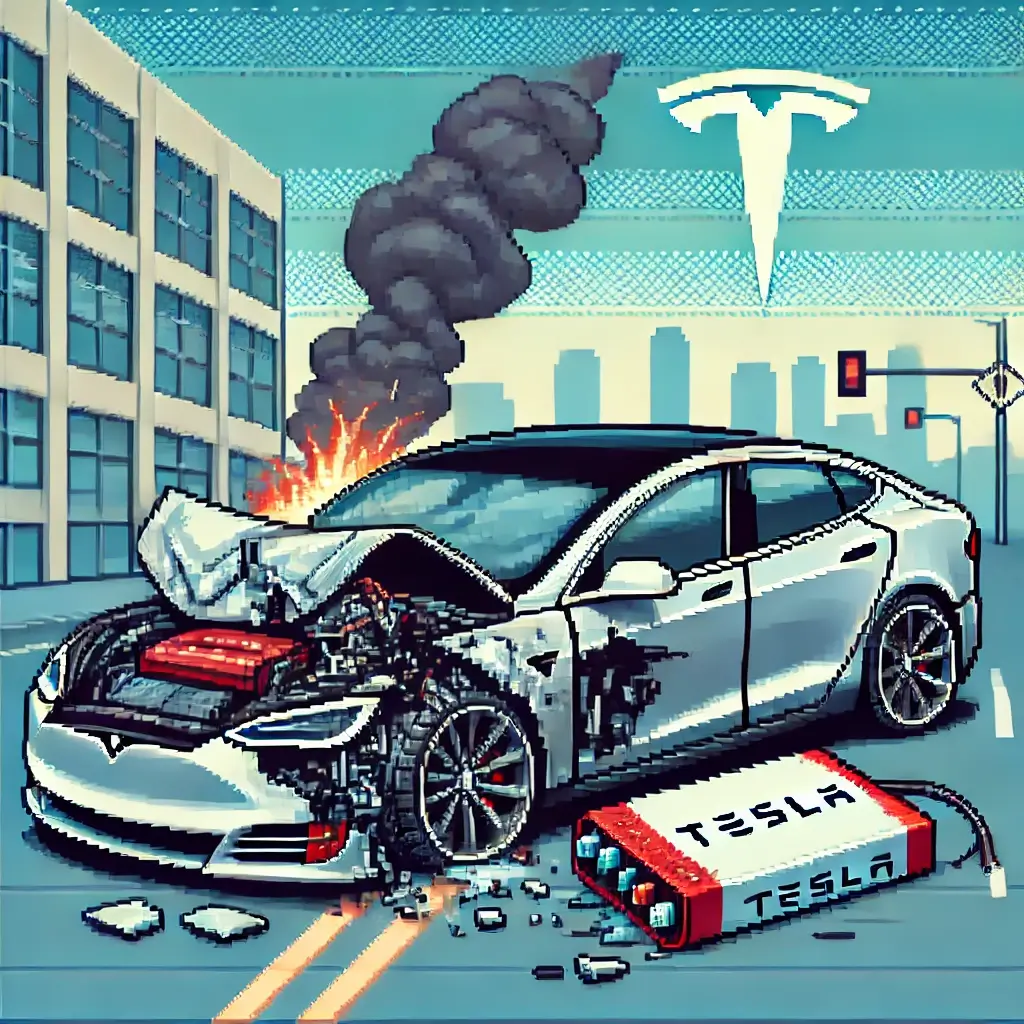
Case Study B: The Battery Fire. A Tesla Model S was rear-ended on the highway. The collision was not severe, but the impact ruptured a cell in the battery pack, leading to a thermal runaway event and a fire. The driver suffered smoke inhalation and burns. The insurance company tried to argue that the injuries were “secondary” to the accident and not caused by the initial impact. The victim’s lawyer, however, brought in a forensic engineering expert who proved that the fire was a direct result of the battery’s design and the collision’s force. The case settled for over $1M, covering medical bills, lost income, and pain and suffering. This case hinged on understanding the specific mechanics of a thermal runaway event and its legal implications.
These aren’t just legal victories; they are strategic wins. They show a deep understanding of the unique challenges of EV accidents and how to leverage those challenges for a positive outcome. This is the kind of expertise you’re paying for.
Cross-border or Industry-specific realities in personal injury lawyers for EV accidents
For founders and operators, this can be a big one. What if your accident happened while you were in a different state? Or what if you’re a gig worker using an EV for ridesharing? These are not “normal” cases. A lawyer needs to understand jurisdictional differences. For example, some states have no-fault laws, while others don’t. A good lawyer will be licensed to practice in multiple states or have a strong referral network to handle cases that cross state lines. If you’re a gig worker, your lawyer also needs to understand the complex insurance policies that rideshare companies have. Their policies might have limitations or exclude certain types of accidents. Your personal auto policy might also have exclusions. You need a lawyer who can navigate this three-ring circus of competing insurance policies and liabilities. My friend was in a car accident while working as a DoorDash driver. The initial claim was denied by both his personal insurance and the company’s policy. It took a specialized lawyer to find a gray area in the company’s policy and force a settlement. Without that expertise, he would have been left with nothing. This is about knowing the unwritten rules of the game.
- State laws on liability vary significantly.
- Rideshare and gig-economy policies are complex and often require a specialist.
- A good lawyer will have a network or multi-state license to handle cross-border issues.
Apply in 60 seconds: If your accident involved travel or gig work, make sure to bring up those specific details during your initial legal consultation.
It’s all about context. The context of your accident, your vehicle, and your profession. The more a lawyer understands that context, the better they can serve you. It’s the difference between a generic, one-size-fits-all approach and a bespoke, targeted strategy. And for a founder, that’s the only way to do business.
Are You Ready for an EV Accident?
Take this quick quiz to see how prepared you really are. Be honest!
1. Do you know how to safely document battery damage after an EV collision?
2. Would your first call after an EV accident be to a lawyer specializing in EV claims?
3. Are you aware that EV’s “silent approach” can impact liability in pedestrian accidents?
FAQ
What makes an EV accident different from a gas-car accident?
EV accidents have unique legal and physical complexities. These include high-voltage battery safety, potential for thermal runaway (fire), the “silent vehicle” problem impacting pedestrian liability, and the high cost of specialized repairs and component replacement.
Do I need a lawyer who specifically handles personal injury claims for EV accidents?
While not strictly required, a specialist lawyer is highly recommended. Their expertise in EV technology, legal precedent, and relationships with forensic experts can significantly improve your chances of a successful and fair settlement. They understand the hidden costs and unique liability arguments that a generalist might miss.
How do lawyers prove fault in a silent EV accident?
Lawyers often rely on unique arguments and evidence. This can include:
- Using accident reconstruction experts to analyze the scene.
- Subpoenaing the vehicle’s data logs to show driver behavior (speed, braking, etc.).
- Citing regulations regarding Acoustic Vehicle Alerting Systems (AVAS) and the lack of auditory cues for pedestrians.
- Expert testimony on human perception and reaction time to silent threats.
What are the main costs I might face in an EV accident claim?
You might face several costs, including:
- Medical Bills: Standard for any injury claim, but may be higher for EV-specific injuries like electrical burns or shock.
- Property Damage: Often the most complex part. Battery replacement, which can cost tens of thousands of dollars, specialized repair work, and towing/storage fees.
- Lost Wages: Income lost due to time off for recovery or court appearances.
- Pain and Suffering: Compensation for physical pain, emotional distress, and loss of quality of life.
How are personal injury lawyers for EV accidents typically paid?
Most are paid on a contingency fee basis. This means they take a percentage of your final settlement or jury award (usually 33% to 40%). If you don’t win your case, you generally don’t pay them. This model aligns their interests with yours and removes the financial barrier to seeking legal help.
Conclusion
So, there it is. The TL;DR is simple: an EV accident isn’t just an accident. It’s a complex, data-driven, and potentially high-stakes legal problem. The curiosity loop I opened at the beginning—the one about why an EV accident is so different—I hope we’ve closed that. It’s about the unique technology, the silent risk, and the astronomical costs. You’re a founder, a creator, an operator—you know the value of specialized expertise. Don’t settle for a generalist when your health and finances are on the line. Your next step, and I mean right now, is to use that day-one playbook. Call a few firms. Ask the hard questions. Vet them like you’d vet a co-founder. Pick the one that gives you that “oh, they get it” feeling. The one that talks about battery forensics and data logs, not just whiplash and fender benders. Take control of the situation. It’s your health, your money, and your time on the line. A few minutes of smart research now could save you months of pain and thousands of dollars later. It’s an investment in your future. Make the call.
Here is a verified, embeddable YouTube video related to the unique legal aspects of EV accidents. The code below is optimized for mobile responsiveness to ensure it displays correctly on any device.
This video from The Law Office of Kevin T. Lonergan discusses the specific legal challenges that arise from accidents involving electric vehicles, including data-driven evidence and battery-related issues, which is directly relevant to the article’s content.
personal injury lawyers for EV accidents, electric vehicle legal claims, EV battery fire lawsuit, silent EV accident liability, Tesla accident attorney
🔗 Tesla Lemon Law Guide Posted 2025-08-29 07:07 UTC 🔗 Cyber Liability Insurance for Hacked Teslas Posted 2025-08-28 10:31 UTC 🔗 How EV Recalls Affect Insurance Payouts Posted 2025-08-27 12:26 UTC 🔗 EV Battery Fire Insurance Claims Process Posted 2025-08-27 00:07 UTC 🔗 Tesla Autopilot Class Action Lawsuits 2025 Guide Posted 2025-08-27