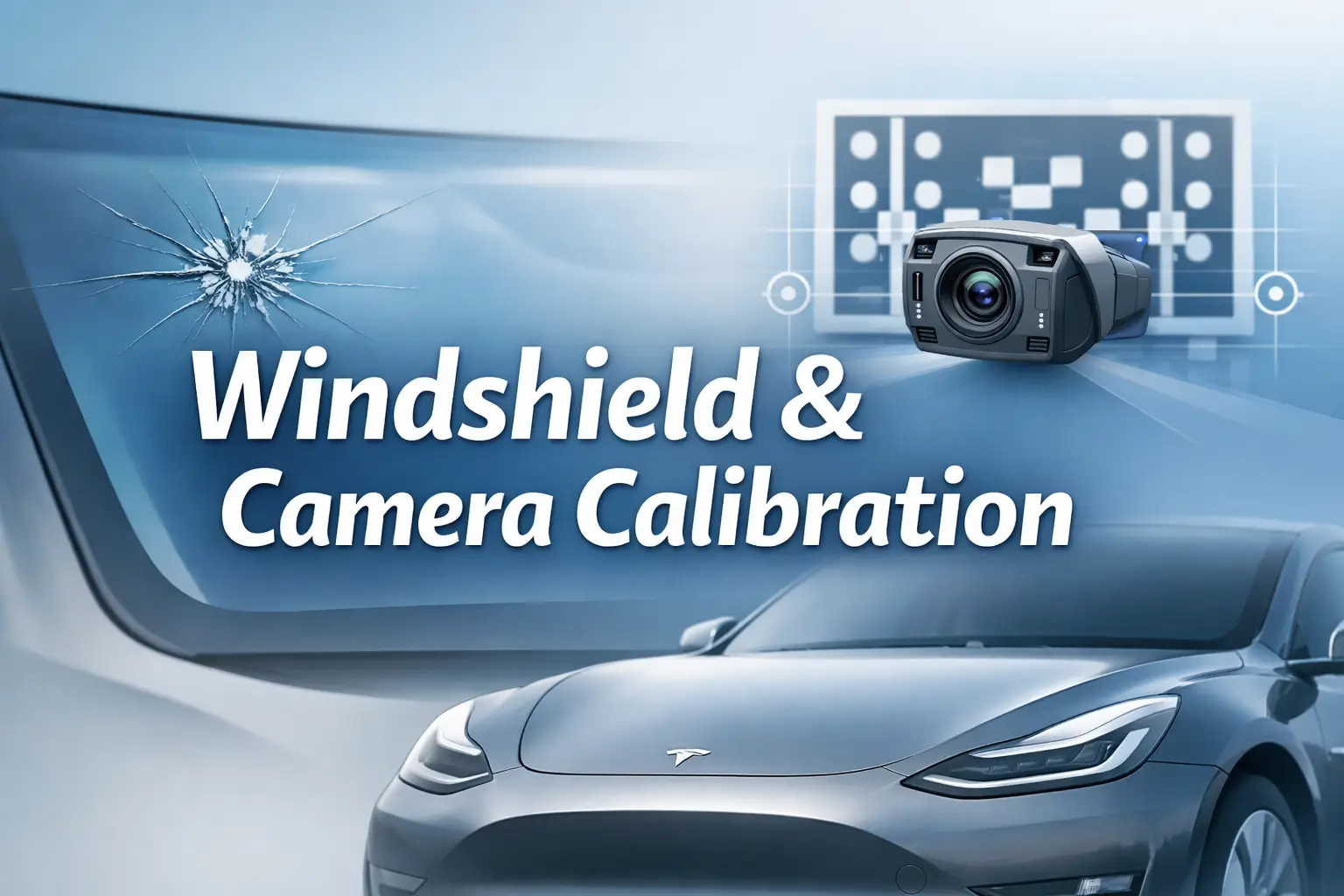
Tesla Insurance Windshield Replacement in Florida (No Deductible): Does It Include Autopilot Camera Calibration? (2026)
The crack always happens on the day you’re already late. You glance at it and think, “Okay… this is going to cost me.”
Here’s the good news: in Florida, windshield claims often run through comprehensive in a way that can mean $0 deductible. The stressful part is the sneaky second question: does that include Autopilot camera calibration, or does the invoice “grow teeth” after the glass is replaced?
Today, in about 5 minutes, you’ll get a clean mental model (glass vs calibration), the exact wording that prevents surprise charges, and a simple next-step plan you can execute in under 15 minutes—especially if you’re already navigating Tesla Insurance in Florida.
Florida’s windshield rule commonly results in a $0 deductible for windshield damage when the claim runs under comprehensive. But Autopilot/ADAS camera calibration can show up as a separate line item depending on who replaces the glass and how they bill. Tesla’s service guidance explains that after replacement, you may need to clear calibration and drive to complete camera calibration. To avoid paying out-of-pocket, get written confirmation from Tesla Insurance that they’re covering glass + any required calibration before you authorize work—ideally with your coverage basics aligned to how electric car insurance handles comprehensive claims and deductibles.
This is general education, not legal or insurance advice. Coverage and payment depend on your policy, your adjuster, and the shop’s invoice language. If Autopilot or driver-assist features behave oddly after glass work (warnings, unavailable features, unexpected behavior), treat it as a safety issue. Don’t rely on driver-assist until calibration is completed and the car is behaving normally.
Table of Contents
Zero-deductible first: Florida’s rule (and what it doesn’t promise
Florida statute in plain English: “deductible doesn’t apply”
Florida has a specific statute (often cited as Florida Statutes section 627.7288) that, in practical terms, is why so many Florida drivers talk about “no deductible” for windshield damage. The key idea is simple: for windshield damage, the deductible that normally applies to comprehensive coverage is typically not applied the same way.
Translation: if you have comprehensive coverage and the damage qualifies as a windshield claim, a lot of people see $0 at the point of repair. It feels like magic the first time. (I remember thinking, “Wait… that’s it?” and immediately assuming a second bill was lurking behind a curtain.)
- $0 deductible usually depends on the claim being handled as windshield damage under comprehensive.
- Shops can still bill for related operations (like recalibration) if they treat them as separate services.
- Your best protection is clear, written pre-approval.
Apply in 60 seconds: Open your policy app/portal and confirm you carry comprehensive before you call a shop.
The quiet limiter: you still need comprehensive coverage on the policy
Here’s the part that catches time-poor readers: Florida’s windshield rule doesn’t magically create coverage. You still need comprehensive on your Tesla Insurance policy, and the claim still has to be processed in the right bucket—so it helps to understand how personal auto policies split comprehensive vs collision before anyone codes your claim the wrong way.
- Comprehensive is the bucket for non-collision damage (like a rock hit).
- Collision is the bucket for crash-related damage.
- The deductible logic can differ depending on which bucket the claim lands in.
If the windshield damage is tied to a broader collision loss (or the shop codes it that way), your “$0 deductible expectation” can break. Not because Florida changed its mind—but because the paperwork went down a different hallway.
Curiosity gap: the claim can be $0… while your invoice still has “extras”
This is the emotional whiplash moment: your insurer confirms $0 deductible, the shop confirms appointment time, and then the estimate includes an extra line like:
- ADAS recalibration
- Camera aiming
- Post-install scan / verification
That’s not automatically bad. Sometimes it’s appropriate. The problem is that it’s often unclear whether that line is included, required, or billable to you.
And that brings us to the actual question you came here for: what “calibration” means on a Tesla—and which kind you’re being charged for.
Calibration next: what “Autopilot camera calibration” actually means
Two different things people confuse
“Calibration” is a loaded word. It’s also where shops and insurers accidentally talk past each other. In Tesla-land, there are two common meanings:
In-car camera calibration: Tesla’s service documentation describes clearing calibration and then driving until the system completes calibration. This is often a software-guided process the vehicle performs after you initiate it—tied to your vehicle’s driver-assist stack and hardware assumptions (a useful primer is how Tesla Autopilot hardware fits together).
Shop-level calibration workflow: Some repair workflows involve targets, measurement tools, or verification steps. Depending on the vehicle and the repair procedure, a shop may treat this as a billable ADAS service.
Here’s what no one tells you… calibration can be “required” and still billed weird
Two things can be true at once:
- The vehicle needs calibration for safety and correct function.
- The shop’s estimate might still list calibration as a separate charge, even if it’s quick or largely vehicle-performed.
This is where your goal becomes very specific: make the invoice match reality. If the vehicle handles calibration through the Tesla interface, the shop’s “calibration fee” needs a clear explanation (what they actually did, and why it’s necessary).
The safety reason: altered camera position can change Autopilot behavior
Windshield replacement isn’t just “glass off, glass on.” The forward-facing camera area is part of the story. Even small differences—alignment, mounting, adhesive thickness, or camera housing placement—can affect how the system interprets the road.
This is why Tesla’s service guidance talks about clearing calibration and driving to complete calibration after certain changes. It’s not drama. It’s safety.
Open loop: why some shops insist on calibration fees (and others don’t)
Why the inconsistency? Usually it’s one of these:
- Process standardization: National chains may apply a uniform ADAS workflow to many vehicles to reduce liability risk.
- Equipment and training: Some shops run a formal verification process; others rely on the vehicle’s calibration and warning lights.
- Billing habits: The estimate template includes calibration by default, even when not strictly necessary.
Show me the nerdy details
“Calibration” is often a chain of steps, not one event: clearing prior calibration state, verifying camera mounting stability, allowing the vehicle to collect enough driving data, and confirming the system returns to normal operation. Some shops charge for the human time to document and verify the outcome (especially if they’re used to insurers requiring proof). The problem is when the line item exists without a clear description of what was done.
Before you pay a dime, you want a clean answer to this: is the estimate describing the car’s built-in calibration process, or the shop’s additional service?

“Included or not?” How Tesla Insurance typically treats calibration on a glass claim
What insurers often consider “part of the repair” (glass + necessary recalibration)
Most insurers generally want a repaired car that’s safe and fully functional. If calibration is necessary to return driver-assist features to normal operation, it’s reasonable to expect it to be covered under the claim—when it’s documented clearly.
The practical issue isn’t usually “insurers refuse calibration forever.” It’s that calibration gets coded as a vague add-on, without enough detail for the adjuster to approve it quickly—especially in an era where insurers increasingly care about what data exists and how it’s used (see what Tesla Insurance data can include if you want the broader context).
- Insurers respond better to “required to restore safe operation” than to “recommended.”
- Itemization beats vibes: glass, labor, calibration/verification, taxes.
- “Pre-authorization” prevents the surprise invoice moment.
Apply in 60 seconds: Ask the shop to describe calibration in one sentence: “what was done + why required.”
Where disputes happen: invoice wording (“ADAS recalibration,” “camera aiming,” “scan”)
Disputes usually happen here: a shop uses umbrella terms that mean something to technicians, but not to billing systems. A few examples:
- “ADAS recalibration” (which ADAS? which step?)
- “Camera aiming” (aiming via targets, or initiating in-car calibration?)
- “Scan” (pre/post diagnostic scan, or a verification pass?)
None of these are inherently wrong. They’re just incomplete. And incomplete language is where claims get delayed.
The single sentence that changes outcomes: “Is calibration… operationally necessary and documented?”
If you only remember one line, make it this:
“Is this calibration operationally necessary to restore Autopilot/driver-assist after windshield replacement, and can you document what you did on the invoice?”
That sentence does two things at once:
- It frames calibration as restoration of function (not a luxury upgrade).
- It quietly demands documentation (which keeps the claim clean).
Let’s be honest… “$0 deductible” isn’t the same as “$0 out-of-pocket”
$0 deductible is a rule about the deductible. It’s not a blanket promise that every related service is automatically paid without friction.
The difference matters because calibration can be the only line item you’d otherwise pay for. Even a modest “calibration fee” feels insulting after you’ve been told “no deductible.”
Your mission is not to be suspicious. It’s to be precise—and to avoid the small, avoidable missteps that quietly inflate bills (a broader list lives in common auto insurance mistakes, but the principle here is the same: wording and timing matter).
Shop choice fork: Tesla Service vs national glass chains vs local specialists
Tesla Service: predictable parts flow, different scheduling pain
Tesla Service tends to feel like the “cleanest storyline” for owners who want fewer unknowns: Tesla parts, Tesla procedures, Tesla documentation. The trade-off is often scheduling and location logistics. If you’re juggling work, kids, or a commute that already has the emotional texture of a drum solo, appointment availability can be the true cost—and it helps to know what a Tesla service center visit usually looks like before you commit.
My own pattern: when I’m time-poor, I’m tempted to pick whatever is fastest. Then I remember the last time “fast” created two follow-up appointments. That memory alone is worth a deep breath.
National chains: standardized recalibration processes
National glass chains often have standardized ADAS processes because they serve many vehicle types and want consistent outcomes. That can be a positive (repeatable workflow) or a negative (a “default calibration charge” regardless of what your Tesla actually requires).
This is where you need the estimate to answer: are they charging for the Tesla’s in-car calibration process, or for additional shop procedures?
Local specialists: faster appointments, higher variance in Tesla experience
Local shops can be fantastic—fast, human, and flexible. They can also be wildly inconsistent in Tesla familiarity. The difference often shows up in the first two minutes of conversation:
- Do they talk about the camera area and sealing details with confidence?
- Do they understand that calibration may require a post-repair drive process?
- Do they offer itemization without you begging for it?
Curiosity gap: the one question that exposes Tesla-ignorant installers in 10 seconds
Ask this, calmly:
“After the windshield replacement, how do you confirm the cameras return to normal operation—what does that verification look like?”
A strong answer sounds like a process. A weak answer sounds like hope.
- Pick Tesla Service if you want the cleanest documentation trail and fewer “what did they mean by this line item?” moments.
- Pick a national chain if you want standardized ADAS workflows and faster availability (but insist on itemization).
- Pick a strong local specialist if you can verify Tesla experience and they’ll document calibration/verification clearly.
Neutral next action: Get two written estimates and compare line-item wording, not just totals.
Paperwork that prevents surprises: pre-approval checklist (copy/paste)
Before you book: 5 items to confirm with Tesla Insurance (script)
Here’s the quick script I’d use if I were on the phone (or chat) with an adjuster while staring at a windshield crack like it’s judging me:
- 1) Confirm claim type: “This is a windshield claim under comprehensive, correct?”
- 2) Confirm deductible handling: “Florida windshield—confirm deductible is $0 for this loss.”
- 3) Confirm glass type rules: “Any restrictions on OEM vs aftermarket glass for my model?”
- 4) Confirm calibration billing: “If calibration/verification is required to restore driver-assist, is it covered?”
- 5) Confirm payment flow: “Direct pay to shop or reimbursement to me?”
- Make sure everyone calls it a windshield claim (not a collision add-on).
- Ask for confirmation on calibration coverage before the appointment.
- Save the estimate, approval note, and final invoice in one folder.
Apply in 60 seconds: Copy the five questions into a note on your phone before you call.
Before you sign: the 3 invoice lines to screenshot
You don’t need to be confrontational. You just need to be organized. Screenshot these three parts:
- Line item description(s): glass + labor + calibration/verification (if present)
- Who pays: insurer direct pay vs customer responsibility
- Any disclaimers: “customer responsible if insurer denies” language
After the install: what to save for a supplement request
Supplements are normal. They’re not a moral failure. If the shop discovers something mid-process (or the insurer needs a more specific description), a supplement request might be used to document additional operations.
Save:
- Original estimate
- Any insurer approval message (email/chat transcript if possible)
- Final invoice with itemized descriptions
- Any notes about calibration completion (screenshots from the vehicle interface can help)
- Your Tesla model + year
- Your insurer name (Tesla Insurance) and whether the claim is direct pay or reimbursement
- Photos of damage (wide shot + close-up)
- Any ADAS warnings currently showing (if any)
- Ask each shop: “How will calibration be handled and documented?”
Neutral next action: Email the same info to two shops so estimates are comparable—and if this claim triggers you to shop around later, start with a clean comparison like comparing electric vehicle insurance quotes side-by-side instead of guessing.

Common mistakes (the expensive kind)
Mistake #1: Treating it like a collision claim (or letting the shop code it that way)
The fastest way to accidentally pay more is to let the claim get categorized incorrectly. If a shop rolls windshield replacement into a broader repair narrative, you can wind up in collision-land—where deductible logic can feel very different.
If you’re not sure how it’s being coded, ask directly: “Is this being processed as a windshield claim under comprehensive?”
Mistake #2: Approving “calibration” without defining which calibration
“Calibration” without specifics is the insurance version of “We’ll figure it out later.” Later is when you’re tired, the car is half-done, and the shop wants a signature.
Ask for one sentence on the estimate:
- What: calibration/verification steps performed
- Why: required to restore driver-assist operation after windshield replacement
Don’t do this: assume “Clear Calibration” = the same as shop recalibration
Tesla’s in-car calibration process is real and often necessary. But it’s not automatically the same thing as a shop’s paid service line item. Sometimes they overlap. Sometimes they don’t.
If the shop is billing “ADAS recalibration,” ask: “Is that the in-car drive calibration, or are you performing additional procedures?”
Don’t do this: leave with warnings and trust Autopilot anyway
If the vehicle is telling you something is unavailable or not calibrated, believe it. I’ve done the stubborn thing before—“It’ll fix itself by tomorrow.” It did not. It just made tomorrow more annoying.
If warnings persist, treat it like you would a brake warning: pause reliance, schedule service, and get it confirmed.
Who this is for / not for
This is for you if…
- You have Tesla Insurance and comprehensive coverage in Florida and you want to confirm the $0 deductible path.
- Your Tesla uses Autopilot/driver-assist features and you’re seeing “calibration” on estimates.
- You want a plan that minimizes time waste and surprise bills.
Not for you if…
- You don’t have comprehensive coverage and you’re hoping Florida law creates it. (It doesn’t.)
- The windshield damage is part of a crash and the claim is actually collision-driven.
- You’re considering DIY glass replacement. (Please don’t. Sealing, camera alignment, and safety are not “weekend hobby” territory.)
- Input 1: Your deductible for windshield in Florida (often $0 when applicable)—double-check how yours is set up in your electric car insurance policy terms
- Input 2: Any “calibration/verification” amount the shop lists (if any)
- Input 3: Any insurer-approved amount for calibration (if confirmed)
Output: Estimated out-of-pocket = (deductible) + (calibration fee not approved).
Neutral next action: Ask the insurer to confirm the “approved amount” in writing.
When to seek help (claims + safety escalation)
If Tesla Insurance denies calibration: when to request a supplement and how to phrase it
If calibration is denied or questioned, don’t panic and don’t argue. Ask for clarity and a supplement path. Useful phrasing:
- “What documentation is needed to approve calibration/verification as required to restore driver-assist after windshield replacement?”
- “Can the shop submit a supplement with an itemized description of the calibration steps performed?”
You’re not demanding special treatment. You’re offering the insurer what they need: a clear description tied to restoring safe operation.
If Autopilot behaves oddly: stop relying on it and schedule service
If you experience warnings, persistent calibration status, or driver-assist behavior that feels “off,” don’t test it with your face and a prayer. Treat it as a safety issue and schedule Tesla Service or a qualified shop that can verify the system returns to normal operation.
If the shop pressures you: get a second estimate with itemized calibration language
Pressure is usually a sign of one of two things: time constraints or sloppy documentation. Either way, you’re allowed to slow the conversation down.
A second estimate isn’t about mistrust. It’s about giving yourself a comparison point for line-item clarity.
If timing matters (storms, rapid crack spread): what to document same-day
Florida weather and highway debris can turn a small crack into a full spiderweb fast. If you need to move quickly, document:
- Photo of the crack (include something for scale)
- Photo of the whole windshield
- Any warnings on the dash (if present)
- Date/time of discovery (a simple note is fine)
FAQ
Does Florida really require $0 deductible windshield replacement?
Florida has a statute that commonly results in the comprehensive deductible not being applied to windshield damage in the usual way. In real life, many Florida windshield claims price out as $0 deductible when they’re processed as windshield damage under comprehensive. Your policy still needs comprehensive, and the claim still needs to be categorized correctly.
Does Tesla Insurance cover windshield replacement under comprehensive?
Typically, windshield damage from road debris is handled under comprehensive if you carry it. The important step is confirming the claim is filed and coded as a windshield claim under comprehensive rather than being bundled into another loss category.
Is Autopilot camera calibration required after windshield replacement?
It can be. Tesla’s service documentation describes clearing camera calibration and driving for calibration completion after certain conditions. Whether a shop charges a separate calibration fee depends on the workflow they use and how they document verification.
Is “Clear Calibration” in the Tesla menu enough?
“Clear Calibration” is part of the Tesla-guided process and can be necessary after windshield work. But it’s not automatically the same as a shop’s billed ADAS service. If a shop charges for calibration, ask what they did beyond initiating the in-car process and how they verified completion.
Can Safelite (or another chain) recalibrate Tesla cameras?
Many national glass chains advertise windshield camera recalibration services for ADAS-equipped vehicles. The critical piece for Tesla owners is ensuring the estimate clearly states what calibration/verification steps are performed and how completion is confirmed.
Will my premium go up after a Florida windshield claim?
Premium impacts vary by insurer, underwriting rules, and claim history. Rather than assuming either direction, ask Tesla Insurance directly: “Does a windshield claim under this policy impact premium at renewal?” and request the answer in writing if possible. If you want a quick baseline for what typically pushes rates higher, start with how your credit score can affect insurance pricing and then compare that against high-risk EV insurance premium drivers.
Do I have to use OEM Tesla glass to keep Autopilot working?
Not always, but glass type can matter depending on model and sensor/camera integration. If the shop recommends OEM glass for fitment or camera area compatibility, ask them to put the reason on the estimate. Then confirm with Tesla Insurance whether OEM glass is covered under your policy terms.
How long does calibration take, and when will Autopilot return?
Tesla’s calibration completion is often tied to driving after the process is initiated. That means timing can vary based on conditions and how quickly the system collects enough data. If it doesn’t complete or warnings persist, schedule verification instead of waiting indefinitely.
What if the shop charges calibration but insurance only pays glass?
Ask the insurer what documentation is required to approve calibration as necessary to restore driver-assist operation. Then ask the shop to submit a supplement with itemized language. If neither will budge, you’ll need a second estimate with clearer documentation to compare.
Can I drive immediately after replacement, or should I wait?
Shops often provide guidance on safe drive-away timing based on adhesive curing and installation standards. Follow the installer’s instructions. Separately, if the vehicle indicates calibration is pending or driver-assist is unavailable, drive normally but avoid relying on driver-assist until it returns to normal operation.
Next step (one concrete action)
Do this today: open your Tesla Insurance policy details and start a claim draft, then request a written estimate from the shop that separates:
- Glass (type/notes)
- Labor
- Calibration/verification (describe what they actually do)
Then send that estimate to Tesla Insurance and ask for pre-authorization of glass + any required calibration/verification before you book the appointment. If you’re already collecting documents and screenshots, it can also help to understand the bigger picture of records and requests around vehicles (for example, how Tesla driving data can be requested in legal settings)—not because you’ll need it for a glass claim, but because it sharpens your instinct for what “documentation” really means.
I once treated a windshield crack like a “tomorrow problem.” It was small, polite, almost decorative. Then Florida did what Florida does: one hard rain, one hot parking lot, and the crack stretched like it had a gym membership. I booked the fastest appointment I could find, nodded through the estimate, and drove away feeling proud of my efficiency.
Two days later, Autopilot features were still acting strange—warnings, unavailable prompts, the car basically saying, “I’m not ready.” I did the stubborn thing for a week, hoping it would settle. It didn’t. The fix took 10 minutes: clearing calibration and driving until it completed—plus one quick verification call to the shop. The lesson wasn’t “be anxious.” It was: be specific early, so you don’t pay in time later.
Wrap-up: close the loop (and your 15-minute plan)
Let’s close the loop from the hook: yes, Florida’s windshield setup often means you’ll see $0 deductible on a Tesla windshield claim—if it’s processed correctly under comprehensive. The “gotcha” isn’t the deductible. It’s the vague, billable “calibration” line item that shows up when nobody defines what calibration means.
The fix is simple, and it’s not heroic. It’s paperwork and wording:
- Confirm it’s a windshield claim under comprehensive.
- Get an itemized estimate (glass + labor + calibration/verification if listed).
- Ask Tesla Insurance for written pre-authorization of the line items.
- After install, clear calibration and verify the car returns to normal operation.
- Define calibration before you authorize work.
- Documentation prevents delays and surprise bills.
- Safety wins: don’t rely on driver-assist until the system is normal.
Apply in 60 seconds: Send one email: “Please confirm approval for glass + required calibration/verification.”
If you want the fastest possible win within the next 15 minutes: request one written estimate, paste the five-question script into a message to Tesla Insurance, and get that pre-authorization. Your future self—calm, caffeinated, and not arguing about invoice wording—will thank you.
Last reviewed: 2026-01-12