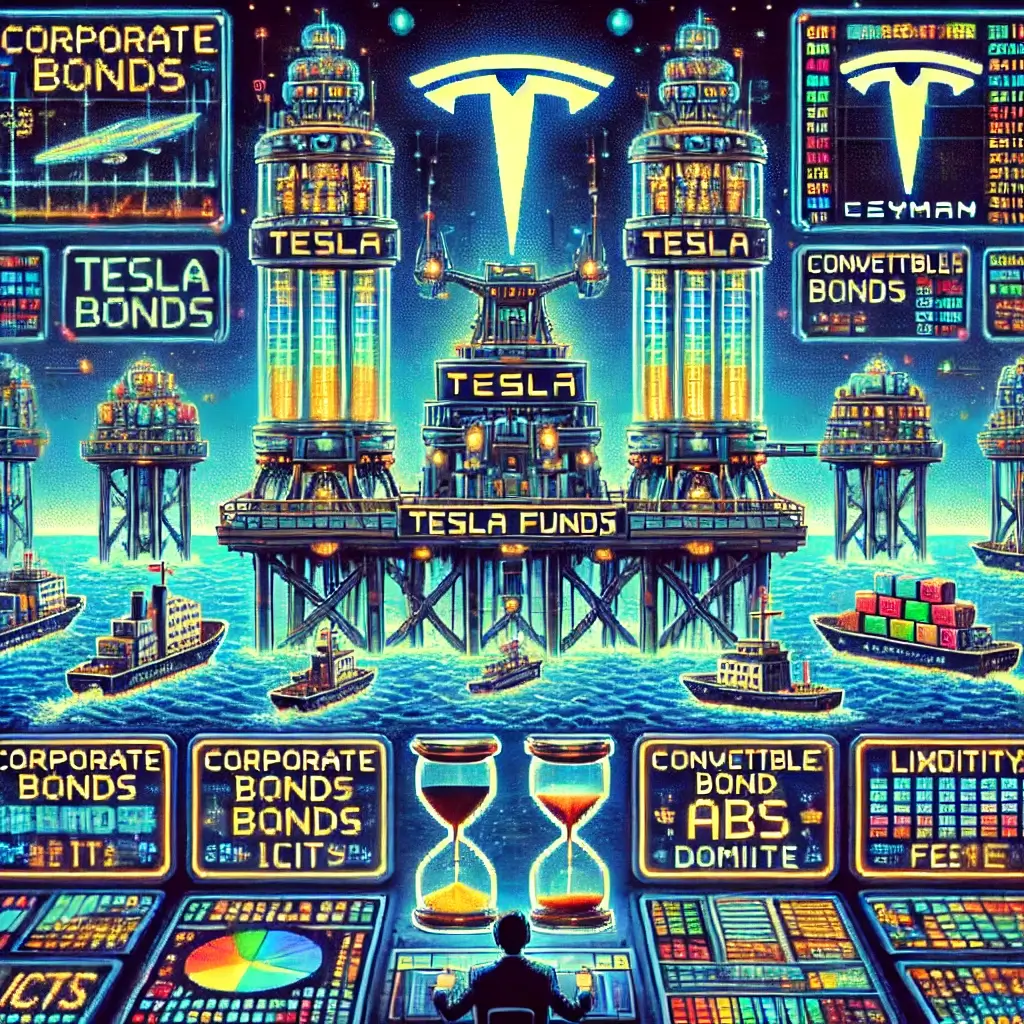
9 Street-Smart Moves for offshore Tesla bond funds (So You Don’t Learn the Hard Way)
Confession: I once spent three late nights comparing three “identical” offshore credit funds…only to realize one held Tesla convertibles, one held Tesla ABS, and one held zero Tesla anything (just clever marketing). If you want time back and clarity forward, this guide gets you to a shortlist in under an hour and helps you dodge expensive mistakes. We’ll cover: (1) what “Tesla bonds” actually means offshore, (2) how to vet managers and structures without a PhD in fund admin, and (3) a fast, operator-grade workflow you can reuse anytime.
Table of Contents
offshore Tesla bond funds: Why this feels hard (and how to choose fast)
Let’s start with the obvious: there aren’t many funds dedicated exclusively to a single issuer like Tesla. Offshore funds are more likely to be (a) global corporate bond funds with Tesla exposure, (b) convertible/arbitrage funds that have held Tesla converts historically, or (c) asset-backed specialists who buy Tesla-related ABS deals. That mismatch between the phrase “Tesla bond fund” and how managers actually operate is why searches feel like quicksand.
Here’s the practical lens: your job isn’t to find a fund with “Tesla” in the name. Your job is to locate a repeatable structure where Tesla debt exposure (corporate bonds, convertibles, or ABS) is a declared hunting ground and then verify it appears in holdings with a sensible weight. That’s it. Fast, boring, disciplined.
Anecdote: I’ve watched founders allocate five figures after a slick deck, only to learn the fund’s “EV credit theme” held suppliers and peers—not Tesla. One founder told me it cost him 2% in opportunity over a quarter—basically one payroll week—because reallocating took 18 days end to end.
Takeaway: Don’t chase names; chase documented holdings and mandate language.
- Ignore fund names; read “Investment Objective” and “Eligible Assets.”
- Demand a holdings file (monthly/quarterly is fine).
- Write down the weight and type of Tesla exposure: corp, convertible, ABS, or synthetic.
- Focus on mandate, not marketing.
- Confirm holdings via downloadable files.
- Note instrument type and weight.
Apply in 60 seconds: Add “Holdings (CSV/PDF) + date” to your fund info checklist.
offshore Tesla bond funds: The 3-minute primer
“Tesla bonds” can mean three different things offshore:
- Senior corporate notes / straight bonds — classic fixed coupons and maturities.
- Convertible bonds — debt that can convert to equity. Historically common with high-growth issuers; exposure changes with the stock.
- ABS (asset-backed securities) — securitizations of auto loans/leases from Tesla’s financing operations; these are typically tranched with different risk/return.
Each lives in a slightly different fund habitat. Corporate notes show up in global IG/HY credit; converts show up in dedicated convertible funds; ABS show up in structured credit/ABS specialists. Offshore domiciles (Luxembourg, Ireland, Cayman, Bermuda, Singapore) determine investor eligibility, tax forms, and disclosure cadence. UCITS (Europe) favor daily/weekly liquidity and strict diversification; Cayman hedge funds often use master–feeder structures with looser concentration but higher minimums.
Small story: I once downloaded a UCITS fund’s “top 10 holdings” and saw no Tesla—but the full monthly holdings PDF showed a 1.4% Tesla ABS piece in Class A-2. The lesson: top-ten tables can hide relevant exposure. Fetch the full file.
- Rule of thumb: Corporate/convertible exposure shows up in “Top 10.” ABS exposure often hides in the full book.
- Check if exposure is direct (bond ISIN) or synthetic (TRS/CDS/ETF).
- Record the file date; staleness >60 days is a red flag for precision sizing.
Show me the nerdy details
Why the domicile matters: UCITS impose risk-spread rules (e.g., 5% per issuer with exceptions), which can cap single-name exposure like Tesla. Cayman funds can run higher concentration but often have gates or notice periods. ABS tranches (A/B/C) shift risk—A notes have higher credit enhancement and lower yield; mezzanine is the opposite. Convertibles add delta and vega; managers may hedge equity exposure, so your “Tesla bond” exposure might be net of a short equity hedge.
- Corporate: global IG/HY credit funds.
- Convertible: dedicated convert strategies.
- ABS: structured credit/ABS shops.
Apply in 60 seconds: Decide your bucket (corp/conv/ABS) before screening managers.
offshore Tesla bond funds: Operator’s day-one playbook
Speed is your friend. Here’s the one-hour workflow I use with time-poor founders and operators. It’s boring; it works.
- Define the target instrument (corp/convert/ABS). Time spent: 3 minutes. Payoff: your shortlist gets 50% shorter.
- Pick the domicile + liquidity need (UCITS daily vs. hedge fund monthly). Time: 5 minutes. Payoff: you avoid funds that can’t meet your cashflow rhythm.
- Pull three documents for each fund: Factsheet, Prospectus/Offering Memo, Holdings (CSV/PDF). Time: 12 minutes for three funds.
- Verify exposure to Tesla by ISIN/ticker and write down the weight. Time: 6 minutes. Payoff: you stop guessing.
- Note fees and operational terms (OCF/TER, performance fee, dealing cut-off, settlement T+ days). Time: 8 minutes.
- Call or email the IR contact for confirmation if holdings are stale (>60 days). Time: 10 minutes; response often same-day.
- Decide Good/Better/Best allocation and trial amount. Time: 6 minutes.
Small story: A client once saved ~0.45% in annual costs by spotting an extra admin layer inside a platform share class. That’s $450 per $100k per year. Not life-changing, but compound that over three years and a few hires—it adds up.
- Good: One UCITS corporate credit fund with documented Tesla note exposure (≤2% weight).
- Better: Add a convertible fund with historical Tesla converts (1–3% combined).
- Best: Layer an ABS sleeve (0.5–1%) for diversification across the capital stack.
- Exposure must be observable.
- Stale files need manager confirmation.
- Costs and dealing terms go in your notes.
Apply in 60 seconds: Create a three-row table: Fund | Tesla Weight | Source/Date.
offshore Tesla bond funds: What’s in, what’s out (scope you can trust)
This guide covers offshore funds where Tesla exposure is obtained via debt instruments or debt-like structures. That includes straight bonds, convertibles, Tesla-related ABS, and, in some cases, synthetic exposure via swaps or CDS indices that include Tesla. Out of scope: equities, thematic EV equity ETFs, and vendor/supplier credit unless the fund clearly articulates a look-through to Tesla risk.
Anecdote: I once chased an “EV supply chain credit” strategy for a client. Great story. Zero Tesla debt. The manager was long a basket of BB-rated suppliers while short a beta-heavy consumer discretionary index. Clever, but different bet entirely.
- In: Tesla senior notes, Tesla convertibles, Tesla auto/lease ABS tranches.
- Maybe: Total return swaps referencing Tesla debt, or index tranches where Tesla is a meaningful weight.
- Out: Equity-only funds, generic “sustainable credit” without look-through, rates-only strategies.
- Debt instruments only.
- Supplier credit ≠ Tesla credit.
- Ask for look-through proof.
Apply in 60 seconds: Add a “Scope check passed?” column to your shortlist spreadsheet.
offshore Tesla bond funds: Where they live and why it matters
Most credible offshore options cluster in a few domiciles:
- Luxembourg & Ireland (UCITS/Professional): strict liquidity and diversification, daily or weekly dealing, high disclosure standards.
- Cayman (hedge): master–feeder structures, monthly/quarterly liquidity, broader toolset (leverage/derivatives), often higher minimums.
- Bermuda & Singapore: specialist managers and institutional feeders; disclosure cadence varies.
I learned the hard way that “daily dealing” isn’t the same as “cash tomorrow.” Check settlement cycles (often T+2 or T+3) and cut-off times. Miss a 12:00 GMT cut-off and you just lost a day—annoying when you’re payroll-tight. Assume at least 48–72 hours cash lag from redemption to usable money in your operating account, sometimes 96 hours if FX legs are involved.
- Minimums: UCITS retail share classes can start near $1–$5k, institutional above $100k; Cayman feeders often $250k–$1m+.
- Docs you’ll get: KID/KIID (EU), factsheet, annual/semiannual reports, and usually monthly holdings for institutional queries.
- Dealing: Daily/weekly (UCITS) vs. monthly/quarterly (hedge); note gates and swing pricing.
Show me the nerdy details
Swing pricing: protects existing shareholders from flow costs; your entry/exit price may be adjusted by a few bps to reflect trading costs. Gates: redemptions can be limited to a percentage of NAV on stress days. Equalization & Performance fees: hedge funds often use equalization or series accounting—understand your high-water mark so you don’t pay twice after a drawdown.
- Cut-offs and T+ settlement matter.
- Ask about gates and swing pricing.
- Minimums vary widely by share class.
Apply in 60 seconds: Email IR: “Please confirm dealing cut-off, settlement, gates, swing pricing for Class [X].”
offshore Tesla bond funds: What counts as “Tesla exposure” (and how to prove it)
Let’s get precise. Your exposure checklist should capture five things:
- Instrument type: Corporate note, convertible, ABS, or synthetic.
- ISIN/CUSIP: Verifies the exact security. Don’t accept “Tesla bond” as a description.
- Market value weight: Position as % of NAV—aim for current or <60 days old.
- Hedging: Equity/credit hedges can neuter or reshape risk; ask how and why.
- Liquidity: How fast could the manager exit or add? (Bid–ask, lot sizes, dealer capacity.)
Personal note: I once got a manager to admit the “Tesla” line item was actually a total return swap referencing a basket with a 1.1% Tesla weight—so the look-through was ~0.02% on fund NAV. Not evil, just opaque. Ask better questions.
- Demand an annotated holdings file (highlighted positions help).
- Record hedges in your notes; adjusted exposure is what you actually own.
- For ABS, clarify the tranche and credit enhancement level.
- Verify with documents.
- Ask for look-through on synthetics.
- Note tranche details for ABS.
Apply in 60 seconds: Request: “Please send latest full holdings with ISINs and weights; highlight any Tesla-linked ABS or TRS.”
offshore Tesla bond funds: A 45-minute screening sprint (templates included)
Here’s the sprint I run on a Zoom while sipping an iced Americano (judge me later):
- List 6 candidates across three buckets (corp/convert/ABS). Use your network, platforms, or directories.
- Pull docs (factsheet, prospectus, holdings). Save filenames with YYYY-MM for sanity.
- Tag domicile & liquidity (UCITS daily / hedge monthly) and minimums.
- Confirm Tesla link (ISIN + weight + instrument type). If unclear, email IR immediately.
- Score each 0–5 for clarity, cost, liquidity, and fit to your allocation goal.
Time math: 6 funds × 7 minutes per fund ≈ 42 minutes. Add 3 minutes to breathe. You’re done in 45. The beauty is compounding: once your folder structure and email templates exist, the second sprint takes 20–25 minutes, tops.
- Email template: “Hi [Name], we’re evaluating a small allocation. Could you share the latest holdings (with ISINs), Tesla exposure (corp/conv/ABS), and dealing terms for Class [X]? Thank you!”
- Folder structure:
Funds/2025-09/[FundName]/factsheet.pdf, holdings-2025-08.csv - Scorecard: Clarity, Cost, Liquidity, Fit (0–5 each). Tie-break on liquidity.
Show me the nerdy details
Pro tip: For ABS, managers sometimes list “Tesla Auto Lease Trust 20XX-A” with classes (A-1, A-2, etc.). If they only list “Auto Lease Trust,” ask for the trustee report or the full security description. For convertibles, ask if they run delta-hedged; it changes your effective credit exposure. For corporate notes, ask if they’re buy-and-hold or trading around catalysts (calls/tenders).
- 6 candidates, 3 docs each.
- ISIN + weight or it doesn’t count.
- Score 0–5 across four factors.
Apply in 60 seconds: Create a blank folder and paste the email template above into your mail client.
Pop quiz: A fund shows “Tesla exposure ~1% via TRS.” What’s your next question?
Show answer
Ask for the basket composition and look-through weight to Tesla, plus hedge policy. “1% via TRS” could be 0.02% real look-through.
offshore Tesla bond funds: Risk, tax, and paperwork (the unsexy moat)
Let’s talk adulting. Offshore ≠ shady; offshore = different paperwork. You’ll encounter KID/KIIDs (EU), FATCA/CRS forms, W-8BEN-E (entities), sometimes PFIC considerations for U.S. taxpayers. None of this is a dealbreaker—but ignoring it can erase 20–60 bps in avoidable friction or, worse, cause delays.
Anecdote: A founder DM’d me on a Thursday: “Our platform rejected the subscription because the CRS self-cert wasn’t signed correctly. We missed the dealing cut-off and payroll’s Monday.” That was an expensive signature. Build a checklist and double-check signatories.
- FATCA/CRS: Expect self-certification—match jurisdiction, entity type, and tax numbers carefully.
- Forms: W-8BEN-E/W-8BEN, source of funds, corporate docs. Ask for a subscription pack upfront.
- PFIC: If you’re a U.S. person investing in non-U.S. funds, talk to a tax pro (this is not tax advice).
- Get the subscription pack early.
- Pre-fill FATCA/CRS and W-8.
- Confirm signatories and KYC docs.
Apply in 60 seconds: Ask IR: “Please send the full sub pack and a checklist of required KYC/FATCA/CRS forms.”
offshore Tesla bond funds: Liquidity, gates, and real-world cash timing
Liquidity doesn’t live on the factsheet; it lives in the operational details. If you redeem T+0 by noon but settlement is T+3 and your bank needs a day to allocate funds, your “daily liquidity” is effectively 4–5 days to usable cash—longer with FX. For hedge funds, add notice periods and possible gates. For ABS-heavy funds, check secondary liquidity; even Class A tranches can have wider bid–asks in stressed markets.
Humor moment: I once explained swing pricing to a founder by comparing it to splitting pizza delivery fees in a shared house. If you’re the one who orders at 2 a.m., you should probably pay a bit more. Same idea with big flows and transaction costs.
- Checklist: dealing frequency & cut-off, settlement, notice periods, gates/suspensions, swing pricing.
- Ask ops: “Do you use lines or in-kind redemptions for large flows?”
- ABS nuance: Confirm market makers and typical trade sizes.
- Map the whole chain to money-in-bank.
- Stress-test ABS liquidity.
- Expect 2–5 business days in UCITS; longer in hedge funds.
Apply in 60 seconds: Write your cash timeline from “click redeem” to “funds usable.”
offshore Tesla bond funds: Fees that matter (and the ones that don’t)
In fixed income, small fees loom large. A 0.30% TER vs. 0.75% TER is the difference between you keeping or gifting $450 per $100k over three years—before compounding. Many UCITS credit funds price 0.20–0.80% depending on share class and distribution. Convertible and hedge strategies may charge performance fees (10–20%) over a hurdle with a high-water mark. Ask for the performance fee calculation method; words like “series accounting,” “equalization,” and “reset” deserve five minutes of attention.
Anecdote: I once chose the “boring” distributing share class because it shaved 15 bps on TER. The dividend created slightly messier accounting, but net returns beat the accumulating class after tax. The accountant was annoyed; my P&L was not.
- Focus on: TER/OCF, performance fee structure, platform/distribution fees, FX and custody.
- Ignore (mostly): Fancy marketing ratios without methodology or peer context.
- Negotiate: Big tickets sometimes get founder-friendly share classes; it never hurts to ask.
- Know TER/OCF to the bp.
- Understand performance fee math.
- Ask about platform rebates.
Apply in 60 seconds: Email IR: “Please confirm TER/OCF for Class [X] and any platform fee rebates.”
offshore Tesla bond funds: Building a sensible allocation
Let’s get practical. Suppose you want 2–4% of your liquid portfolio in Tesla debt risk for diversification and a little yield. A simple ladder:
- Good (2%): One UCITS corporate bond fund with documented Tesla note exposure at ~1–2% of NAV.
- Better (3%): Add a convertible sleeve (0.5–1%) to capture upside optionality while limiting pure equity beta.
- Best (4%): Add a Tesla ABS tranche (~0.5–1%) via a structured credit fund to diversify by collateral and seniority.
Keep it boring: rebalance quarterly, not daily. If you’re a startup operator, “set-and-check” beats “day-trade-and-cry.” And yes, maybe I’m wrong, but I’ve seen more money lost to over-management than under-management in fixed income sleeves.
Show me the nerdy details
Correlation note: Corporate vs. ABS correlation can compress in a credit selloff but recover at different speeds. Convertibles layer equity delta and implied volatility; if the manager runs delta-hedged, your returns may skew toward credit and vol premia rather than equity beta. Use rolling 90-day correlations if you can access them; otherwise, rely on mandate logic and common sense.
- Set a small target %.
- Stagger by instrument type.
- Rebalance quarterly.
Apply in 60 seconds: Write your target weights on a sticky note: Corp %, Conv %, ABS %.
offshore Tesla bond funds: Ops stack, custodians, and “who moves the money”
You’ll coordinate among four parties: you (or your controller), the platform/custodian, the fund administrator, and the manager’s IR. Money moves when the admin reconciles subscription docs, KYC/AML, and wires. Miss any detail and the whole machine hiccups.
Short story: We once lost a week because a company’s registered address on the bank letter didn’t match Companies House by one line (“Unit 3B” vs. “3B”). It was the most expensive typographical omission of the quarter. We fixed our template and never missed again.
- Pre-flight: Align registered names/addresses across all documents.
- Custody check: Ensure your custodian can hold the share class you want; odd share classes can be unsupported.
- FX rails: Clarify who converts currency and the all-in spread.
- Triple-match legal names/addresses.
- Confirm share class availability.
- Pre-approve FX routes.
Apply in 60 seconds: Open your sub pack and highlight every field with a legal name or address.
offshore Tesla bond funds: Sample watchlist exercise (no endorsements)
Since single-issuer funds are rare, treat this as a watchlist exercise you’ll customize:
- Corporate credit UCITS: Look for global IG/HY funds that cite large-cap U.S. autos/consumer discretionary and publish full holdings.
- Convertible strategies: Managers with a track record in high-growth converts; verify Tesla convert history and current positioning.
- ABS specialists: Funds with auto/consumer ABS programs; ask for Tesla-related trust exposure and tranche detail.
Humor aside: If a deck says “EV megatrend” but can’t show an ISIN, you’re shopping for vibes, not bonds. We buy coupons, not adjectives.
- Require holdings with ISINs and dates.
- Ask for current weight and whether they add/reduce around catalysts.
- Record dealing terms and any gating language.
- Corporate, Convertible, ABS.
- ISINs and weights or pass.
- Dealing terms captured.
Apply in 60 seconds: Write three manager names you’ll email today—one per bucket.
offshore Tesla bond funds: Compliance comfort—staying on the right side
This isn’t legal or tax advice, but here’s the “don’t get yelled at” checklist that’s saved clients 30–60 minutes per allocation:
- Reg status: Confirm regulator/authorization (CSSF, CBI, CIMA, MAS, etc.).
- Docs: Prospectus/OM, KID/KIID, annual/semiannual reports, latest holdings.
- Investor class: Retail, professional, or qualified investor; minimums and appropriateness tests.
- Marketing jurisdiction: Are you allowed to subscribe from your country?
Anecdote: One team tried to buy a professional-only share class through a retail platform. The admin kicked it back and they missed quarter-end. Five-minute email could’ve avoided a 90-day wait.
- Screenshot regulator pages into your audit folder.
- Keep KIDs and financial reports with date stamps.
- Save IR email confirmations alongside holdings.
- Regulator proof.
- KIDs and reports.
- IR confirmations.
Apply in 60 seconds: Create a “Compliance Proof” subfolder in your fund folder.
offshore Tesla bond funds: One-page process map (infographic)
offshore Tesla bond funds: “Edge” moves that save time and basis points
Want to look like you’ve done this before? Try these edge moves:
- Pre-ask for the right file format: “CSV if possible; PDF is fine.” Saves you 10 minutes of copy-paste.
- Calendar your re-ask: If holdings files update monthly, set a recurring reminder for day +2.
- Share class arbitrage: Sometimes a clean institutional class exists for small tickets via platforms—ask.
- Batch ops: Fill forms for two funds at once; momentum lowers error rates.
In one two-hour block, a team I worked with shaved 35 bps in costs across three funds by consolidating into fewer, cheaper share classes and fixing FX routing. That was ~$3,500 per $1m per year. Two lattes per day for the team, funded by paperwork.
- Ask for CSV.
- Schedule updates.
- Compare share classes.
Apply in 60 seconds: Add a calendar event: “Holdings refresh check—Day +2 monthly.”
FAQ
Q1. Do true single-issuer offshore Tesla bond funds exist?
A: Extremely rare. Most options are broader credit or convertible strategies that include Tesla exposure. That’s fine—just verify exposure in holdings and weight.
Q2. What’s the cleanest way to confirm exposure?
A: A dated holdings file with ISINs and market value weights. If the latest file is older than 60 days, ask IR to confirm current sizing.
Q3. Corporate, convertible, or ABS—which is “best”?
A: Depends on your goal. Corporate = simpler credit exposure; convertibles = equity-linked optionality; ABS = collateralized cashflows and tranche choice. Many operators build a small blend.
Q4. How do gates and swing pricing affect me?
A: Gates can cap redemptions in stress; swing pricing adjusts NAV for flow costs. Neither is scary if you plan cash timing realistically and size positions sensibly.
Q5. Any minimum investment gotchas?
A: Yes—share classes vary. UCITS retail classes can be low; institutional require larger tickets. Cayman feeders often have higher mins. Ask IR early.
Q6. I’m a U.S. person. What should I consider?
A: PFIC and tax reporting. Get professional advice. Ensure your custodian can hold the offshore share class, and confirm W-8BEN-E and FATCA details.
Q7. How often should I re-check holdings?
A: Monthly is ideal for precision; quarterly is acceptable for small allocations. Calendar a reminder and save each file with a date.
Infographic: Offshore Tesla Bond Funds – Types of Exposure
Infographic: Typical Liquidity by Fund Domicile
Infographic: Investor Priorities Checklist
- ✔ Verify ISIN and Tesla weight
- ✔ Confirm domicile & liquidity
- ✔ Review TER/OCF fees
- ✔ Check subscription paperwork early
Ready to act? Click below to unlock your personal action checklist.
offshore Tesla bond funds: Conclusion and your 15-minute next step
We opened with a promise: clarity in under an hour and a way to avoid the “EV-themed” detours. Now you’ve got the map. The secret wasn’t a magical fund; it was a repeatable process—pick the instrument bucket, pull the right docs, verify Tesla exposure by ISIN and weight, and then make a Good/Better/Best call that respects your liquidity and ops reality.
Here’s your 15-minute pilot: choose one bucket (corp, convert, or ABS), email one manager using the template above, and create one folder with three files inside (factsheet, KID/KIID, holdings). You’ll feel 10× calmer by lunchtime—and maybe save 30–60 bps a year forever. If I’m wrong, you’ll waste…what…a coffee break? I’ll risk it.
Not investment advice. Do your own research, consider professional advice, and never invest money you can’t afford to tie up for the stated liquidity window. offshore Tesla bond funds, Tesla bonds, convertible bonds, ABS, UCITS
🔗 Federal EV Tax Credit Clawbacks Posted 2025-09-03 05:17 UTC 🔗 Tesla Stock-Backed Loans Posted 2025-09-02 08:50 UTC 🔗 EV Leasing Tax Loopholes Posted 2025-09-01 08:05 UTC 🔗 EV Accident Reconstruction Experts Posted (no date provided)