Neuralink & Automotive: 5 Shocking Futures of Driving!
Table of Contents
- The Dawn of a New Era: Are You Ready?
- So, What Exactly IS Neuralink Anyway?
- Driving Today: Where We Are with Automotive Tech
- Future 1: The Intuitive Drive – No Hands, No Voice, Just Thought!
- Future 2: Hyper-Personalized Commutes & The “Mind-Sync” Dashboard
- Future 3: The End of Distracted Driving? A Safer Tomorrow
- Future 4: Your Car, Your Companion – Emotional AI & Enhanced Interaction
- Future 5: Brain-to-Brain Communication on the Road: The Hive Mind?
- Navigating the Minefield: Ethical Roadblocks & Societal Shifts
- Hitting the Brakes: Regulatory Hurdles and Public Acceptance
- The Road Ahead: Are We Ready to Take the Wheel (Mentally)?
The Dawn of a New Era: Are You Ready?
Alright, buckle up, folks, because we’re about to take a wild ride into a future that sounds straight out of a sci-fi blockbuster. I’m talking about a world where your car doesn’t just respond to your voice or touch, but to your very thoughts. Yes, you heard that right – your thoughts! We’re peering into the speculative, yet tantalizing, realm where **Tesla’s automotive prowess meets Neuralink’s brain-computer interface (BCI) technology**. It’s not just about driving; it’s about rethinking what it means to interact with the machines that move us.
Imagine, for a moment, zipping down the highway, and you need to adjust the AC, change the music, or even reroute your navigation. No fumbling with screens, no shouting at a digital assistant that half the time misunderstands you. Just… *think* it. Like magic, but it’s pure, unadulterated science. Sounds pretty wild, doesn’t it? Almost too good to be true? Well, the components are already here, and the brilliant (and sometimes, let’s be honest, slightly eccentric) minds behind them are pushing the boundaries faster than we can say “autonomous.”
For decades, we’ve been incrementally improving how we drive. From manual gear shifts to automatic, from crank windows to power windows, from basic radios to full-blown infotainment systems. Each step has made our lives a little easier, a little more convenient. But what **Neuralink** brings to the table for **Tesla** isn’t just an incremental step; it’s a quantum leap. It’s about bridging the gap between human intention and machine execution in a way that’s never been possible. It’s about creating a seamless, intuitive experience that redefines the very essence of mobility.
Now, before you start picturing some dystopian future where robots read your deepest desires (we’ll get to the ethical bits, don’t worry), let’s ground ourselves in what these technologies are *currently* capable of and then launch into some truly fascinating possibilities. This isn’t just wishful thinking or idle speculation; it’s a look at the logical (and perhaps inevitable) progression of two of the most disruptive technologies of our time. So, are you ready to engage your mind and explore the **5 shocking futures** that **Neuralink** could unlock for **Tesla** and beyond?
So, What Exactly IS Neuralink Anyway?
Let’s get one thing straight first: what exactly is this “Neuralink” thing that everyone’s buzzing about? Forget the sensational headlines for a moment and let’s talk brass tacks. **Neuralink** is a neurotechnology company founded by Elon Musk, aiming to develop ultra-high bandwidth brain-computer interfaces (BCIs). In plain English? They’re trying to create a direct communication pathway between your brain and a computer.
Think of it like this: your brain is an incredibly powerful, incredibly complex processor that communicates using electrical signals. These signals are like data packets flying around at lightning speed. What Neuralink is doing is developing tiny, flexible “threads” – thinner than a human hair – that can be surgically implanted into the brain. These threads contain thousands of electrodes that can “listen in” on these electrical signals and, crucially, *transmit* them to an external device. Conversely, they can also potentially *send* signals back into the brain. It’s truly mind-blowing stuff, no pun intended.
Their initial goals, and perhaps the most widely discussed, are squarely in the medical field. Imagine restoring sight to the blind, movement to the paralyzed, or even helping those with neurological disorders like Parkinson’s. For example, Neuralink has already showcased a monkey playing a video game using just its mind. This wasn’t some parlor trick; it was a demonstration of the sheer potential of directly translating neural activity into digital commands. This is huge! It means the concept of a BCI isn’t just theoretical; it’s becoming a tangible reality.
So, while the current focus is on helping people with severe neurological conditions, the underlying technology has implications far beyond medicine. If you can control a cursor on a screen with your thoughts, what else could you control? The possibilities are staggering, and that’s precisely where **Tesla’s automotive** world enters the picture. The crossover isn’t as far-fetched as it might seem when you consider the core capability: direct, intuitive control of a machine through mental intent.
Driving Today: Where We Are with Automotive Tech
Before we completely lose ourselves in the futuristic haze, let’s take a quick pit stop and remember where we are right now with **automotive technology**, especially at **Tesla**. Because understanding the present helps us appreciate the magnitude of the future.
Today’s **Tesla** vehicles are already marvels of engineering and software. We’ve got:
Advanced Driver-Assistance Systems (ADAS): Features like adaptive cruise control, lane-keeping assist, automatic emergency braking. These systems are constantly monitoring your surroundings, helping prevent accidents, and reducing driver fatigue. It’s like having an extra pair of eyes and a helping hand, constantly.
Full Self-Driving (FSD) Beta: This is where things get really interesting. Tesla’s FSD aims to achieve full autonomy, meaning the car can navigate city streets, highways, and even complex intersections without human intervention. It uses a sophisticated array of cameras, sensors, and powerful AI to perceive its environment and make driving decisions. It’s still in beta, meaning it’s not perfect and requires driver supervision, but it’s constantly learning and improving. It’s like having a highly skilled, albeit still learning, robot chauffeur.
Intuitive Infotainment Systems: Large touchscreens, voice commands, over-the-air updates – modern cars are essentially computers on wheels. You can stream music, navigate, check traffic, and even play games (when parked, of course!). The user interface is designed to be as seamless as possible, integrating your digital life with your driving experience.
Over-the-Air Updates: This is a game-changer. Unlike traditional cars that require dealership visits for software updates, Teslas get updates wirelessly. This means new features, bug fixes, and performance enhancements can be rolled out to your car overnight, keeping it fresh and improving over time. It’s like your car is constantly evolving, getting smarter while you sleep.
All these technologies aim to make driving safer, more convenient, and more enjoyable. But here’s the kicker: even with all this sophistication, there’s still a barrier. That barrier is the interface. We still use our hands (steering wheel, buttons), our feet (pedals), and our voices (voice commands) to tell the car what we want. What if that barrier could be removed entirely? What if the intention itself was enough? That’s the chasm **Neuralink** seeks to bridge, and that’s where the **Tesla** integration truly begins to spark our imaginations.
Future 1: The Intuitive Drive – No Hands, No Voice, Just Thought!
Okay, let’s dive headfirst into the first mind-blowing future: **direct neural control of your Tesla**. Forget “hands-free” or “voice control.” We’re talking “brain-control.” This isn’t just about turning on your wipers with a thought; it’s about a complete paradigm shift in how we interact with our vehicles.
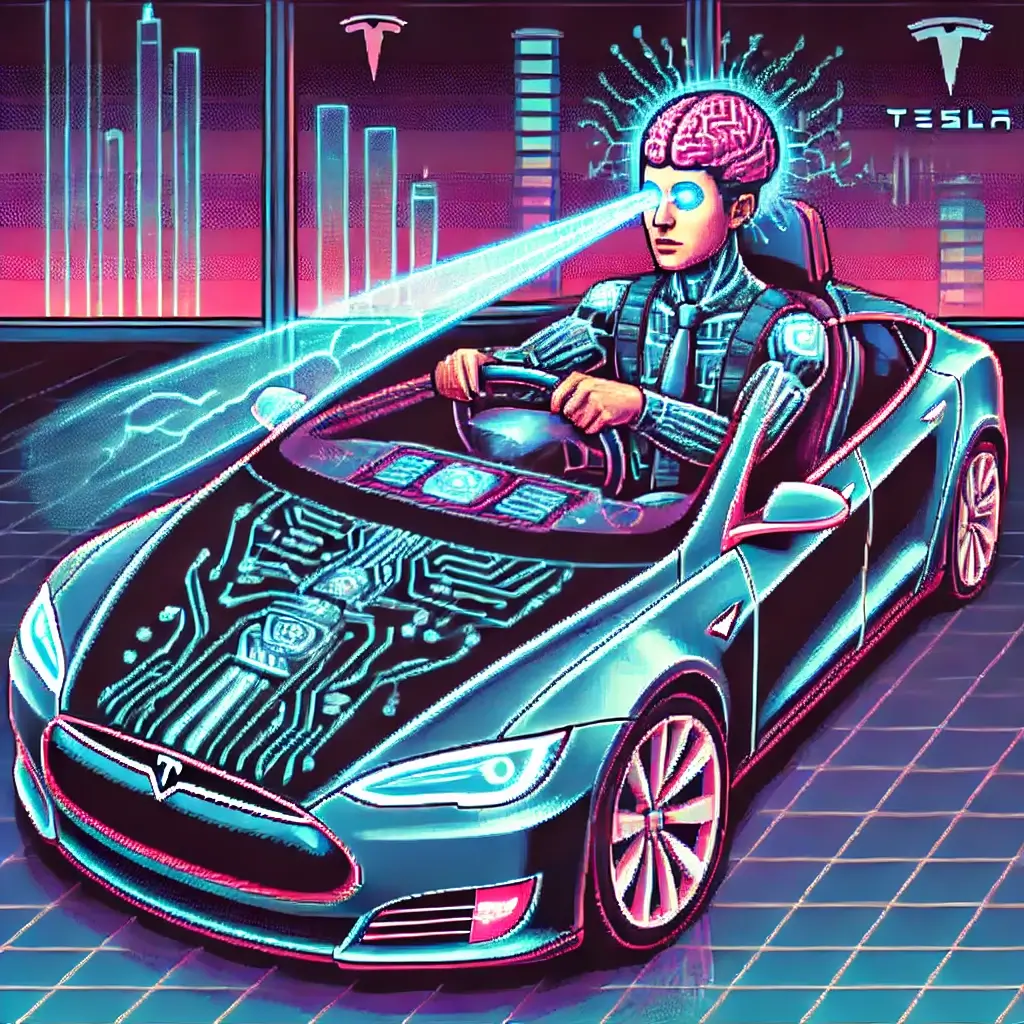
Imagine this: You get into your **Tesla**, and instead of gripping the steering wheel, you simply *think* “drive.” The car recognizes your intent, assesses the route, and off you go. Need to change lanes? A gentle mental nudge, an intuitive thought, and the car seamlessly executes the maneuver. It would feel less like operating a machine and more like an extension of your own body – akin to moving your arm, but on a much grander scale.
This isn’t just about controlling the basics of driving. Think about all the myriad functions in a modern car. Adjusting the cabin temperature? A fleeting thought about feeling warm or cool. Changing the playlist? A mental cue for a specific genre or artist. Opening the sunroof? A simple mental “open.” The speed at which you could interact with your vehicle would be unparalleled. No more searching for buttons, no more missed voice commands in noisy environments. Just pure, unadulterated intent. It’s like having the car literally read your mind for commands.
For those who enjoy driving, this could elevate the experience to an entirely new level. Instead of manual exertion, your focus could be entirely on the road, the scenery, or even just enjoying the moment. The cognitive load of driving would be drastically reduced, allowing for a more relaxed and perhaps even more engaging experience for those who still choose to be “active drivers.” For those who prefer to be chauffeured, it would make the autonomous experience truly effortless, even enabling minor adjustments with sheer thought.
The potential for enhanced safety here is also immense. Imagine your brain detecting an anomaly or a potential hazard fraction of a second before your conscious mind registers it. A **Neuralink-enhanced Tesla** could theoretically react even faster than a human, perhaps initiating emergency braking or evasive maneuvers based on subtle neural signals indicating surprise, fear, or recognition of danger. It’s like your intuition being directly wired into the car’s safety systems. This could revolutionize accident prevention, making roads significantly safer for everyone. But, of course, the big question is: are we ready to cede that much control to our thoughts, and trust a machine to interpret them flawlessly?
Future 2: Hyper-Personalized Commutes & The “Mind-Sync” Dashboard
Moving on to our second tantalizing future: **hyper-personalized commutes** driven by a “mind-sync” dashboard. This isn’t just about setting your seat preferences. This is about your **Tesla** truly knowing *you* on an unprecedented level, and adapting itself dynamically based on your mental state and preferences, thanks to **Neuralink**.
Imagine stepping into your car. The moment you enter, the **Neuralink** system, passively monitoring your brain activity (with your consent, of course!), detects your mood. Feeling stressed after a long day? The car might automatically dim the lights, play soothing ambient music, and even activate a gentle massage in your seat. Feeling energized and ready for an exciting drive? The car could suggest a more dynamic route, adjust suspension settings for a sportier feel, and even project vibrant, stimulating visuals onto the interior displays. It’s like having a personalized sanctuary or adrenaline booster on wheels, tailored to your exact mental state in real-time.
The “mind-sync” dashboard would take personalization far beyond simple profiles. It would learn your preferences on a neural level. Do you tend to get bored on long drives? The car might proactively suggest engaging audio content or activate subtle visual stimuli to keep you alert and entertained. Do you prefer a certain driving style when you’re in a hurry versus a leisurely cruise? Your **Tesla** would adapt its acceleration and braking profiles to match your mental intent, without you needing to manually adjust a single setting. This isn’t just predictive; it’s reactive and incredibly nuanced.
Think about the implications for productivity. If you’re commuting to work, the car could transition into a focused “work mode” as soon as your brain indicates a desire for concentration. External distractions could be minimized, and relevant information (like meeting schedules or news updates) could be subtly presented on the windshield display, directly integrated into your visual field. Conversely, on the way home, it could shift into “relax mode,” preparing you for an evening of unwinding. The car essentially becomes an extension of your mental state, optimizing your environment to suit your needs at any given moment.
This level of personalization would require incredibly sophisticated **Neuralink** data interpretation and a robust AI within the **Tesla** system, but the foundational elements are already being explored in neuro-marketing and adaptive learning. The challenge, of course, will be ensuring privacy and preventing this hyper-personalization from becoming intrusive or overly prescriptive. But the potential for a driving experience that genuinely anticipates and caters to your every mental nuance is truly captivating.
Future 3: The End of Distracted Driving? A Safer Tomorrow
Now, let’s talk about something incredibly important: safety. Distracted driving is a global epidemic, causing countless accidents, injuries, and fatalities every single year. We text, we scroll, we chat, we fiddle with the radio – our attention is constantly pulled away from the primary task of driving. But what if **Neuralink** combined with **Tesla** could finally put an end to this menace? This is our third shocking future: **a dramatically safer tomorrow where distracted driving becomes a thing of the past.**
Imagine a scenario where your **Neuralink-enhanced Tesla** actively monitors your neural activity, specifically looking for signs of inattention or distraction. If your brain signals indicate you’re mentally checking out, perhaps thinking about your grocery list instead of the road ahead, the car could gently, subtly, bring your attention back. This isn’t about scolding you; it’s about intelligent, proactive assistance. It could use haptic feedback in the steering wheel, a gentle auditory cue, or even temporarily take over control for a few seconds to ensure safety, seamlessly and without alarm.
Furthermore, with direct thought control (as discussed in Future 1), the very *need* for manual interaction with infotainment systems, navigation, or climate control would vanish. No more glancing down at a screen to change a song. No more typing addresses into a GPS. All these actions could be performed purely through mental commands, keeping your eyes on the road and your hands on the wheel (or off it, if it’s fully autonomous). This eliminates a massive source of cognitive and visual distraction, making the driving environment inherently safer.
But it goes deeper. Consider the potential for enhanced situational awareness. If **Neuralink** can pick up on your brain’s processing of visual cues, it could augment your perception. For instance, if you miss a pedestrian stepping out from behind a parked car, but your subconscious brain registers it, the **Tesla** could immediately alert you or even initiate braking, acting as a direct extension of your subconscious warning system. It’s like having a sixth sense for road hazards, amplified by cutting-edge AI.
For autonomous vehicles, this integration could be even more critical. While the car drives itself, human supervision is still required for FSD Beta. If **Neuralink** can confirm that the human driver is indeed paying attention and ready to intervene if necessary (by detecting specific patterns of alertness), it adds another layer of verification to the safety equation. It’s about building a truly robust, human-in-the-loop safety system that leverages the best of both biological and artificial intelligence. The vision here is not just fewer accidents, but a complete transformation of road safety, making driving a low-risk activity rather than one fraught with peril. This would save countless lives and significantly reduce the economic burden of crashes.
Future 4: Your Car, Your Companion – Emotional AI & Enhanced Interaction
This next future ventures into more philosophical territory, but it’s a captivating one: **your Tesla evolving into a true companion, thanks to Neuralink, with emotional AI and enhanced interaction.** We’re not just talking about a car that responds to commands; we’re talking about one that understands, anticipates, and perhaps even offers comfort.
Imagine your **Neuralink-enabled Tesla** becoming attuned to your emotional state through sophisticated brain activity monitoring. Beyond just adjusting ambient settings (as in Future 2), this car could genuinely react to your emotions. Feeling frustrated in traffic? The car might not just play calming music; it could engage in a gentle, empathetic conversation, offering a perspective or even a perfectly timed, dry witted joke (because, you know, Tesla and personality). It’s like having a highly intelligent, emotionally aware co-pilot who understands you on a deep, non-verbal level.
This isn’t about the car “feeling” emotions itself; it’s about its AI interpreting your neural signals to understand your emotional state and respond in a way that is genuinely helpful and supportive. Consider a moment of panic due to unexpected road conditions. The car, detecting your fear response via **Neuralink**, could not only take immediate evasive action but also provide reassuring vocal feedback, explaining what it’s doing and why, helping to de-escalate your anxiety. It’s a proactive, emotionally intelligent support system.
This level of interaction would transform the driving experience from a utilitarian act to a genuinely integrated, personal journey. The car could become a confidante, a motivator, or even a digital therapist, offering personalized mindfulness exercises if it detects high stress levels during your commute. It could learn your preferences for conversation, your sense of humor, and even your philosophical inclinations, making every interaction feel unique and tailored.
Of course, this raises questions about the nature of human-machine relationships and the fine line between helpful AI and an overbearing digital presence. We’re already seeing early versions of emotional AI in other fields, but combining it with **Neuralink** data would give it an unparalleled understanding of the human user. The ethical considerations here are profound, but the potential for a car that truly acts as a supportive, intelligent companion, enhancing not just your travel but your overall well-being, is a fascinating and somewhat utopian vision of the future of **Tesla**.
Future 5: Brain-to-Brain Communication on the Road: The Hive Mind?
Alright, hold onto your hats, because this fifth future is truly the stuff of science fiction, yet it’s a logical (if perhaps terrifying) extension of **Neuralink’s** capabilities combined with **Tesla’s** networked vehicles: **brain-to-brain communication on the road, creating a kind of “hive mind” for traffic management and shared experiences.**
Imagine if your **Neuralink** wasn’t just talking to *your* **Tesla**, but also, anonymously and securely, communicating with *other* **Neuralink-enabled Teslas** on the road. This isn’t about reading other people’s thoughts. This is about sharing crucial, non-identifying data and intentions directly from one brain to another, mediated by the **Tesla** network.
For example, instead of relying solely on sensors for traffic flow, imagine a collective neural “sense” of congestion forming. If multiple drivers simultaneously experience a specific stress response or an intent to change lanes due to perceived slowdowns, this aggregate data could be instantly shared and used to optimize traffic light timings, suggest alternative routes, or even coordinate autonomous vehicle movements with unprecedented efficiency. It’s like a decentralized, biologically-enhanced traffic control system, far more dynamic than anything we have today.
But let’s push this even further. What if human intentions could be directly communicated between vehicles in close proximity? For instance, you intend to turn left, and your **Neuralink-enabled Tesla** instantly broadcasts this intention (not your thought, but the *command* derived from it) to the autonomous vehicles around you, allowing for smoother, faster, and safer merging and lane changes. This would move beyond simple turn signals; it would be a direct, intuitive declaration of intent that leaves no room for misinterpretation.
And then there’s the shared experience. While perhaps less practical, consider the ability to share certain sensory or emotional “data” with passengers or even other cars. Imagine a parent in the driver’s seat, using **Neuralink** to share the serene feeling of a beautiful scenic drive with their child in the back, who might be otherwise distracted by a tablet. Or perhaps a driver encountering a particularly thrilling moment (within safe parameters!) on a race track could share that rush of adrenaline with a remote observer. This moves into the realm of shared consciousness, albeit in a highly controlled and probably opt-in fashion.
This “hive mind” concept, where collective human intent and perception, enhanced by **Neuralink**, feeds into **Tesla’s** vast network of vehicles, could lead to a level of traffic efficiency and collaborative driving that seems almost magical. The ethical and privacy implications are, frankly, enormous and would require incredibly robust safeguards. But the potential for a truly symbiotic relationship between human drivers, autonomous systems, and the collective driving experience is a mind-bending prospect, challenging our very notions of individual mobility.
Navigating the Minefield: Ethical Roadblocks & Societal Shifts
Okay, I know, I know. All this talk of brain control, mind-sync dashboards, and automotive hive minds sounds incredibly cool, right? But before we get completely swept away by the promise of a **Neuralink-Tesla** future, we *have* to hit the brakes and talk about the elephant in the room: **the ethical implications and potential societal shifts**. Because with great power (and truly, this is immense power) comes great responsibility, and a whole lot of questions we need to answer as a society.
First off, **privacy and data security**. If your **Neuralink** implant is transmitting your thoughts, intentions, and even emotional states to your **Tesla**, where does that data go? Who owns it? How is it protected from hackers, government surveillance, or even commercial exploitation? The idea of our most intimate mental data being accessible, even in encrypted form, is deeply unsettling for many. Ensuring absolute, ironclad security and transparent data usage policies will be paramount. Without it, public trust will vanish faster than a cheap umbrella in a hurricane.
Then there’s the question of **autonomy and control**. If our cars are literally reading our minds, how much agency do we retain? What if the car misinterprets a thought? What if a momentary distraction, amplified by the system, leads to unintended consequences? The line between human intention and machine execution could become dangerously blurred. We need to define clear boundaries and fail-safes. The human always needs to be ultimately in control, even if that control is exercised by mental veto rather than physical input.
Consider **equity and access**. Will this incredible technology be available to everyone, or will it exacerbate existing societal divides? If **Neuralink-enabled Teslas** offer a significant advantage in safety, convenience, and productivity, what about those who cannot afford or choose not to get such implants? We could see a future where the “have-implants” move faster, safer, and more efficiently, leaving the “have-nots” literally in the dust. This isn’t a problem to solve after the tech is deployed; it needs to be addressed from the outset.
And what about **the very nature of being human**? If our thoughts are constantly being interpreted and acted upon by machines, how does that change our cognitive processes? Do we become less adept at manual control? Does our intuition atrophy? These are profound psychological questions that don’t have easy answers. We’re essentially talking about augmenting human cognition, and while that has immense upside, it also carries unknown long-term consequences for our brains and our behavior.
Finally, there’s the slippery slope of **human enhancement**. While the initial focus of **Neuralink** is therapeutic, the path to enhancement is clear. If you can control a car with your thoughts, what about other machines? What about enhancing memory, learning, or communication? These are discussions that extend far beyond **Tesla** and **automotive** use cases, touching on the very definition of humanity in an age of rapid technological advancement. These ethical considerations aren’t minor footnotes; they are fundamental challenges that require thoughtful, widespread public discourse and robust regulatory frameworks before this future truly arrives.
Hitting the Brakes: Regulatory Hurdles and Public Acceptance
So, we’ve painted some pretty vivid pictures of a **Neuralink-Tesla** future. But let’s be realistic for a moment. Even if the technology works perfectly (a huge “if”!), there are some massive real-world obstacles standing in the way: **regulatory hurdles and, perhaps even more importantly, public acceptance.**
Think about it: who’s going to certify a brain-controlled car as safe? Current automotive regulations are incredibly complex, covering everything from crashworthiness to emissions to driver interfaces. Introducing a direct brain-computer interface adds layers of complexity that no existing regulatory body is equipped to handle. How do you test for misinterpretations of thought? What happens if the implant malfunctions mid-drive? What are the cybersecurity standards for a device literally plugged into your brain and connected to a moving vehicle? The National Highway Traffic Safety Administration (NHTSA) and other global equivalents would have a monumental task on their hands, requiring entirely new frameworks and testing protocols.
Then there’s the legal liability. If a **Neuralink-driven Tesla** gets into an accident, who’s at fault? Is it the “driver” (the person whose brain sent the signals)? Is it **Tesla** for the car’s software? Is it **Neuralink** for the implant? The legal battles would be epic, and the concept of “fault” would need a complete redefinition in the age of mind-controlled machines. Lawyers everywhere are probably already salivating at the thought.
But beyond the legal and regulatory quagmire, there’s the colossal mountain of **public acceptance**. Let’s be honest, getting a brain implant is a pretty big ask for the average person. We’ve seen resistance to vaccines, GMOs, and even self-driving cars. The idea of voluntarily undergoing brain surgery to control your **Tesla** is going to be met with a lot of skepticism, fear, and outright rejection by a significant portion of the population. It’s a huge leap of faith, and it challenges deeply ingrained notions of personal privacy and bodily integrity.
Building trust will be a multi-decade endeavor, requiring impeccable safety records, transparent communication, and a clear demonstration of undeniable benefits that outweigh the perceived risks. Think about how long it’s taken for fully autonomous vehicles to even begin to gain tentative public trust, and that doesn’t involve brain surgery! The narrative around **Neuralink** needs to shift from futuristic novelty to essential, life-improving technology before widespread adoption in non-medical applications like **automotive** is even conceivable.
So, while the technological potential of **Neuralink** and **Tesla** is undeniable, the road to widespread adoption is paved with formidable regulatory hurdles and the challenging task of earning the trust and acceptance of a global public. This isn’t just about engineering; it’s about psychology, sociology, and ultimately, our collective willingness to embrace a truly transformative, and perhaps terrifying, future.
The Road Ahead: Are We Ready to Take the Wheel (Mentally)?
Well, we’ve just journeyed through some truly wild terrain, haven’t we? From thought-controlled driving to hyper-personalized commutes, from the potential end of distracted driving to cars that are genuine companions, and even to the audacious concept of a brain-to-brain automotive “hive mind.” The integration of **Tesla’s** cutting-edge **automotive** technology with **Neuralink’s** brain-computer interfaces truly opens up a Pandora’s Box of possibilities – some exhilarating, some profoundly unsettling.
This isn’t a future that will arrive overnight. The current state of **Neuralink** technology is still primarily focused on critical medical applications, and rightly so. The leap to widespread consumer use in vehicles like **Tesla** requires not only incredible technological advancements but also rigorous testing, robust ethical frameworks, and immense public discourse and acceptance. We’re talking decades, not just years, before these concepts become commonplace, if ever.
But the seeds have been planted. The underlying technologies are advancing at a breakneck pace. The visionaries like Elon Musk continue to push boundaries, often daring us to imagine what seems impossible. What’s clear is that the future of mobility isn’t just about faster, more efficient, or even fully autonomous vehicles. It’s about a deeper integration of human and machine, blurring the lines in ways we’ve only dreamed of in fiction.
So, the question remains for all of us: are we ready to take the wheel mentally? Are we prepared for a world where our cars understand our thoughts, anticipate our emotions, and perhaps even communicate our intentions directly to others on the road? The answers will shape not just the future of **Tesla** and **automotive** technology, but also the very essence of human experience in a rapidly evolving technological landscape. It’s a journey we’re just beginning, and it promises to be nothing short of revolutionary.
Buckle up, and keep thinking! The future is coming, whether we’re ready or not.
Tesla, Neuralink, Automotive, Brain-Computer Interface, Autonomous Driving