The EV Battery Revolution: 3 Game-Changing Technologies You NEED to Know!
Welcome, fellow EV enthusiasts and curious minds!
Have you ever found yourself scrolling through endless news feeds about electric vehicles, feeling excited one moment and utterly overwhelmed the next?
It’s a wild ride, isn’t it?
One minute we’re celebrating incredible range figures, and the next we’re scratching our heads over battery materials and charging times.
I get it.
As someone who’s been following the automotive world for decades, I’ve seen my fair share of promises and pivots.
But let me tell you, what’s happening in the EV battery space right now?
It’s not just a pivot; it’s a full-blown revolution.
And it’s a lot more thrilling than watching paint dry, trust me.
For years, lithium-ion batteries have been the undisputed champions of the EV world.
They powered our Teslas, our Leafs, our Bolts – you name it.
And they’ve done a fantastic job, don’t get me wrong.
But like any good monarch, even the lithium-ion king eventually needs to consider its succession plan.
Because, frankly, for all their brilliance, lithium-ion batteries come with their own set of baggage:
cost, environmental concerns around raw material extraction, and those pesky range anxiety whispers that still haunt some potential EV buyers.
Plus, who hasn’t wished their EV charged in five minutes flat like a gas car?
Just me?
Didn’t think so.
So, what’s next?
Well, my friends, that’s precisely what we’re diving into today.
We’re going to pull back the curtain on the **three most promising battery technologies** poised to redefine the electric vehicle landscape.
Get ready to have your mind blown, because the future of **EV battery** tech is not just coming; it’s practically knocking on our garage doors.
These aren’t just theoretical pipe dreams; these are technologies with serious backing, serious potential, and serious implications for how we’ll drive in just a few short years.
We’re talking about a future where range anxiety is a distant memory, charging is lightning fast, and your EV’s battery is as sustainable as a well-tended garden.
Sound good?
Then buckle up!
Table of Contents
1. Solid-State Batteries: The Holy Grail of EV Power?
Imagine a battery that doesn’t just promise more range and faster charging but also whispers sweet nothings about enhanced safety.
Sounds like a dream, right?
Well, that dream has a name: **solid-state batteries**.
For years, the phrase “solid-state battery” has been whispered in hushed, reverent tones throughout the industry, almost like a mythical creature we’ve all been chasing.
And for good reason.
These aren’t your grandpa’s lithium-ion cells.
Let’s break down what makes them so special.
The Liquid Problem and the Solid Solution
The fundamental difference between traditional lithium-ion and solid-state batteries lies in their electrolyte.
Standard lithium-ion batteries use a flammable liquid electrolyte, which is great for ion flow but, let’s be honest, not so great if it leaks or overheats.
Remember those smartphone battery incidents?
Yeah, those were typically related to the liquid electrolyte.
Solid-state batteries, as their name implies, replace this liquid with a solid material – think ceramics, polymers, or even glass.
This seemingly simple change unlocks a cascade of benefits that could utterly transform EVs.
Why Solid-State Batteries are a Game-Changer for EVs
So, what’s the big deal?
Why is everyone from Toyota to QuantumScape pouring billions into this **EV battery** tech?
Let me count the ways:
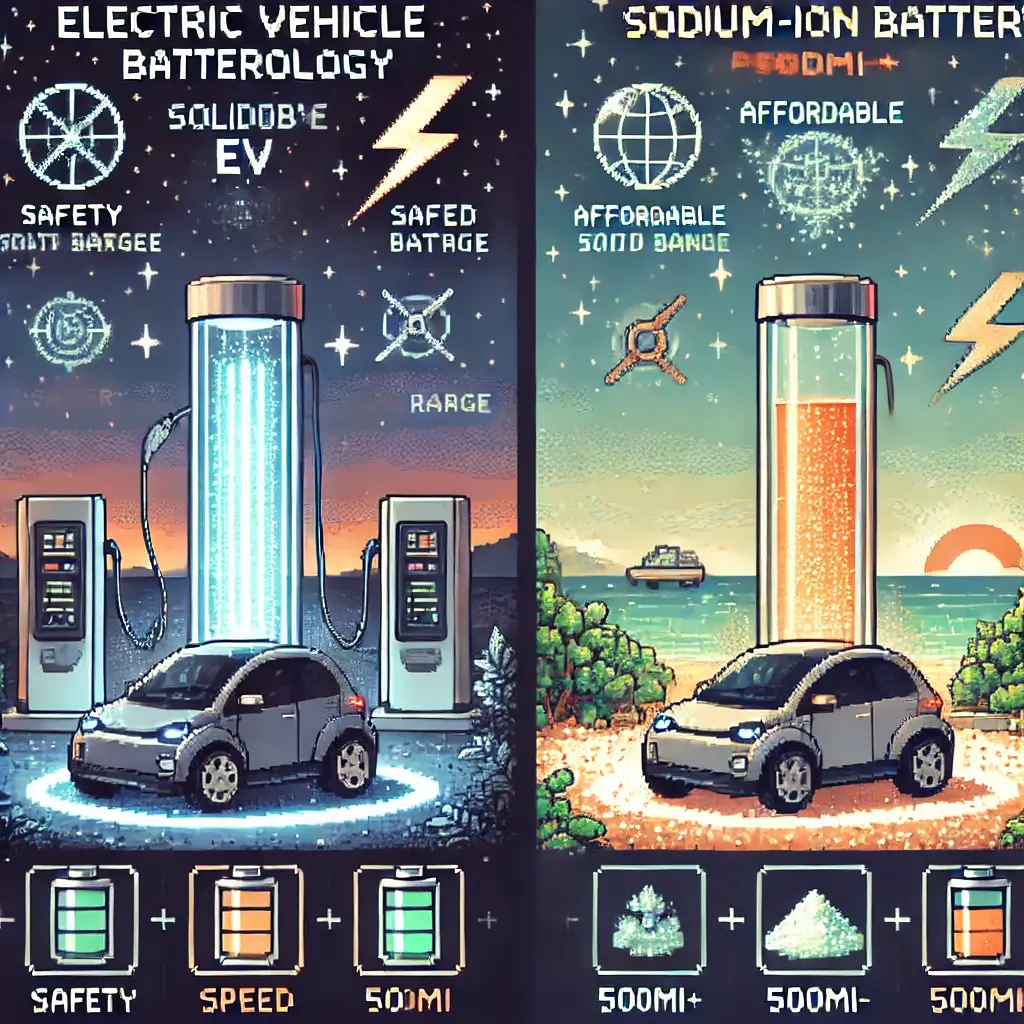
**1. Energy Density on Steroids:** Because the solid electrolyte is more stable and less reactive, you can pack more energy into a smaller, lighter package.
This translates directly to **more range** for your EV without making the battery pack bigger or heavier.
Imagine a Tesla Model 3 with 500 miles of range, or a Ford F-150 Lightning that can tow for hundreds of miles without breaking a sweat.
That’s the kind of leap we’re talking about.
It’s like upgrading from a small, leaky fuel tank to one that’s twice the size and perfectly sealed.
**2. Blazing Fast Charging:** The solid electrolyte allows for faster ion movement, meaning you can potentially charge these batteries much, much quicker.
We’re talking about charging your EV from 10% to 80% in 10-15 minutes, perhaps even less.
Think about that for a second.
That’s practically the same time it takes to fill up a gas tank.
Range anxiety?
What range anxiety?
This capability alone could be the single biggest factor in convincing the remaining skeptics to go electric.
It’s the ultimate time-saver for road trips.
**3. Safety First, Always:** Without a flammable liquid, the risk of thermal runaway (aka, the battery catching fire) is drastically reduced.
This isn’t just a win for peace of mind; it could simplify battery management systems and potentially lead to less bulky battery packaging, further improving vehicle design and efficiency.
It’s like replacing a volatile, explosive fuel with something as inert as a brick.
Much safer!
**4. Longer Lifespan:** Solid-state batteries generally exhibit less degradation over time and charge cycles compared to their liquid-electrolyte counterparts.
This means your EV’s battery could last for the entire lifespan of the vehicle, reducing the need for costly replacements and contributing to greater sustainability.
The Roadblocks: Why Aren’t They Everywhere Yet?
Okay, so if solid-state batteries are so amazing, why aren’t they in every EV on the road right now?
Good question, and it brings us back to the pesky realities of engineering and mass production.
**1. Manufacturing Complexity:** Producing solid electrolytes on a mass scale, with the consistency and purity required, is incredibly challenging.
It’s like trying to bake a perfect soufflé every single time, but on an industrial scale.
The interfaces between the solid electrolyte and the electrodes are particularly tricky, requiring meticulous engineering to ensure good ion flow without cracking or delamination.
**2. Cost:** Right now, the materials and processes involved in making solid-state batteries are significantly more expensive than those for lithium-ion.
While prices are expected to come down with scale, it’s a major hurdle for widespread adoption.
Think of it like early flat-screen TVs – amazing, but astronomically priced.
**3. Performance at Scale:** While lab results are promising, scaling up from small prototypes to large, automotive-grade battery packs is a monumental task.
Maintaining performance, consistency, and reliability across thousands of cells in a single pack is where the real work happens.
Who’s Leading the Charge?
Despite the challenges, the race for commercial solid-state batteries is heating up, with some serious contenders:
**QuantumScape:** Backed by Volkswagen, this California-based startup is making significant strides, showcasing impressive performance metrics in their test cells.
They’re aiming for commercial production in the next few years.
**Toyota:** A long-time pioneer in battery tech, Toyota has been working on solid-state batteries for decades and holds a massive number of patents in the field.
They’ve been a bit more cautious with timelines but remain a formidable player.
**Factorial Energy:** This US-based company is collaborating with Mercedes-Benz and Stellantis, focusing on a polymer-based solid-state electrolyte.
**StoreDot:** Known for its “extreme fast charging” technology, StoreDot is also developing solid-state solutions that could enable charging times as low as five minutes.
It’s an exciting time, with breakthroughs happening seemingly every few months.
I genuinely believe that within the next 5-7 years, we’ll start seeing solid-state batteries in niche, high-end EVs, paving the way for broader adoption by the end of the decade.
Learn More About Solid-State Batteries Explore QuantumScape’s Progress
2. Sodium-Ion Batteries: The Affordable, Abundant Challenger
While solid-state batteries capture the headlines with their high-tech promises, another contender is quietly, yet powerfully, rising through the ranks: **sodium-ion batteries**.
If solid-state is the supercar of the battery world, then sodium-ion is the incredibly reliable, cost-effective, and surprisingly capable workhorse.
And trust me, sometimes the workhorse wins the race.
Why Sodium-Ion is So Appealing for EVs
The biggest draw for sodium-ion batteries, especially for the broader **EV market**, boils down to one word: **abundance**.
**1. Abundant and Cheap Materials:** Unlike lithium, which is concentrated in a few regions globally and is becoming increasingly expensive to mine, sodium is literally everywhere.
It’s in seawater, it’s in salt, it’s in vast mineral deposits.
This means the raw materials for sodium-ion batteries are incredibly cheap and readily available, reducing geopolitical risks and making the entire supply chain more resilient.
Think about it:
no more scrambling for rare earth minerals; just good old salt.
It’s like finding out you can power your car with sand instead of gold.
**2. Cost-Effectiveness:** This ties directly into material abundance.
Lower material costs translate to significantly lower manufacturing costs for the batteries themselves.
This is huge for bringing down the price of EVs, particularly entry-level models and even two-wheelers or smaller commercial vehicles.
Imagine a truly affordable EV that doesn’t compromise on essential performance.
This could be the key to mass EV adoption in developing markets and beyond.
**3. Improved Safety:** While not as inherently safe as solid-state, sodium-ion batteries generally exhibit better thermal stability than some lithium-ion chemistries.
This means they are less prone to overheating and thermal runaway, adding another layer of security.
**4. Good Performance in Cold Weather:** Some sodium-ion chemistries show promising performance in colder temperatures, which is a known challenge for lithium-ion batteries.
If you live somewhere with harsh winters, this is definitely something to cheer about.
Where Sodium-Ion Might Fall Short (For Now)
Of course, nothing’s perfect, and sodium-ion batteries do have a few areas where they don’t quite measure up to current lithium-ion technology, or the future promise of solid-state.
**1. Lower Energy Density:** Currently, sodium-ion batteries typically have a lower energy density than lithium-ion.
This means for the same weight or volume, they store less energy.
So, to achieve the same range as a lithium-ion EV, a sodium-ion EV would need a physically larger and heavier battery pack.
This isn’t ideal for long-range premium vehicles, but it’s perfectly acceptable for city cars, last-mile delivery vehicles, and stationary energy storage.
**2. Cycle Life:** While improving rapidly, the cycle life (how many times the battery can be charged and discharged before significant degradation) of some sodium-ion chemistries is still not quite on par with the best lithium-ion batteries.
However, for applications where the vehicle might be replaced before the battery reaches its end-of-life, or for vehicles with less intensive daily use, this is less of a concern.
Sodium-Ion on the Horizon
So, where are we seeing sodium-ion pop up?
You might be surprised how close it is to commercial reality.
**CATL:** The undisputed giant in battery manufacturing, CATL (Contemporary Amperex Technology Co. Limited) has already announced plans for mass production of sodium-ion batteries and has even shown off vehicles powered by them.
They’re a big believer in this technology for entry-level EVs.
**BYD:** Another Chinese EV powerhouse, BYD is also heavily invested in sodium-ion research and development, seeing its potential for their extensive range of vehicles.
**Northvolt:** The Swedish battery manufacturer is also exploring sodium-ion as a potential alternative to lithium-ion, particularly for grid-scale energy storage, but with an eye towards automotive applications as well.
I envision sodium-ion batteries finding their sweet spot in smaller, more affordable EVs, potentially even motorcycles and scooters, where cost and raw material availability are paramount.
Think of it as the perfect second car for urban commutes or the workhorse for a delivery fleet.
They might not win the drag race against a Lucid Air, but they’ll make EVs accessible to millions more people, and that, my friends, is a huge win for the planet and our wallets.
Discover CATL’s Sodium-Ion Battery DOE on Sodium-Ion Batteries
3. LFP Batteries: The Quiet Workhorse Getting a Major Upgrade
Alright, let’s talk about a battery chemistry that’s already in many EVs you might not even realize.
While solid-state and sodium-ion are the shiny new toys, **Lithium Iron Phosphate (LFP) batteries** are the dependable, unsung heroes that have been quietly powering a growing number of electric vehicles, especially in China, and are now gaining serious traction globally.
They’re not as “sexy” as solid-state, perhaps, but their practicality and recent advancements make them incredibly compelling.
The LFP Advantage: Why They’re Making a Comeback
For a while, LFP batteries were seen as a budget option, mainly due to their lower energy density compared to nickel-manganese-cobalt (NMC) lithium-ion batteries.
But recent innovations have changed the game.
**1. Cost-Effectiveness:** This is still LFP’s strongest suit.
Iron and phosphate are far more abundant and cheaper than nickel and cobalt, which are critical components of NMC batteries.
This significantly reduces the cost of the battery pack, making EVs more affordable for consumers.
It’s a straightforward equation:
cheaper raw materials = cheaper cars.
**2. Exceptional Safety:** LFP chemistry is inherently more stable and less prone to thermal runaway (fire) than other lithium-ion chemistries.
This means enhanced safety for drivers and passengers, which is always a top priority.
You can virtually charge them to 100% every single day without major concerns about degradation, unlike NMC batteries which often recommend charging only to 80% for daily use.
It’s like having a battery that’s just chill, all the time.
**3. Long Cycle Life:** LFP batteries are renowned for their incredible longevity.
They can withstand thousands of charge and discharge cycles with minimal degradation.
This means the battery in your LFP-powered EV could easily outlast the car itself, and potentially be repurposed for second-life applications in energy storage, further enhancing sustainability.
**4. Improved Energy Density (Recent Breakthroughs):** This is where LFP has really stepped up its game.
Thanks to innovations like “cell-to-pack” (CTP) technology (pioneered by CATL) and structural batteries (like BYD’s Blade Battery), battery manufacturers are integrating cells more efficiently into the pack, reducing wasted space and boosting overall energy density.
This means LFP batteries can now offer competitive ranges, especially for mainstream EVs.
It’s like a genius redesign of your luggage, allowing you to fit way more clothes than you thought possible.
Who’s Embracing LFP?
The list of automakers adopting LFP batteries is growing rapidly:
**Tesla:** A major proponent, Tesla uses LFP batteries in its standard range Model 3 and Model Y vehicles, especially those produced in China, and is expanding their use globally.
Elon Musk himself has often praised the LFP chemistry.
**BYD:** As one of the world’s largest EV manufacturers, BYD has heavily invested in LFP, particularly with their groundbreaking “Blade Battery” which offers exceptional safety and packaging efficiency.
Many of their popular EV models use LFP.
**Ford:** The American automaker is also integrating LFP batteries into some of its EV models, including the Mustang Mach-E and F-150 Lightning, seeing the benefits in cost and supply chain diversification.
**Volkswagen, Mercedes-Benz, and Others:** Many major automakers are now either using or planning to use LFP batteries in their more affordable or entry-level EV offerings, recognizing their critical role in making EVs accessible to the masses.
The beauty of LFP is that it’s not just a future promise; it’s a present reality that’s evolving rapidly.
If you’re considering an EV, don’t overlook LFP-powered options, especially if daily charging to 100% and a long battery lifespan are priorities for you.
They might just be the practical, reliable choice you’ve been looking for.
CATL’s LFP Battery Technology BYD Blade Battery Explained
The Race Is On: What This Means for YOU
So, what does all this talk about **EV battery** tech mean for you, the potential or current electric vehicle owner?
It means a future filled with more choices, better performance, and greater peace of mind.
**1. More Affordable EVs:** Sodium-ion and advanced LFP batteries are directly addressing the cost barrier, which is one of the biggest hurdles to widespread EV adoption.
Imagine a new electric car that costs roughly the same as a comparable gasoline vehicle, without government incentives.
That’s the future these technologies promise.
**2. Reduced Range Anxiety:** With solid-state promising hundreds of miles of range and ultra-fast charging, and LFP continually improving, the days of worrying about finding a charger on a long trip are rapidly fading into the rearview mirror.
**3. Enhanced Safety:** The focus on solid-state and the inherent stability of LFP means future EVs will be even safer than they are today, reducing concerns about battery fires or other thermal events.
**4. Sustainable Future:** Diversifying away from heavily reliant lithium-ion chemistries, especially those using cobalt, makes the entire EV ecosystem more sustainable and less dependent on volatile supply chains.
Sodium-ion, in particular, offers a truly abundant and environmentally friendly alternative.
It’s like having a whole new set of ingredients for your favorite recipe – more options, often healthier, and sometimes even tastier!
The Road Ahead for EV Battery Tech
The battery landscape is incredibly dynamic, with new breakthroughs being announced regularly.
It’s not a winner-take-all situation; rather, we’re likely to see a diverse portfolio of battery chemistries serving different segments of the EV market.
**Solid-state** for premium, long-range, performance vehicles.
**Sodium-ion** for entry-level, urban, and stationary storage applications where cost and abundance are key.
And **LFP** continuing its reign as the reliable, cost-effective workhorse for a wide range of mainstream EVs.
And beyond these three, there are other intriguing chemistries being explored, like zinc-air, flow batteries, and even fluoride-ion.
The innovation isn’t stopping anytime soon.
The rapid pace of development reminds me of the early days of the internet – exponential growth and possibilities we could barely imagine.
As a consumer, this is fantastic news.
It means the EV you buy in 5-10 years will likely be significantly better, safer, and more affordable than anything on the market today.
Final Thoughts on the EV Battery Future
It’s easy to get caught up in the hype cycles, but when it comes to EV batteries, the excitement is truly warranted.
We are on the cusp of a transformative period that will address many of the lingering concerns about electric vehicles.
These emerging **battery technologies** aren’t just incremental improvements; they are foundational shifts that will unlock new levels of performance, accessibility, and sustainability.
So, the next time you hear someone grumbling about EV range or cost, you can confidently tell them:
“Just wait, the battery revolution is just getting started!”
And it’s going to be an incredible ride.
What are you most excited about in the future of EV batteries?
Let me know in the comments below!
Electric Vehicles, Solid-State, Sodium-Ion, LFP, Battery Technology