10+ Shocking Secrets to Buying a Pre-Owned Tesla: Don’t Get Scammed!
Table of Contents
Introduction: Why a Pre-Owned Tesla?
Let’s be honest, the idea of owning a Tesla is exhilarating.
That instant torque, the minimalist interior, the promise of self-driving technology—it all feels like the future is here, and you’re driving it.
But then you look at the price tag for a brand new one, and your stomach drops faster than a Model S Plaid on launch mode.
That’s where the magic of the pre-owned market comes in, my friends.
It’s a world of opportunity, a chance to get into the electric vehicle (EV) game without completely emptying your bank account.
But let me tell you, buying a used Tesla is a whole different beast than buying a used Honda Accord.
You’re not just looking at oil changes and timing belts; you’re diving into a world of battery health, software updates, and supercharger history.
It can be a minefield if you don’t know what you’re doing.
Think of me as your seasoned guide, your wise-cracking co-pilot on this journey.
I’ve been in the trenches, talked to countless owners, and made a few mistakes myself so you don’t have to.
This isn’t just a list of tips; it’s a real-world, no-holds-barred guide to finding that perfect pre-owned Tesla without falling for a lemon.
So, buckle up, because we’re about to get real about what to look for and, more importantly, what to avoid.
The Pre-Owned Tesla Hype – Is It Real?
You see them everywhere now, don’t you?
Tesla Model 3s and Ys zipping around, silently cruising through neighborhoods, turning heads.
There’s a reason for that.
The demand for these cars is insatiable, and that’s a double-edged sword for the used market.
On one hand, it means a healthy supply of pre-owned Teslas, from early Model S sedans to slightly-used Model 3s.
On the other, it means prices can be a little… inflated, and sellers might try to hide a few secrets under the hood.
I remember a friend of mine, let’s call him Dave, who was so excited about buying a used Model X.
He found a deal that seemed too good to be true.
Spoiler alert: it was.
The seller claimed the battery was in perfect condition, but a quick check with a little diagnostic tool—which I’ll tell you about later—showed a significant degradation.
Dave was heartbroken, but it was a great lesson learned: you have to be a detective when you’re shopping for a used Tesla.
The hype is real, the technology is revolutionary, but the market is also ripe with potential pitfalls.
That’s why this guide is so crucial.
We’re going to sift through the noise and get to the good stuff.
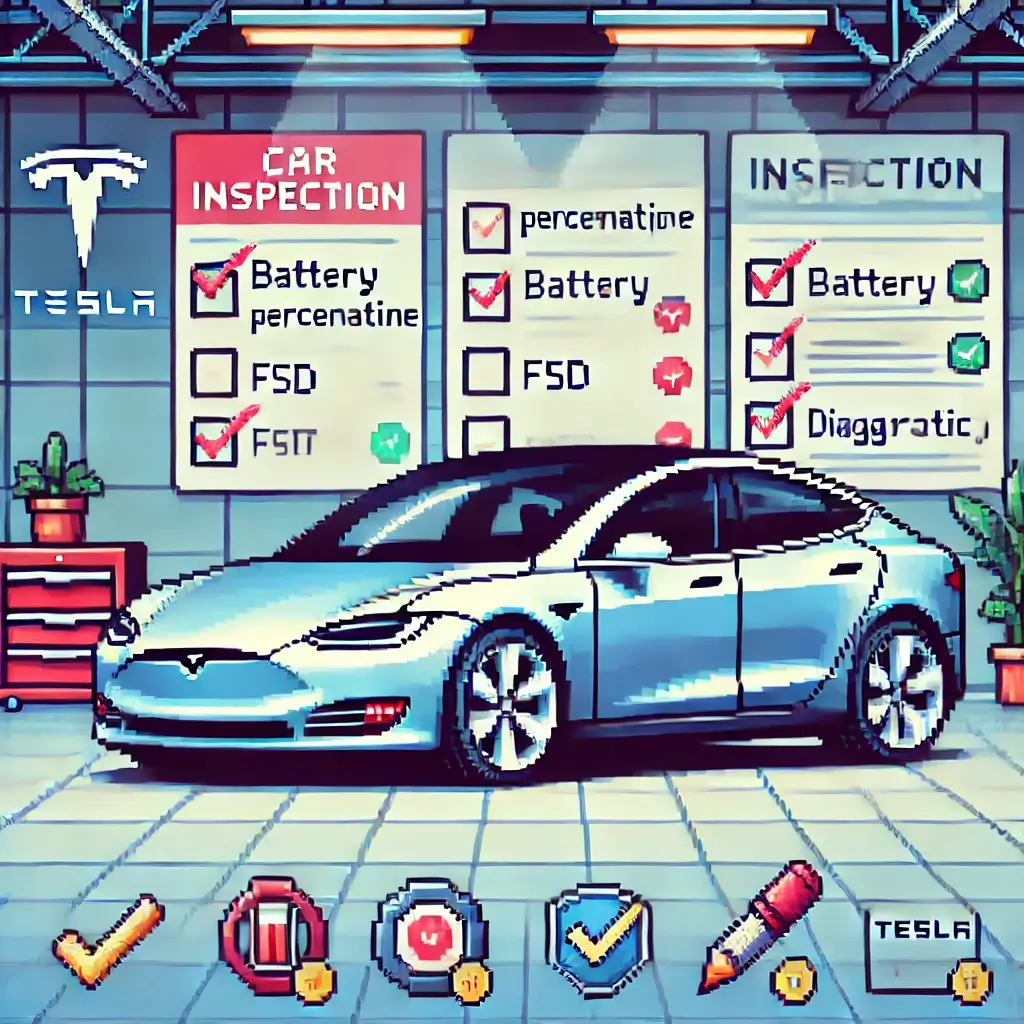
The 10+ Things You MUST Check Before Buying a Used Tesla
This is the meat and potatoes of our guide.
This isn’t a checklist you can skim; this is a list you need to print out and take with you.
Trust me, it could save you thousands.
1. The Battery Health (This is a Big One!):
Unlike a gas car where you’re checking engine compression, here you’re checking the heart of the car: the battery.
It’s the most expensive component, and its health is paramount.
There’s no simple “battery health percentage” displayed on the screen.
You’ll need to do a little detective work.
One way is to look at the total range at 100% charge.
Compare this to the car’s original EPA range.
For example, a new Model 3 Standard Range Plus had an EPA range of around 250 miles.
If a used one only charges up to 210 miles, that’s about a 16% degradation.
That’s a significant drop and should be a point of negotiation.
Another, more advanced method is to use a third-party app that can pull data from the car’s diagnostics, like ScanMyTesla.
This is an invaluable tool for getting a real, scientific look at the battery’s health, its individual cell voltages, and more.
It’s a little geeky, but it’s the only way to be 100% sure.
2. Charging History (A Window into Its Past Life):
How was the car charged?
This is a question many people forget to ask, but it’s crucial for battery longevity.
Was it primarily charged at home on a Level 2 charger, or was it constantly hammered with DC fast charging at Superchargers?
While Supercharging is convenient, excessive use can put more strain on the battery over time.
Ask the owner how they typically charged the car.
A car that was mostly home-charged and rarely took long road trips is generally going to have a healthier battery.
3. Autopilot and Full Self-Driving (FSD) Status:
This is a huge factor in the value of a used Tesla.
There’s a massive difference in price between a car with standard Autopilot and one with the coveted FSD package.
The FSD package is a one-time purchase that can cost thousands, and it often transfers with the car.
You need to verify this by looking at the car’s software menu under “Controls” > “Software” > “Additional Vehicle Information” or by asking the seller to show you the “Upgrades” section in the Tesla mobile app for that car.
Don’t just take their word for it.
I’ve heard stories of sellers claiming a car has FSD when it only has the base Autopilot.
4. The MCU (Media Control Unit) – The Brain of the Car:
This is the large touchscreen in the center of the car.
Early Model S and X vehicles had an MCU1 that was prone to a memory issue, causing the screen to freeze or go blank.
Many of these have been upgraded to MCU2, but you need to check.
Go to the “Software” screen and look at the processor type.
If it says “Tegra,” it’s an MCU1.
If it says “Intel Atom,” it’s the newer, more reliable MCU2.
An MCU1 isn’t necessarily a deal-breaker, but it’s a known issue and something to be aware of, as a replacement can be pricey.
5. Physical Condition – A Different Kind of Inspection:
Sure, you’ll check for dents and scratches, just like any other car.
But on a Tesla, you need to look for a few specific things.
Check the panel gaps.
Are the doors and trunk aligned?
Early Teslas were notorious for inconsistent panel gaps.
Also, inspect the undercarriage for any signs of damage to the battery pack.
This is a critical inspection.
Look for scrapes, cracks, or punctures.
This kind of damage can be incredibly expensive to repair.
6. Warranty Status (Does it Still Have It?):
Teslas come with a few different warranties.
The basic vehicle warranty is 4 years/50,000 miles.
The battery and drive unit warranty is usually 8 years/100,000 or 120,000 miles, depending on the model.
Knowing if the car is still under warranty can be a huge peace of mind.
You can check this directly on the car’s screen or by having the VIN run by Tesla, which the seller can do for you.
7. Tires and Brakes (Don’t Forget the Basics):
With the instant torque of a Tesla, tires can wear down faster than you think.
Check the tire tread depth carefully.
And while the regenerative braking means you won’t use the physical brakes as often, they still need to be in good condition.
Listen for any squealing or grinding noises during the test drive.
8. Service History (What Has Been Done to It?):
Unlike traditional cars with detailed service records from various shops, a Tesla’s service history is largely digital and tied to the car’s VIN.
Ask the owner to show you their service history from their Tesla account.
This will reveal any major repairs, recalls, or service visits.
It’s a great way to gauge how well the car has been maintained.
9. The Title and Accident History (Don’t Buy a Salvage Title!):
This is standard for any used car, but it’s especially important here.
Get a CarFax or similar report.
A salvage title is a huge red flag.
Even a minor fender bender can have hidden consequences with a car as technologically complex as a Tesla.
10. The Keys and Charging Cables (The Little Things That Add Up):
Does the car come with two key cards (for Model 3/Y) or two key fobs (for Model S/X)?
Are the mobile charger and J1772 adapter included?
These are small details, but replacing them can cost a few hundred dollars.
Make sure you get everything that originally came with the car.
11. Test Drive (More than Just a Joyride):
During the test drive, pay attention to the little things.
Do the windows roll up and down smoothly?
Do all the buttons on the steering wheel work?
Listen for any strange noises from the suspension.
And most importantly, try out the Autopilot features if the car has them.
Does it steer and stay in the lane properly?
This is your chance to really feel the car and make sure everything is in working order.
Avoiding the Lemon – Red Flags to Watch Out For
Not all sellers are honest, and not all deals are as good as they seem.
Here are some of the most common red flags I’ve seen in my years of dealing with pre-owned Teslas.
Red Flag #1: The Seller Won’t Let You See the Car’s Service History.
This is a massive no-no.
If they have nothing to hide, they should be more than happy to show you the car’s maintenance and repair records from Tesla.
A refusal is a clear sign that something is amiss.
Red Flag #2: The Price is Drastically Lower Than Market Value.
While a good deal is great, a price that’s thousands of dollars below the average should make you suspicious.
It could be a salvage title car, a flood-damaged vehicle, or it could have a severe battery issue.
Always research the market value on sites like Edmunds or Kelley Blue Book.
Red Flag #3: A Private Seller Who is Vague or Unresponsive.
If a seller is taking forever to answer questions, or their answers are short and unhelpful, it’s a sign that they might not know the car’s history, or they might be hiding it.
A good, honest seller will be enthusiastic about the car and happy to answer any questions you have.
Red Flag #4: The Car’s VIN Doesn’t Match the Title.
This is a rare but serious red flag.
Always cross-reference the VIN on the car with the VIN on the title.
If they don’t match, run, don’t walk, away from that deal.
The Best Places to Find Your Dream Tesla
So, you’ve got your checklist and you know what to avoid.
Now, where do you actually find these cars?
There are a few key places to look, each with its own pros and cons.
1. The Official Tesla Used Inventory Page:
This is arguably the safest place to buy a pre-owned Tesla.
These cars have been inspected by Tesla technicians and come with a warranty.
The prices can be a little higher, but you get peace of mind.
It’s a great starting point for your search.
2. Online Marketplaces (e.g., Autotrader, CarGurus):
These sites have a huge selection of Teslas from both dealers and private sellers.
You’ll have more options and potentially better deals here, but you’ll have to do your due diligence and be more vigilant.
This is where our checklist from Chapter 2 becomes your best friend.
3. Local Dealers (Non-Tesla):
Many used car dealerships now have Teslas on their lots.
Be cautious here.
The salespeople might not be as knowledgeable about the specific nuances of Teslas.
You’ll need to rely heavily on your own knowledge and the information in this guide.
My Personal Tesla Buying Story and Final Advice
I’ve been in your shoes.
A few years back, I was obsessed with the idea of getting a used Model S.
I found a 2015 model with what seemed like a great price.
The owner was a nice guy, and the car looked pristine.
He told me the battery was great, and the car had a full service history.
During the test drive, everything seemed perfect.
But something felt off.
I asked him to show me the car’s range at a full charge.
It was a good 25% lower than the original EPA rating.
When I brought it up, he got a little defensive.
Then I asked to see the service records.
He couldn’t find them and blamed a “computer glitch.”
That’s when I knew.
I walked away, and it was one of the best decisions I ever made.
I ended up finding a slightly newer model a few weeks later from a more transparent seller, and it’s been a dream ever since.
My biggest piece of advice is this: don’t let your excitement cloud your judgment.
It’s easy to get caught up in the idea of owning a Tesla.
But this is a major financial decision.
Be patient, be meticulous, and be willing to walk away if something feels wrong.
Understanding the Tesla Ecosystem After Your Purchase
Congratulations!
You’ve just bought your pre-owned Tesla.
But the journey doesn’t end there.
You’re now part of a unique ecosystem that’s a little different from the traditional car world.
Over-the-Air (OTA) Software Updates:
One of the coolest parts of owning a Tesla is the regular software updates.
Your car will get new features, bug fixes, and performance improvements all while you’re sleeping.
You’ll want to make sure your car is connected to Wi-Fi to get these updates reliably.
The Supercharger Network:
Your car’s navigation system will automatically route you through the Supercharger network on long trips.
You’ll simply plug in, and your car will be charged and ready to go in about 20-40 minutes, depending on the model and state of charge.
It’s an incredibly seamless experience, and it’s one of the biggest selling points for a Tesla.
Tesla Service Centers:
Unlike traditional cars, you don’t take your Tesla to a local mechanic for most issues.
You’ll use the Tesla app to schedule a service appointment, and a mobile technician can often come to you for minor fixes.
For more major repairs, you’ll go to a dedicated Tesla Service Center.
Conclusion: The Road Ahead with Your Used Tesla
Buying a pre-owned Tesla is a fantastic way to experience the future of driving today.
But it’s a process that requires patience, research, and a healthy dose of skepticism.
By following this guide, you’ll be armed with the knowledge you need to navigate the market, spot a good deal, and avoid the potential headaches.
Don’t be afraid to ask tough questions, demand to see documentation, and walk away if your gut tells you something is wrong.
The perfect pre-owned Tesla is out there waiting for you.
Happy hunting, and I’ll see you on the road!
Pre-Owned Tesla, Used Tesla, Battery Health, FSD, Autopilot
Tesla’s Innovation CultureEV vs ICE: What You Need to Know
Understanding Your Tesla Insurance Bill
EV Fleet Opportunities in 2025
Tesla Adventures: EV Camping & Overlanding