EV Home Charging Just Got a Jolt: 3 Ways Bidirectional Power Will Transform Your Life!
Hey there, fellow electric vehicle enthusiasts and curious minds!
Are you ready for a mind-blowing shift in how you think about your EV?
Forget just charging your car; imagine your car charging your house!
Sounds like something out of a sci-fi movie, right?
Well, buckle up, because the future is here, and it’s called bidirectional power flow, or more commonly, V2G (Vehicle-to-Grid) and V2H (Vehicle-to-Home).
This isn’t just some far-off dream; it’s rapidly becoming a tangible reality, promising to revolutionize our energy landscape and, dare I say, give us a bit more control over our lives.
I know, I know, it sounds a bit technical, but trust me, it’s actually pretty simple to grasp, and the implications are HUGE.
I’ve been deep-diving into this fascinating world, and honestly, every new piece of information makes me even more excited for what’s coming.
So, let’s pull back the curtain and explore how your trusty EV is about to become your home’s new best friend, and maybe even a local power plant! —
Table of Contents
—
Unpacking the Buzzwords: What Exactly Are V2G and V2H?
Alright, let’s cut through the jargon, shall we?
V2G and V2H might sound like secret agent codes, but they’re actually quite straightforward concepts once you get past the acronyms.
Think of your electric vehicle’s battery not just as a power source for driving but as a giant, mobile energy storage unit.
Traditionally, charging your EV has been a one-way street: electricity flows from the grid or your home into your car’s battery.
That’s what we call unidirectional charging, and it’s been the standard for, well, forever.
But what if that street suddenly became a two-way boulevard?
That, my friends, is the essence of **bidirectional power flow**.
V2G: Vehicle-to-Grid
Imagine your EV, parked in your driveway, not just passively charging, but actively participating in the energy grid.
That’s V2G in a nutshell.
It allows your EV to send electricity back to the main power grid.
Why would you want to do this?
Well, think of it like this: on a scorching hot summer day, everyone’s air conditioners are blasting, and the grid is straining.
Instead of firing up a dirty, expensive peaker plant, your utility could tap into a network of parked EVs, drawing small amounts of power from each to stabilize the grid.
And guess what? You could get paid for it!
It’s like selling lemonade, but your lemonade stand is your car, and your customers are the power company.
It helps balance supply and demand, integrates more renewable energy sources (like solar and wind, which are, by nature, intermittent), and ultimately makes our entire energy system more resilient and efficient.
V2H: Vehicle-to-Home
Now, V2H, or Vehicle-to-Home, is perhaps even more immediately exciting for us everyday folks.
This is where your EV acts as a personal power bank for your own home.
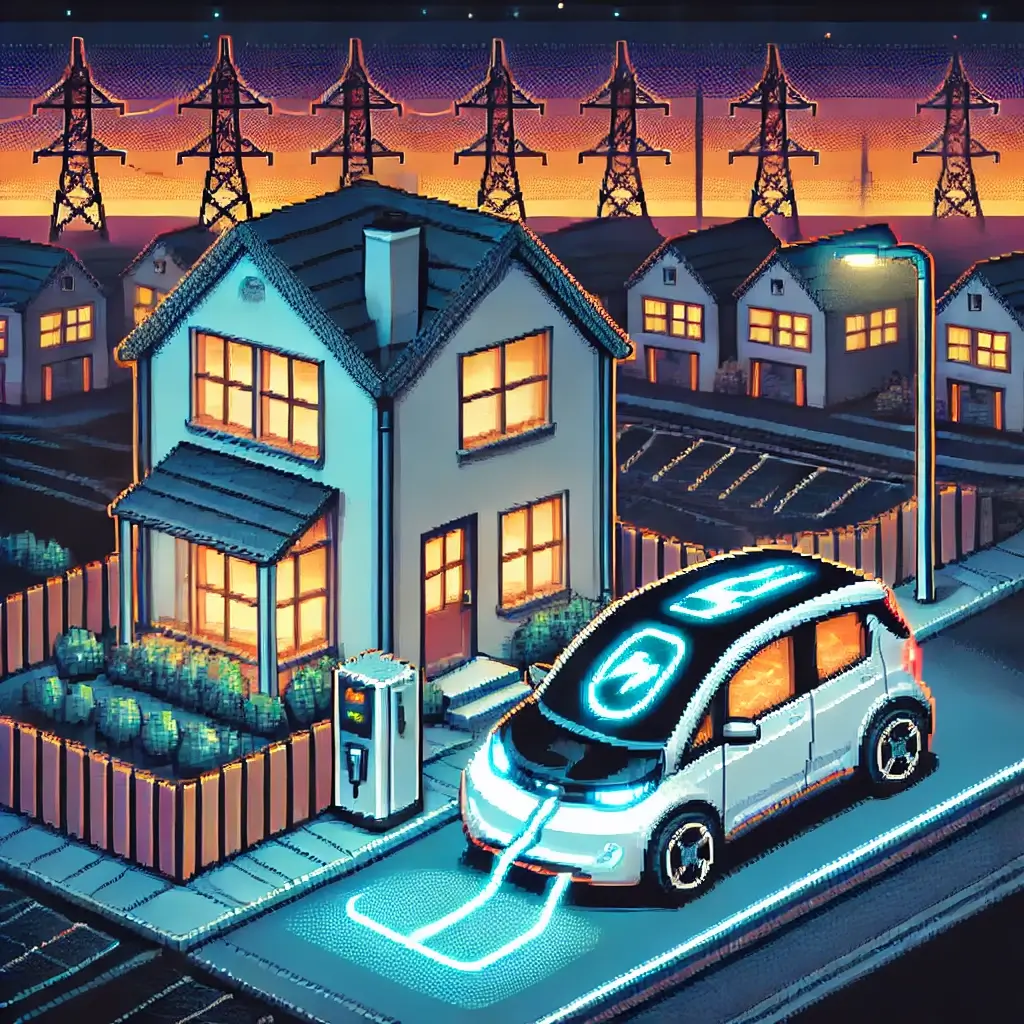
Picture this: a sudden power outage hits your neighborhood.
Everyone else is scrambling for candles and flashlights, but you? You just plug your EV into your home’s electrical panel, and poof! Lights on, fridge humming, Wi-Fi blazing.
It’s like having a gigantic, silent, and incredibly efficient generator sitting in your garage.
But it’s not just for emergencies.
V2H can also be used for daily energy management.
You can charge your EV when electricity rates are low (say, overnight) and then use that stored energy to power your home during peak hours when rates are sky-high.
It’s a clever little arbitrage game, and guess who wins? You do!
In essence, both V2G and V2H are about maximizing the utility of that massive battery pack in your EV.
They transform your car from a mere mode of transportation into an active, dynamic participant in your home’s energy ecosystem and, by extension, the broader energy grid.
Pretty cool, right? —
The Magic Under the Hood: How Bidirectional Charging Actually Works
So, you’re probably thinking, “How does my car, designed to take power, suddenly start giving it back?”
It’s not magic, but it certainly feels like it!
The secret sauce lies in a piece of equipment called a **bidirectional EV charger**.
Unlike your standard Level 2 home charger, which is a one-way street for electrons, a bidirectional charger is like a rotary intersection for electricity.
It can convert the alternating current (AC) from your home or the grid into direct current (DC) to charge your car’s battery (the usual way).
But here’s the kicker: it can also convert the DC power stored in your car’s battery back into AC power that your home appliances and the grid can use.
Your EV’s battery stores energy as DC, much like a giant AA battery.
Your home, however, runs on AC, the kind of electricity that comes out of your wall outlets.
The bidirectional charger acts as the sophisticated translator, seamlessly converting power back and forth.
Think of it like this: when you charge your phone, it uses a small AC-to-DC converter (that little brick on the charging cable).
A bidirectional EV charger is just a much, much larger and smarter version of that, capable of handling a significant amount of power flow in both directions.
The Brains of the Operation: Software and Smart Management
It’s not just about the hardware; the software behind the scenes is incredibly clever too.
Sophisticated energy management systems (EMS) play a crucial role.
These systems decide when it’s most beneficial to charge your car, when to discharge power to your home, and when to send it back to the grid.
They take into account things like:
- Electricity prices: Charging when prices are low, discharging when they’re high.
- Your driving schedule: Ensuring you always have enough charge for your commute.
- Home energy demand: Prioritizing powering your home during peak usage or outages.
- Grid signals: Responding to requests from the utility for demand response.
These systems can be controlled via smartphone apps, allowing you to monitor and manage your energy flow right from your couch.
Some even integrate with smart home devices and solar panel systems for a truly optimized energy ecosystem.
The beauty of this system is its intelligence.
It’s not just a dumb battery; it’s a dynamic, responsive energy hub that can adapt to your needs and the needs of the grid.
It’s pretty remarkable when you think about it! —
Why Should You Care? The Jaw-Dropping Benefits of Bidirectional Power
Alright, now we’re getting to the good stuff.
Beyond the cool factor, what’s in it for YOU?
Let me tell you, the benefits of embracing bidirectional power with your EV are not just impressive; they’re truly transformative for individuals, communities, and the planet as a whole.
I mean, who doesn’t love a win-win-win situation?
Energy Independence & Blackout Protection: Your Home, Your Power!
This is probably the most immediate and tangible benefit for homeowners.
Remember those annoying power outages? The ones where you frantically search for flashlights and hope your perishables don’t spoil?
Well, with V2H, those days can become a distant memory.
Your EV, with its massive battery (think anywhere from 40 kWh to over 100 kWh in some models!), can power your entire home for hours, if not days, depending on your energy consumption.
It’s like having a backup generator that doesn’t smell of gasoline, doesn’t need constant refueling, and runs silently.
For me, the peace of mind knowing that my family will have power during a storm or grid failure is invaluable.
No more shivering in the dark or worrying about spoiled food.
It’s true energy resilience, putting the power literally in your hands.
Imagine your neighbors looking on in envy as your lights stay on while theirs are out.
A little bit of bragging rights never hurt, right?
Smarter Energy Management: Saving You Real Money!
This is where your wallet starts to smile.
Many utility companies offer **time-of-use (TOU) electricity rates**, meaning electricity costs more during peak demand hours (usually late afternoon/early evening) and less during off-peak hours (like overnight).
With bidirectional charging, you can strategically charge your EV when electricity is cheapest (e.g., after midnight) and then use that stored energy to power your home when rates are highest.
It’s like buying groceries when they’re on sale and using them when they’re full price.
This simple trick can significantly reduce your monthly electricity bill.
If you have solar panels, the benefits amplify even further!
You can store excess solar energy generated during the day in your EV battery and use it at night, further reducing your reliance on grid electricity and maximizing your solar investment.
It’s a smart, efficient way to optimize your energy consumption and keep more cash in your pocket.
Who doesn’t love saving a buck or two, especially when it’s this effortless?
Supporting the Grid: Becoming an Energy Superhero!
This is where V2G truly shines.
As our energy grids become more reliant on intermittent renewable sources like solar and wind, maintaining grid stability becomes a bigger challenge.
Imagine a cloudy, windless day – solar panels aren’t producing much, and wind turbines are idle.
This is where your EV fleet comes in!
By allowing your car to send power back to the grid during these times of high demand or low renewable output, you become a vital part of the solution.
Utilities can offer incentives (payments or credits) for participating in these “demand response” programs.
It’s a win-win: you get paid for letting your car share its electrons, and the grid becomes more stable and resilient, reducing the need for dirty, expensive fossil fuel “peaker plants.”
You’re not just driving green; you’re *powering* green!
It’s like being a tiny, distributed power plant right in your driveway.
Pretty heroic, if you ask me.
Boosting Sustainability: A Greener Footprint!
This is the big picture, the reason many of us got into EVs in the first place.
Bidirectional charging dramatically enhances the integration of renewable energy sources.
By providing flexible energy storage, EVs help smooth out the peaks and valleys of renewable generation.
When the sun is shining brightly and solar panels are overproducing, your EV can soak up that excess clean energy.
When the sun sets, and demand is high, your EV can release that stored green energy back into your home or the grid.
This means less wasted renewable energy and a reduced reliance on fossil fuels, leading to a cleaner environment and a more sustainable future for everyone.
Every little bit helps, and with V2G/V2H, your EV makes a significantly larger positive impact on the environment than just driving emissions-free.
It’s truly a game-changer for accelerating the clean energy transition. —
But Wait, There’s Always a Catch? Navigating the Hurdles
Okay, I know I’ve been gushing about how amazing bidirectional charging is, and for good reason!
But like any revolutionary technology, it’s not without its bumps in the road.
It’s crucial to address these challenges head-on, not to discourage, but to understand what we’re up against and how we can overcome them.
After all, every innovation has its growing pains, right?
1. Vehicle Compatibility: Not Every EV is Created Equal (Yet!)
Here’s the first hurdle: not all EVs are currently equipped for bidirectional charging.
While a growing number of manufacturers are incorporating this capability, it’s not universal.
For instance, Nissan Leaf and some Mitsubishi models have been pioneers with their CHAdeMO V2G capabilities, but many newer EVs use the CCS standard, which has been slower to adopt bidirectional features.
It’s definitely improving, with Ford’s F-150 Lightning being a notable game-changer with its V2H capabilities, and others like Hyundai and Kia (with their E-GMP platform) enabling V2L (Vehicle-to-Load), which is a step towards V2H.
Before you get too excited, make sure your specific EV model is compatible with bidirectional charging.
It’s like wanting to play a new video game, but realizing your console doesn’t support it (yet!).
2. Charger Availability and Cost: The Hardware Hurdle
Even if your car is ready, you’ll need a special **bidirectional EV charger**.
These aren’t your run-of-the-mill Level 2 chargers you pick up at your local big-box store.
They are more complex, sophisticated devices, and as such, they tend to be significantly more expensive than standard chargers.
Availability is also a factor, though it’s rapidly improving as more companies enter the market.
Installation can also be more involved, often requiring a professional electrician to integrate it safely and correctly with your home’s electrical system, potentially including an automatic transfer switch for V2H backup power.
It’s an investment, for sure, but one that could pay dividends over time.
3. Battery Degradation Concerns: Will It Harm My Precious Battery?
This is a common and very valid question.
Every time you cycle a battery (charge and discharge it), there’s a tiny bit of wear and tear, leading to gradual degradation over its lifespan.
So, won’t using your EV battery for V2G/V2H accelerate this degradation?
The short answer is: potentially, yes, if not managed correctly.
However, modern battery management systems (BMS) are incredibly sophisticated.
They are designed to optimize charging and discharging to minimize stress on the battery.
Many V2G programs also involve “shallow” discharges, meaning you’re only using a small percentage of your battery’s capacity, which is less stressful than deep discharges.
Some manufacturers are even providing specific warranties that cover V2G/V2H usage.
Ultimately, the long-term impact is an area of ongoing research, but the consensus is that with proper management and smart algorithms, the benefits far outweigh any minor, additional degradation.
It’s about finding that sweet spot where you maximize utility without compromising battery health.
4. Regulatory and Policy Frameworks: The Red Tape Tango
This is arguably the biggest, trickiest hurdle.
For V2G to truly flourish, we need robust regulatory frameworks and clear policies from governments and utility companies.
Things like interconnection standards (how your car safely connects to the grid), billing mechanisms for selling power back, and grid service market rules all need to be established and harmonized.
Progress is being made, but it’s often a slow dance, varying significantly from region to region and country to country.
Some states and countries are ahead of the curve, offering incentives and pilot programs, while others are still playing catch-up.
It’s a complex puzzle involving technology, economics, and policy, but with increasing pressure for clean energy, the momentum is certainly building.
5. Public Awareness and Education: Spreading the Word
Finally, there’s the human element.
Many people are simply unaware that this technology exists or don’t understand its potential benefits.
Educating the public, building trust, and demonstrating the real-world advantages are crucial for widespread adoption.
That’s partly why I’m writing this for you right now!
It’s about moving from a niche concept to a mainstream understanding.
These challenges are real, no doubt about it.
But every major technological leap has faced similar obstacles.
The exciting part is seeing how quickly these hurdles are being addressed and overcome by innovation, policy changes, and growing consumer demand.
The future is bright, despite the current bumps in the road! —
Where Are We Now? The Current Landscape and Early Adopters
It’s easy to talk about the future, but what about today?
Is this all still just theory, or are people actually doing this?
The great news is that V2G and V2H are no longer just concepts confined to research labs.
We’re seeing real-world deployments, pilot programs, and even commercial offerings emerging, albeit in pockets around the globe.
Pioneering EVs: Leading the Charge
For a long time, the **Nissan Leaf** was the undisputed king of V2G, thanks to its embrace of the CHAdeMO charging standard, which inherently supported bidirectional flow.
In fact, some of the most successful early V2G pilots, particularly in Europe and Japan, have utilized fleets of Nissan Leafs.
More recently, we’ve seen significant strides with vehicles built on platforms like Hyundai’s **E-GMP** (used in the Ioniq 5, Ioniq 6, and Kia EV6) and Genesis models.
These cars offer **Vehicle-to-Load (V2L)** capabilities, which means you can plug appliances directly into an outlet on the car (or via an adapter on the charging port) to draw power.
While not full V2H (which typically integrates with your home’s main panel), V2L is a fantastic step, allowing you to power camping equipment, tools, or even essential home appliances during short outages.
But the real game-changer for V2H in North America (and soon globally) has been the **Ford F-150 Lightning**.
With its “Intelligent Backup Power” system, enabled by Ford’s Charge Station Pro and an Intelligent Backup Power Home Integration System, the Lightning can literally power an average home for several days during an outage.
This has truly brought V2H into the mainstream conversation for a significant portion of the population.
Other manufacturers are quickly following suit, recognizing the immense value proposition.
Global Pilots and Commercial Deployments
Around the world, various companies and utilities are running fascinating pilot projects:
- In **Denmark**, a project called ‘Parker’ has successfully demonstrated how EVs can provide grid services, balancing renewable energy fluctuations.
- In the **Netherlands**, companies like Jedlix have been working with utilities to offer V2G services, allowing EV owners to earn money by enabling smart charging and discharging.
- In the **UK**, Octopus Energy is at the forefront, actively testing V2G with customers and showing real-world savings and grid benefits. They’re making it surprisingly easy for participants!
- In **Japan**, given their frequent natural disasters, V2H has been a focus for disaster preparedness, utilizing EVs as mobile power sources.
- In the **United States**, several utilities and research institutions are exploring V2G capabilities, and programs are slowly emerging, especially in states with ambitious clean energy goals like California.
While still in relatively early stages, the momentum is undeniable.
Every month, it seems another partnership is announced, another pilot program launched, or another V2G-compatible vehicle hits the market.
It’s a snowball effect, and it’s picking up speed.
It’s an exciting time to be an EV owner, or even just someone interested in the future of energy! —
Gazing into the Crystal Ball: What Does the Future Hold?
If the present looks promising, the future of bidirectional power flow with EVs is downright electrifying!
We’re talking about a paradigm shift in how we generate, store, and consume energy, and EVs are poised to be right at the heart of it.
1. Widespread Adoption and Standardization: The Norm, Not the Niche
I genuinely believe that within the next decade, bidirectional charging will become a standard feature on most new EVs, similar to how air conditioning became standard in cars decades ago.
As more EVs are built with this capability, and as charging infrastructure matures, we’ll see widespread adoption.
Crucially, the push for standardization – particularly around the CCS charging standard (for DC fast charging) to fully support bidirectional power – will be key.
Once there’s a unified approach, development will accelerate, and costs will come down.
2. Seamless Integration with Smart Homes and Renewables: The Energy Orchestra
Imagine your smart home not just controlling your lights and thermostat, but orchestrating your entire energy flow.
Your EV will seamlessly integrate with your solar panels, home battery storage systems (like a Powerwall), and smart appliances.
The system will automatically manage when to charge your EV from solar, when to power your home from the EV, and when to sell excess energy back to the grid – all based on real-time electricity prices, weather forecasts, and your personal energy habits.
It’ll be like having a highly intelligent energy conductor ensuring every instrument in your home’s energy orchestra plays in perfect harmony, maximizing efficiency and savings.
3. Dynamic Grid Services and Virtual Power Plants: EVs as Grid Superheroes
On a larger scale, millions of V2G-enabled EVs will form **Virtual Power Plants (VPPs)**.
These VPPs will aggregate the energy stored in countless EV batteries, acting as a flexible, distributed energy resource for the grid.
Instead of building massive, centralized power plants, utilities can rely on these VPPs to provide services like frequency regulation, voltage support, and peak shaving.
This creates a more decentralized, resilient, and sustainable grid.
EV owners will be active participants in maintaining grid stability, potentially earning significant income for their contribution.
4. Enhanced Public Infrastructure and Emergency Preparedness: Powering Communities
Beyond individual homes, V2G could transform public infrastructure.
Imagine EV charging stations at community centers or emergency shelters that can also act as backup power sources during disasters.
Fleets of school buses or delivery vans, which sit idle for significant periods, could become mobile power banks, providing crucial energy to neighborhoods in need during emergencies.
This takes community resilience to a whole new level.
5. New Business Models and Innovations: A Thriving Ecosystem
The rise of bidirectional charging will spawn entirely new business models.
We’ll see companies specializing in V2G aggregation services, home energy management platforms, and innovative financing options.
Insurance companies might even offer policies that reflect the reduced risk of power outages for V2H-enabled homes.
The opportunities for innovation are boundless!
In short, the future isn’t just about driving your EV; it’s about your EV becoming a foundational component of a cleaner, more resilient, and economically efficient energy system.
It’s a future where every parked EV is not just a parked car, but a potential power source, contributing to a better tomorrow.
It truly is an exciting time to be alive! —
Ready to Jump In? What You Need to Get Started
Okay, so by now, you’re probably thinking, “This sounds incredible! How do I get in on this?”
And I totally get that excitement!
While it’s still an emerging technology for widespread consumer adoption, there are definite steps you can take to prepare for, and eventually embrace, bidirectional power flow.
It’s not quite as simple as buying a new phone, but it’s getting there!
1. Check Your EV’s Compatibility: The First Hurdle
First and foremost, you need to verify if your current (or future) electric vehicle is capable of bidirectional charging.
As we discussed, not all EVs are designed for it right out of the box.
Look for models that explicitly mention V2G, V2H, or at least V2L (Vehicle-to-Load) capability, as V2L often signifies the underlying hardware can support the more advanced V2H/V2G with future software updates or specific chargers.
Current leaders in this space include: **Ford F-150 Lightning** (for V2H), **Nissan Leaf** (for V2G/V2H via CHAdeMO), and vehicles built on Hyundai/Kia’s **E-GMP platform** (Ioniq 5, EV6, Ioniq 6) which offer V2L and are expected to enable full V2H/V2G down the line.
Always check the manufacturer’s specifications or speak directly with a dealership that specializes in EVs.
2. Research Bidirectional Chargers: The Heart of the System
Once you’ve confirmed your vehicle’s readiness, you’ll need a **bidirectional EV charger**.
These are still less common than standard Level 2 chargers, but the market is growing.
Companies like Wallbox (with their Quasar charger), DC-coupled inverter companies, and even some automakers (like Ford with its Charge Station Pro) are offering solutions.
Look for chargers that are compatible with your EV’s charging standard (CHAdeMO or CCS for DC bidirectional charging).
Keep an eye on companies that are actively involved in V2G/V2H pilot programs, as they are often at the forefront of bringing these products to market.
3. Assess Your Home Electrical System: Is Your Home Ready?
Installing a bidirectional charger for V2H requires some modifications to your home’s electrical system.
You’ll likely need a dedicated circuit, and for seamless V2H functionality (especially for whole-home backup during outages), an **automatic transfer switch** or smart home energy management panel might be necessary.
This ensures that your home safely disconnects from the grid before your EV starts powering it, preventing dangerous “backfeeding” into the grid.
It’s always best to consult with a qualified, licensed electrician who has experience with EV charging installations and smart home energy systems.
4. Explore Utility Programs and Incentives: Get Paid!
This is where it gets exciting for your wallet!
Many utility companies are starting to offer pilot programs, rebates, or incentives for customers who participate in V2G or V2H initiatives.
These programs might offer discounts on bidirectional chargers, installation cost offsets, or even direct payments for allowing your EV to provide grid services.
Contact your local utility provider to inquire about any “demand response,” “V2G,” or “smart charging” programs they might have.
Sometimes, all it takes is a phone call or a quick check on their website!
5. Stay Informed: The Landscape is Evolving Rapidly
The world of EVs and energy is moving at warp speed!
New technologies, policies, and products are emerging constantly.
Follow reputable EV news sources, energy tech blogs, and even your favorite EV manufacturers to stay up-to-date on the latest developments in bidirectional charging.
Attending webinars or local EV events can also be a great way to learn from experts and other early adopters.
It’s a journey, not a destination, and staying informed will ensure you’re always ready to take advantage of the next big thing in EV energy! —
My Two Cents: Why This Matters to ALL of Us
Alright, if you’ve stuck with me this far, you’re clearly as fascinated by this topic as I am!
And honestly, that makes me incredibly happy, because the future of EV home charging, especially with bidirectional power flow, isn’t just about tech geeks or early adopters.
It’s about all of us.
Think about it: for decades, our energy system has been built on a centralized, one-way model.
Big power plants generate electricity, send it down wires, and we consume it.
It’s effective, but it’s also rigid, vulnerable, and often reliant on dirty energy sources.
Bidirectional charging completely flips that script.
It empowers *us* – the consumers – to become active participants in the energy grid.
Your car isn’t just a vehicle anymore; it’s a dynamic, flexible energy asset.
It’s a step towards true **democratization of energy**, where individuals and communities have more control and resilience.
When I think about the implications – from families having reliable power during emergencies, to communities reducing their carbon footprint, to utilities achieving a more stable and efficient grid – it’s genuinely inspiring.
It’s not just about saving a few bucks on your electricity bill (though that’s certainly a nice perk!); it’s about building a cleaner, more resilient, and more equitable energy future for everyone.
So, next time you see an EV, don’t just think about how it moves people.
Think about how it could be moving electrons, supporting the grid, and powering a brighter tomorrow, right from a driveway near you.
It’s a powerful vision, and I, for one, am incredibly excited to be a part of it.
Thanks for coming along on this journey with me!
Now go forth and spread the word about the amazing potential of your EV! —
Further Reading & Resources
Want to dive even deeper? Here are some excellent resources to continue your exploration:
U.S. Department of Energy – Vehicle-to-Grid (V2G) Technology
Nissan Energy Share Technology
Ford F-150 Lightning Intelligent Backup Power
EV Home Charging, Bidirectional Power Flow, V2G, V2H, Energy Independence
🚕 Tesla Robotaxi: Early Adopter Insights ⚡️ EV Charging Beyond Superchargers 🚙 Tesla Cybertruck Mod Guide